BEGIN:VCALENDAR
VERSION:2.0
PRODID:-//ZContent.net//Zap Calendar 1.0//EN
CALSCALE:GREGORIAN
METHOD:PUBLISH
NAME:Events in History
X-WR-CALNAME:Events in History
UID:americanhistorycalendar.com-zapcal-8E8F12428D96FDF0-
X-WR-RECALID:americanhistorycalendar.com-zapcal-8E8F12428D96FDF0-
REFRESH-INTERVAL;VALUE=DURATION:D1D
BEGIN:VTIMEZONE
TZID:UTC
BEGIN:STANDARD
DTSTART:20070101T000000
TZOFFSETFROM:+0000
TZOFFSETTO:+0000
TZNAME:UTC
END:STANDARD
END:VTIMEZONE
BEGIN:VEVENT
SUMMARY:Emancipation Proclamation
UID:2008-05-08-11-02-18-63-@americanhistorycalendar.com
SEQUENCE:0
STATUS:CONFIRMED
TRANSP:OPAQUE
RRULE:FREQ=YEARLY;INTERVAL=1;BYMONTH=1;BYMONTHDAY=1
DTSTART;VALUE=DATE:20080101
DTEND;VALUE=DATE:20080102
DTSTAMP:20260609T202915
CATEGORIES:Civil War Events
LOCATION:Washington\, D.C.
GEO:38.9071923;-77.0368707
X-ALT-DESC;FMTTYPE=text/html:\n\n\n\nThe Emancipatio
n Proclamation was issued by President Abraham Lincoln on January 1, 1863,
during the American Civil War. It declared that enslaved people in Confed
erate-held territory were free, shifting the war’s focus toward ending s
lavery. Although it did not immediately free all enslaved people, it weake
ned the Confederacy and allowed formerly enslaved men to join the Union Ar
my. The proclamation marked a major step toward the abolition of slavery i
n the United States.
\n\n
DESCRIPTION:The Emancipation Proclamation was issued by President Abraham L
incoln on January 1\, 1863\, during the American Civil War. It declared th
at enslaved people in Confederate-held territory were free\, shifting the
war’s focus toward ending slavery. Although it did not immediately free
all enslaved people\, it weakened the Confederacy and allowed formerly ens
laved men to join the Union Army. The proclamation marked a major step tow
ard the abolition of slavery in the United States.\n
URL:https://americanhistorycalendar.com/eventscalendar/2,1853-emancipation-
proclamation
END:VEVENT
BEGIN:VEVENT
SUMMARY:Georgia\, the fourth state
UID:2008-05-02-03-23-05-63-@americanhistorycalendar.com
SEQUENCE:0
STATUS:CONFIRMED
TRANSP:OPAQUE
RRULE:FREQ=YEARLY;INTERVAL=1;BYMONTH=1;BYMONTHDAY=2
DTSTART;VALUE=DATE:20080102
DTEND;VALUE=DATE:20080103
DTSTAMP:20260609T202915
CATEGORIES:State Ratification
LOCATION:Atlanta\, Georgia
GEO:33.7489954;-84.3879824
X-ALT-DESC;FMTTYPE=text/html:\n\n\n\nGeorgia is the
fourth state to join the United States, ratifying the Constitution on Janu
ary 2, 1788. Located in the southeastern region, it was originally founded
as a British colony in 1733. Georgia played an important role in early Am
erican agriculture and trade and later became a key state in the Civil War
. Today, it is known for its diverse geography, growing economy, and rich
cultural and historical heritage.
\n\n
DESCRIPTION:Georgia is the fourth state to join the United States\, ratifyi
ng the Constitution on January 2\, 1788. Located in the southeastern regio
n\, it was originally founded as a British colony in 1733. Georgia played
an important role in early American agriculture and trade and later became
a key state in the Civil War. Today\, it is known for its diverse geograp
hy\, growing economy\, and rich cultural and historical heritage.\n
URL:https://americanhistorycalendar.com/eventscalendar/2,1863-georgia-the-f
ourth-state
END:VEVENT
BEGIN:VEVENT
SUMMARY:Washington wins the Battle of Princeton
UID:2008-05-02-02-29-10-63-@americanhistorycalendar.com
SEQUENCE:0
STATUS:CONFIRMED
TRANSP:TRANSPARENT
RRULE:FREQ=YEARLY;INTERVAL=1;BYMONTH=1;BYMONTHDAY=3
DTSTART;VALUE=DATE:20080103
DTEND;VALUE=DATE:20080104
DTSTAMP:20260609T202915
CATEGORIES:Revolution Era
X-ALT-DESC;FMTTYPE=text/html:\n\n\n\nJanuary 3, 1777
\n\n
DESCRIPTION:January 3\, 1777\n
URL:https://americanhistorycalendar.com/eventscalendar/2,1873-washington-wi
ns-the-battle-of-princeton
END:VEVENT
BEGIN:VEVENT
SUMMARY:Alaska\, the forty-ninth state
UID:2008-05-02-05-28-34-63-@americanhistorycalendar.com
SEQUENCE:0
STATUS:CONFIRMED
TRANSP:TRANSPARENT
RRULE:FREQ=YEARLY;INTERVAL=1;BYMONTH=1;BYMONTHDAY=3
DTSTART;VALUE=DATE:20080103
DTEND;VALUE=DATE:20080104
DTSTAMP:20260609T202915
CATEGORIES:State Ratification
LOCATION:Juneau\, Alaska
GEO:58.3019444;-134.4197222
X-ALT-DESC;FMTTYPE=text/html:\n\n\n\nJanuary 3, 1959
\n\n
DESCRIPTION:January 3\, 1959\n
URL:https://americanhistorycalendar.com/eventscalendar/2,1883-alaska-the-fo
rty-ninth-state
END:VEVENT
BEGIN:VEVENT
SUMMARY:Utah\, the forty-fifth state
UID:2008-05-02-05-10-13-63-@americanhistorycalendar.com
SEQUENCE:0
STATUS:CONFIRMED
TRANSP:TRANSPARENT
RRULE:FREQ=YEARLY;INTERVAL=1;BYMONTH=1;BYMONTHDAY=4
DTSTART;VALUE=DATE:20080104
DTEND;VALUE=DATE:20080105
DTSTAMP:20260609T202915
CATEGORIES:State Ratification
LOCATION:Salt Lake City\, Utah
GEO:40.7607793;-111.8910474
X-ALT-DESC;FMTTYPE=text/html:\n\n\n\nJanuary 4, 1896
\n\n
DESCRIPTION:January 4\, 1896\n
URL:https://americanhistorycalendar.com/eventscalendar/2,1893-utah-the-fort
y-fifth-state
END:VEVENT
BEGIN:VEVENT
SUMMARY:New Mexico\, the forty-seventh state
UID:2008-05-02-05-23-37-63-@americanhistorycalendar.com
SEQUENCE:0
STATUS:CONFIRMED
TRANSP:TRANSPARENT
RRULE:FREQ=YEARLY;INTERVAL=1;BYMONTH=1;BYMONTHDAY=6
DTSTART;VALUE=DATE:20080106
DTEND;VALUE=DATE:20080107
DTSTAMP:20260609T202915
CATEGORIES:State Ratification
LOCATION:Santa Fe\, New Mexico
GEO:35.6869752;-105.937799
X-ALT-DESC;FMTTYPE=text/html:\n\n\n\nJanuary 6, 1912
\n\n
DESCRIPTION:January 6\, 1912\n
URL:https://americanhistorycalendar.com/eventscalendar/2,1903-new-mexico-th
e-forty-seventh-state
END:VEVENT
BEGIN:VEVENT
SUMMARY:Battle of New Orleans
UID:2008-05-18-22-15-43-63-@americanhistorycalendar.com
SEQUENCE:0
STATUS:CONFIRMED
TRANSP:TRANSPARENT
RRULE:FREQ=YEARLY;INTERVAL=1;BYMONTH=1;BYMONTHDAY=8
DTSTART;VALUE=DATE:20080108
DTEND;VALUE=DATE:20080109
DTSTAMP:20260609T202915
CATEGORIES:1812 War Events
LOCATION:New Orleans\, Louisiana
GEO:29.9510658;-90.0715323
X-ALT-DESC;FMTTYPE=text/html:\n\n\n\nJanuary 8, 1815
\n
\n\n
DESCRIPTION:January 8\, 1815\n\n
URL:https://americanhistorycalendar.com/eventscalendar/2,1913-battle-of-new
-orleans
END:VEVENT
BEGIN:VEVENT
SUMMARY:Mississippi secedes from the Union
UID:2008-05-08-02-04-40-63-@americanhistorycalendar.com
SEQUENCE:0
STATUS:CONFIRMED
TRANSP:OPAQUE
RRULE:FREQ=YEARLY;INTERVAL=1;BYMONTH=1;BYMONTHDAY=9
DTSTART;VALUE=DATE:20080109
DTEND;VALUE=DATE:20080110
DTSTAMP:20260609T202915
CATEGORIES:Civil War Events
LOCATION:Mississippi
GEO:32.3546679;-89.3985283
X-ALT-DESC;FMTTYPE=text/html:\n\n\n\nMississippi sec
eded from the Union on January 9, 1861, becoming the second state to leave
the United States in the lead-up to the Civil War. The state cited the pr
eservation of slavery as its primary reason for secession, declaring that
its economic and social systems were deeply tied to enslaved labor. Missis
sippi then joined the Confederate States of America and played a significa
nt role in the Civil War until its defeat and readmission to the Union in
1870.
\n
\n\n
DESCRIPTION:Mississippi seceded from the Union on January 9\, 1861\, becomi
ng the second state to leave the United States in the lead-up to the Civil
War. The state cited the preservation of slavery as its primary reason fo
r secession\, declaring that its economic and social systems were deeply t
ied to enslaved labor. Mississippi then joined the Confederate States of A
merica and played a significant role in the Civil War until its defeat and
readmission to the Union in 1870.\n\n
URL:https://americanhistorycalendar.com/eventscalendar/2,1933-mississippi-s
ecedes-from-the-union
END:VEVENT
BEGIN:VEVENT
SUMMARY:Connecticut\, the fifth state
UID:2008-05-02-03-25-51-63-@americanhistorycalendar.com
SEQUENCE:0
STATUS:CONFIRMED
TRANSP:OPAQUE
RRULE:FREQ=YEARLY;INTERVAL=1;BYMONTH=1;BYMONTHDAY=9
DTSTART;VALUE=DATE:20080109
DTEND;VALUE=DATE:20080110
DTSTAMP:20260609T202915
CATEGORIES:State Ratification
LOCATION:Hartford\, Connecticut
GEO:41.7637111;-72.6850932
X-ALT-DESC;FMTTYPE=text/html:\n\n\n\nConnecticut is
the fifth state to join the United States, ratifying the Constitution on J
anuary 9, 1788. Located in the New England region, it played an important
role in early American history and industry. Often called the “Constitut
ion State,” Connecticut was known for manufacturing, shipbuilding, and i
nnovation. Today, it is a densely populated state with a strong economy, h
istoric communities, and a blend of coastal and rural areas.
\n
\n\n
DESCRIPTION:Connecticut is the fifth state to join the United States\, rati
fying the Constitution on January 9\, 1788. Located in the New England reg
ion\, it played an important role in early American history and industry.
Often called the “Constitution State\,” Connecticut was known for manu
facturing\, shipbuilding\, and innovation. Today\, it is a densely populat
ed state with a strong economy\, historic communities\, and a blend of coa
stal and rural areas.\n\n
URL:https://americanhistorycalendar.com/eventscalendar/2,1923-connecticut-t
he-fifth-state
END:VEVENT
BEGIN:VEVENT
SUMMARY:Florida secedes from the Union
UID:2008-05-08-02-06-35-63-@americanhistorycalendar.com
SEQUENCE:0
STATUS:CONFIRMED
TRANSP:OPAQUE
RRULE:FREQ=YEARLY;INTERVAL=1;BYMONTH=1;BYMONTHDAY=10
DTSTART;VALUE=DATE:20080110
DTEND;VALUE=DATE:20080111
DTSTAMP:20260609T202915
CATEGORIES:Civil War Events
LOCATION:Florida
GEO:27.6648274;-81.5157535
X-ALT-DESC;FMTTYPE=text/html:\n\n\n\nFlorida seceded
from the Union on January 10, 1861, becoming the third state to leave the
United States as tensions over slavery and states' rights escalated. Foll
owing its secession, Florida joined the Confederate States of America and
contributed troops and supplies to the Confederate war effort during the C
ivil War. After the Confederacy's defeat, Florida was readmitted to the Un
ion in 1868 during the Reconstruction era.
\n
\n\n
DESCRIPTION:Florida seceded from the Union on January 10\, 1861\, becoming
the third state to leave the United States as tensions over slavery and st
ates' rights escalated. Following its secession\, Florida joined the Confe
derate States of America and contributed troops and supplies to the Confed
erate war effort during the Civil War. After the Confederacy's defeat\, Fl
orida was readmitted to the Union in 1868 during the Reconstruction era.\n
\n
URL:https://americanhistorycalendar.com/eventscalendar/2,1943-florida-seced
es-from-the-union
END:VEVENT
BEGIN:VEVENT
SUMMARY:Alabama secedes from the Union
UID:2008-05-08-02-09-33-63-@americanhistorycalendar.com
SEQUENCE:0
STATUS:CONFIRMED
TRANSP:OPAQUE
RRULE:FREQ=YEARLY;INTERVAL=1;BYMONTH=1;BYMONTHDAY=11
DTSTART;VALUE=DATE:20080111
DTEND;VALUE=DATE:20080112
DTSTAMP:20260609T202915
CATEGORIES:Civil War Events
LOCATION:Alabama
GEO:32.3182314;-86.902298
X-ALT-DESC;FMTTYPE=text/html:\n\n\n\nAlabama seceded
from the Union on January 11, 1861, becoming the fourth state to do so as
sectional tensions over slavery and states' rights intensified. The state
joined the Confederate States of America, and the Confederate government
was formally organized in Montgomery, Alabama, in February 1861. Alabama p
layed a major role in the Civil War before being defeated and readmitted t
o the Union in 1868 during Reconstruction.
\n
\n\n
DESCRIPTION:Alabama seceded from the Union on January 11\, 1861\, becoming
the fourth state to do so as sectional tensions over slavery and states' r
ights intensified. The state joined the Confederate States of America\, an
d the Confederate government was formally organized in Montgomery\, Alabam
a\, in February 1861. Alabama played a major role in the Civil War before
being defeated and readmitted to the Union in 1868 during Reconstruction.\
n\n
URL:https://americanhistorycalendar.com/eventscalendar/2,1953-alabama-seced
es-from-the-union
END:VEVENT
BEGIN:VEVENT
SUMMARY:Treaty of Paris Ratified
UID:2008-05-16-13-01-29-63-@americanhistorycalendar.com
SEQUENCE:0
STATUS:CONFIRMED
TRANSP:OPAQUE
RRULE:FREQ=YEARLY;INTERVAL=1;BYMONTH=1;BYMONTHDAY=14
DTSTART;VALUE=DATE:20080114
DTEND;VALUE=DATE:20080115
DTSTAMP:20260609T202915
CATEGORIES:Revolution Era
LOCATION:Annapolis\, Maryland
GEO:38.9784453;-76.4921829
X-ALT-DESC;FMTTYPE=text/html:\n\n\n\nThe ratificatio
n of the Treaty of Paris in 1783 formally ended the American Revolutionary
War. The treaty was negotiated between representatives of Great Britain a
nd the United States and recognized American independence. The U.S. Congre
ss ratified the treaty on January 14, 1784, and Britain completed ratifica
tion shortly after. This agreement officially established the United State
s as a sovereign nation and defined its initial borders.
\n
\n\n
DESCRIPTION:The ratification of the Treaty of Paris in 1783 formally ended
the American Revolutionary War. The treaty was negotiated between represen
tatives of Great Britain and the United States and recognized American ind
ependence. The U.S. Congress ratified the treaty on January 14\, 1784\, an
d Britain completed ratification shortly after. This agreement officially
established the United States as a sovereign nation and defined its initia
l borders.\n\n
URL:https://americanhistorycalendar.com/eventscalendar/2,1963-treaty-of-par
is-ratified
END:VEVENT
BEGIN:VEVENT
SUMMARY:Georgia secedes from the Union
UID:2008-05-08-02-11-47-63-@americanhistorycalendar.com
SEQUENCE:0
STATUS:CONFIRMED
TRANSP:OPAQUE
RRULE:FREQ=YEARLY;INTERVAL=1;BYMONTH=1;BYMONTHDAY=19
DTSTART;VALUE=DATE:20080119
DTEND;VALUE=DATE:20080120
DTSTAMP:20260609T202915
CATEGORIES:Civil War Events
LOCATION:Georgia
GEO:32.1656221;-82.9000751
X-ALT-DESC;FMTTYPE=text/html:\n\n\n\nGeorgia seceded
from the Union on January 19, 1861, as tensions over slavery and states'
rights intensified in the United States. The fifth state to secede from th
e Union, Georgia, state joined the Confederate States of America and becam
e an important center for Confederate industry, agriculture, and military
operations during the Civil War. After the Confederacy's defeat, Georgia w
as placed under Reconstruction and was readmitted to the Union in 1870.
\n
\n\n
DESCRIPTION:Georgia seceded from the Union on January 19\, 1861\, as tensio
ns over slavery and states' rights intensified in the United States. The f
ifth state to secede from the Union\, Georgia\, state joined the Confedera
te States of America and became an important center for Confederate indust
ry\, agriculture\, and military operations during the Civil War. After the
Confederacy's defeat\, Georgia was placed under Reconstruction and was re
admitted to the Union in 1870.\n\n
URL:https://americanhistorycalendar.com/eventscalendar/2,1973-georgia-seced
es-from-the-union
END:VEVENT
BEGIN:VEVENT
SUMMARY:Inauguration Day (after 1933)
UID:52b5c7e3-0ba8-4da6-a5b6-4b080a27119a
SEQUENCE:0
STATUS:CONFIRMED
TRANSP:OPAQUE
RRULE:FREQ=YEARLY;INTERVAL=1;BYMONTH=01;BYMONTHDAY=20
DTSTART;VALUE=DATE:20080120
DTEND;VALUE=DATE:20080121
DTSTAMP:20260609T202915
CATEGORIES:Presidential Events
LOCATION:Washington\, D.C.
GEO:0;0
X-ALT-DESC;FMTTYPE=text/html:\n\n\n\nAfter 1933, Ina
uguration Day in the United States has been held on January 20, following
the ratification of the 20th Amendment to the Constitution. The change sho
rtened the transition period between presidential elections and the start
of a new administration. On this day, the president and vice president are
sworn into office, marking the formal beginning of a new four-year term.<
/p>\n

\n\n
DESCRIPTION:After 1933\, Inauguration Day in the United States has been hel
d on January 20\, following the ratification of the 20th Amendment to the
Constitution. The change shortened the transition period between president
ial elections and the start of a new administration. On this day\, the pre
sident and vice president are sworn into office\, marking the formal begin
ning of a new four-year term.\n\n
URL:https://americanhistorycalendar.com/eventscalendar/2,6920-inauguration-
day-after-1933
END:VEVENT
BEGIN:VEVENT
SUMMARY:The 24th Amendment is ratified\, abolishes poll tax
UID:2008-10-15-00-17-47-63-@americanhistorycalendar.com
SEQUENCE:0
STATUS:CONFIRMED
TRANSP:OPAQUE
RRULE:FREQ=YEARLY;INTERVAL=1;BYMONTH=1;BYMONTHDAY=23
DTSTART;VALUE=DATE:20080123
DTEND;VALUE=DATE:20080124
DTSTAMP:20260609T202915
CATEGORIES:Civil Rights Events
X-ALT-DESC;FMTTYPE=text/html:\n\n\n\nThe 24th Amendm
ent to the United States Constitution was ratified on January 23, 1964. It
banned the use of poll taxes in federal elections, removing a major barri
er that had prevented many African Americans and low-income citizens from
voting. The amendment was an important step in strengthening voting rights
and advancing the civil rights movement.
\n
\n
\n
\n\n
DESCRIPTION:The 24th Amendment to the United States Constitution was ratifi
ed on January 23\, 1964. It banned the use of poll taxes in federal electi
ons\, removing a major barrier that had prevented many African Americans a
nd low-income citizens from voting. The amendment was an important step in
strengthening voting rights and advancing the civil rights movement.\n\nÂ
\n \n
URL:https://americanhistorycalendar.com/eventscalendar/2,1983-the-24th-amen
dment-is-ratified-abolishes-poll-tax
END:VEVENT
BEGIN:VEVENT
SUMMARY:Louisiana secedes from the Union
UID:2008-05-08-02-14-20-63-@americanhistorycalendar.com
SEQUENCE:0
STATUS:CONFIRMED
TRANSP:OPAQUE
RRULE:FREQ=YEARLY;INTERVAL=1;BYMONTH=1;BYMONTHDAY=26
DTSTART;VALUE=DATE:20080126
DTEND;VALUE=DATE:20080127
DTSTAMP:20260609T202915
CATEGORIES:Civil War Events
LOCATION:Louisiana
GEO:30.9842977;-91.9623327
X-ALT-DESC;FMTTYPE=text/html:\n\n\n\nLouisiana seced
ed from the Union on January 26, 1861, becoming the sixth state to do so a
s conflicts over slavery and states' rights intensified. It joined the Con
federate States of America and was strategically important because of the
Mississippi River and the port of New Orleans. After the Civil War, Louisi
ana went through Reconstruction and was readmitted to the Union in 1868.\n

\n\n
DESCRIPTION:Louisiana seceded from the Union on January 26\, 1861\, becomin
g the sixth state to do so as conflicts over slavery and states' rights in
tensified. It joined the Confederate States of America and was strategical
ly important because of the Mississippi River and the port of New Orleans.
After the Civil War\, Louisiana went through Reconstruction and was readm
itted to the Union in 1868.\n\n
URL:https://americanhistorycalendar.com/eventscalendar/2,2003-louisiana-sec
edes-from-the-union
END:VEVENT
BEGIN:VEVENT
SUMMARY:Michigan\, the twenty-sixth state
UID:2008-05-02-04-26-28-63-@americanhistorycalendar.com
SEQUENCE:0
STATUS:CONFIRMED
TRANSP:OPAQUE
RRULE:FREQ=YEARLY;INTERVAL=1;BYMONTH=1;BYMONTHDAY=26
DTSTART;VALUE=DATE:20080126
DTEND;VALUE=DATE:20080127
DTSTAMP:20260609T202915
CATEGORIES:State Ratification
LOCATION:Lansing\, Michigan
GEO:42.732535;-84.5555347
X-ALT-DESC;FMTTYPE=text/html:\n\n\n\nMichigan is the
26th state to join the United States, admitted to the Union on January 26
, 1837. Located in the Great Lakes region, it is the only state made up of
two peninsulas and is bordered by four of the five Great Lakes. Michigan
played a major role in American manufacturing, especially the automobile i
ndustry, and remains known for its natural resources, industry, and divers
e economy.
\n
\n\n
DESCRIPTION:Michigan is the 26th state to join the United States\, admitted
to the Union on January 26\, 1837. Located in the Great Lakes region\, it
is the only state made up of two peninsulas and is bordered by four of th
e five Great Lakes. Michigan played a major role in American manufacturing
\, especially the automobile industry\, and remains known for its natural
resources\, industry\, and diverse economy.\n\n
URL:https://americanhistorycalendar.com/eventscalendar/2,1993-michigan-the-
twenty-sixth-state
END:VEVENT
BEGIN:VEVENT
SUMMARY:Space Shuttle Challenger explodes 73 seconds after launch
UID:2009-02-17-09-50-10-63-@americanhistorycalendar.com
SEQUENCE:0
STATUS:CONFIRMED
TRANSP:OPAQUE
RRULE:FREQ=YEARLY;INTERVAL=1;BYMONTH=1;BYMONTHDAY=28
DTSTART;VALUE=DATE:20080128
DTEND;VALUE=DATE:20080129
DTSTAMP:20260609T202915
CATEGORIES:Air and Space Events
LOCATION:Cape Canaveral\, Florida
GEO:28.388333;-80.603611
X-ALT-DESC;FMTTYPE=text/html:\n\n\n\nThe Space Shutt
le Challenger disaster occurred on January 28, 1986, when the shuttle brok
e apart 73 seconds after liftoff from Kennedy Space Center in Florida. All
seven crew members on board, including teacher Christa McAuliffe, were ki
lled. The disaster was caused by the failure of an O-ring seal in one of t
he solid rocket boosters, which allowed hot gases to escape and destroy th
e external fuel tank. The tragedy led to a 32-month suspension of the Spac
e Shuttle program and major changes in NASA's safety procedures.
\n<
img class="float-none" src="images/history/events/challenger_space_shuttle
.jpg" width="400" height="500">
\n\n
DESCRIPTION:The Space Shuttle Challenger disaster occurred on January 28\,
1986\, when the shuttle broke apart 73 seconds after liftoff from Kennedy
Space Center in Florida. All seven crew members on board\, including teach
er Christa McAuliffe\, were killed. The disaster was caused by the failure
of an O-ring seal in one of the solid rocket boosters\, which allowed hot
gases to escape and destroy the external fuel tank. The tragedy led to a
32-month suspension of the Space Shuttle program and major changes in NASA
's safety procedures.\n\n
URL:https://americanhistorycalendar.com/eventscalendar/2,2013-space-shuttle
-challenger-explodes-73-seconds-after-launch
END:VEVENT
BEGIN:VEVENT
SUMMARY:Kansas\, the thirty-fourth state
UID:2008-05-02-04-36-56-63-@americanhistorycalendar.com
SEQUENCE:0
STATUS:CONFIRMED
TRANSP:OPAQUE
RRULE:FREQ=YEARLY;INTERVAL=1;BYMONTH=1;BYMONTHDAY=29
DTSTART;VALUE=DATE:20080129
DTEND;VALUE=DATE:20080130
DTSTAMP:20260609T202915
CATEGORIES:State Ratification
LOCATION:Topeka\, Kansas
GEO:39.0558235;-95.6890185
X-ALT-DESC;FMTTYPE=text/html:\n\n\n\nKansas was the
34th state to join the United States, admitted to the Union on January 29,
1861. Located in the central Great Plains, it played a key role in the na
tion's struggle over slavery before the Civil War, earning the nickname "B
leeding Kansas" due to violent clashes between pro- and anti-slavery settl
ers. Today, Kansas is known for its agriculture, particularly wheat produc
tion, and its contributions to American history and industry.
\n
\n\n
DESCRIPTION:Kansas was the 34th state to join the United States\, admitted
to the Union on January 29\, 1861. Located in the central Great Plains\, i
t played a key role in the nation's struggle over slavery before the Civil
War\, earning the nickname "Bleeding Kansas" due to violent clashes betwe
en pro- and anti-slavery settlers. Today\, Kansas is known for its agricul
ture\, particularly wheat production\, and its contributions to American h
istory and industry.\n\n
URL:https://americanhistorycalendar.com/eventscalendar/2,2023-kansas-the-th
irty-fourth-state
END:VEVENT
BEGIN:VEVENT
SUMMARY:First U.S. Satellite Launched
UID:2015-01-16-08-44-31-585-2@americanhistorycalendar.com
SEQUENCE:0
STATUS:CONFIRMED
TRANSP:OPAQUE
RRULE:FREQ=YEARLY;INTERVAL=1;BYMONTH=1;BYMONTHDAY=31
DTSTART;VALUE=DATE:20080131
DTEND;VALUE=DATE:20080201
DTSTAMP:20260609T202915
CATEGORIES:Air and Space Events
LOCATION:Cape Canaveral\, Florida
GEO:28.388333;-80.603611
X-ALT-DESC;FMTTYPE=text/html:\n\n\n\nThe first U.S.
satellite, Explorer 1, was launched on January 31, 1958. It marked the Uni
ted States' entry into the space race during the Cold War, following the S
oviet Union's launch of Sputnik 1. Explorer 1 discovered the Van Allen rad
iation belts, zones of charged particles trapped by Earth's magnetic field
, making it a major scientific and technological milestone in American spa
ce exploration.
\n
\n\n
DESCRIPTION:The first U.S. satellite\, Explorer 1\, was launched on January
31\, 1958. It marked the United States' entry into the space race during
the Cold War\, following the Soviet Union's launch of Sputnik 1. Explorer
1 discovered the Van Allen radiation belts\, zones of charged particles tr
apped by Earth's magnetic field\, making it a major scientific and technol
ogical milestone in American space exploration.\n\n
URL:https://americanhistorycalendar.com/eventscalendar/2,3541-first-u-s-sat
ellite-launched
END:VEVENT
BEGIN:VEVENT
SUMMARY:Texas secedes from the Union
UID:2008-05-08-02-16-16-63-@americanhistorycalendar.com
SEQUENCE:0
STATUS:CONFIRMED
TRANSP:OPAQUE
RRULE:FREQ=YEARLY;INTERVAL=1;BYMONTH=2;BYMONTHDAY=1
DTSTART;VALUE=DATE:20080201
DTEND;VALUE=DATE:20080202
DTSTAMP:20260609T202915
CATEGORIES:Civil War Events
LOCATION:Texas
GEO:31.9685988;-99.9018131
X-ALT-DESC;FMTTYPE=text/html:\n\n\n\nTexas seceded f
rom the Union on February 1, 1861, becoming the seventh state to do so ami
d rising tensions over slavery and states' rights. It joined the Confedera
te States of America and played a key role in the Civil War through its ag
riculture, military contributions, and strategic location. After the Confe
deracy's defeat, Texas underwent Reconstruction and was readmitted to the
Union in 1870.
\n
\n\n
DESCRIPTION:Texas seceded from the Union on February 1\, 1861\, becoming th
e seventh state to do so amid rising tensions over slavery and states' rig
hts. It joined the Confederate States of America and played a key role in
the Civil War through its agriculture\, military contributions\, and strat
egic location. After the Confederacy's defeat\, Texas underwent Reconstruc
tion and was readmitted to the Union in 1870.\n\n
URL:https://americanhistorycalendar.com/eventscalendar/2,2033-texas-secedes
-from-the-union
END:VEVENT
BEGIN:VEVENT
SUMMARY:Space Shuttle Columbia disintegrates during re-entry
UID:2009-02-17-09-53-42-63-@americanhistorycalendar.com
SEQUENCE:0
STATUS:CONFIRMED
TRANSP:OPAQUE
RRULE:FREQ=YEARLY;INTERVAL=1;BYMONTH=2;BYMONTHDAY=1
DTSTART;VALUE=DATE:20080201
DTEND;VALUE=DATE:20080202
DTSTAMP:20260609T202915
CATEGORIES:Air and Space Events
LOCATION:Texas
GEO:31.9685988;-99.9018131
X-ALT-DESC;FMTTYPE=text/html:\n\n\n\nThe Space Shutt
le Columbia disaster occurred on February 1, 2003, when the shuttle disint
egrated during re-entry into Earth’s atmosphere. All seven astronauts on
board were killed. The accident was caused by damage to the shuttle’s t
hermal protection system, leading to a renewed focus on safety and major c
hanges to NASA’s space shuttle program.
\n
\n\n
DESCRIPTION:The Space Shuttle Columbia disaster occurred on February 1\, 20
03\, when the shuttle disintegrated during re-entry into Earth’s atmosph
ere. All seven astronauts on board were killed. The accident was caused by
damage to the shuttle’s thermal protection system\, leading to a renewe
d focus on safety and major changes to NASA’s space shuttle program.\n\n
URL:https://americanhistorycalendar.com/eventscalendar/2,2043-space-shuttle
-columbia-disintegrates-during-re-entry
END:VEVENT
BEGIN:VEVENT
SUMMARY:Massachusetts\, the sixth state
UID:2008-05-02-03-27-13-63-@americanhistorycalendar.com
SEQUENCE:0
STATUS:CONFIRMED
TRANSP:OPAQUE
RRULE:FREQ=YEARLY;INTERVAL=1;BYMONTH=2;BYMONTHDAY=6
DTSTART;VALUE=DATE:20080206
DTEND;VALUE=DATE:20080207
DTSTAMP:20260609T202915
CATEGORIES:State Ratification
LOCATION:Boston\, Massachusetts
GEO:42.3584308;-71.0597732
X-ALT-DESC;FMTTYPE=text/html:\n\n\n\nMassachusetts i
s the sixth state to join the United States, ratifying the Constitution on
February 6, 1788. Located in the New England region, it played a central
role in the American Revolution, including events such as the Boston Tea P
arty and the Battles of Lexington and Concord. Today, Massachusetts is kno
wn for its historical significance, leading educational institutions, and
strong influence on American politics and culture.
\n
\n\n
DESCRIPTION:Massachusetts is the sixth state to join the United States\, ra
tifying the Constitution on February 6\, 1788. Located in the New England
region\, it played a central role in the American Revolution\, including e
vents such as the Boston Tea Party and the Battles of Lexington and Concor
d. Today\, Massachusetts is known for its historical significance\, leadin
g educational institutions\, and strong influence on American politics and
culture.\n\n
URL:https://americanhistorycalendar.com/eventscalendar/2,2053-massachusetts
-the-sixth-state
END:VEVENT
BEGIN:VEVENT
SUMMARY:Oregon\, the thirty-third state
UID:2008-05-02-04-34-59-63-@americanhistorycalendar.com
SEQUENCE:0
STATUS:CONFIRMED
TRANSP:TRANSPARENT
RRULE:FREQ=YEARLY;INTERVAL=1;BYMONTH=2;BYMONTHDAY=14
DTSTART;VALUE=DATE:20080214
DTEND;VALUE=DATE:20080215
DTSTAMP:20260609T202915
CATEGORIES:State Ratification
LOCATION:Salem\, Oregon
GEO:44.9428975;-123.0350963
X-ALT-DESC;FMTTYPE=text/html:\n\n\n\nFebruary 14, 18
59
\nOregon, admitted as the 33rd state in 1859, is located in the P
acific Northwest region of the United States. Known for its diverse landsc
apes, it features rugged coastlines, dense forests, and volcanic mountains
, with Crater Lake being one of its most famous natural landmarks. Oregon'
s economy is driven by industries such as technology, agriculture, forestr
y, and tourism. The state played a key role in the westward expansion duri
ng the 19th century, with pioneers traveling the Oregon Trail. Oregon is a
lso known for its progressive politics, environmental consciousness, and v
ibrant cultural scene in cities like Portland.
\n
\
n\n
DESCRIPTION:February 14\, 1859\nOregon\, admitted as the 33rd state in 1859
\, is located in the Pacific Northwest region of the United States. Known
for its diverse landscapes\, it features rugged coastlines\, dense forests
\, and volcanic mountains\, with Crater Lake being one of its most famous
natural landmarks. Oregon's economy is driven by industries such as techno
logy\, agriculture\, forestry\, and tourism. The state played a key role i
n the westward expansion during the 19th century\, with pioneers traveling
the Oregon Trail. Oregon is also known for its progressive politics\, env
ironmental consciousness\, and vibrant cultural scene in cities like Portl
and.\n\n
URL:https://americanhistorycalendar.com/eventscalendar/2,2063-oregon-the-th
irty-third-state
END:VEVENT
BEGIN:VEVENT
SUMMARY:Arizona\, the forty-eighth state
UID:2008-05-02-05-26-19-63-@americanhistorycalendar.com
SEQUENCE:0
STATUS:CONFIRMED
TRANSP:TRANSPARENT
RRULE:FREQ=YEARLY;INTERVAL=1;BYMONTH=2;BYMONTHDAY=14
DTSTART;VALUE=DATE:20080214
DTEND;VALUE=DATE:20080215
DTSTAMP:20260609T202915
CATEGORIES:State Ratification
LOCATION:Phoenix\, Arizona
GEO:33.4483771;-112.0740373
X-ALT-DESC;FMTTYPE=text/html:\n\n\n\nFebruary 14, 19
12
\nArizona, the 48th state admitted to the United States in 1912,
is located in the southwestern region of the country. Known for its vast d
eserts, iconic red rock formations, and the Grand Canyon, one of the Seven
Natural Wonders of the World, Arizona boasts diverse landscapes, includin
g mountains, forests, and canyons. Its economy is supported by industries
such as mining, technology, and agriculture, particularly cotton and citru
s. Arizona has a rich Native American history, with several tribes, includ
ing the Navajo and Hopi, calling it home. The state also has a strong cult
ural blend, influenced by both Western and Mexican traditions.
\n
\n\n
DESCRIPTION:February 14\, 1912\nArizona\, the 48th state admitted to the Un
ited States in 1912\, is located in the southwestern region of the country
. Known for its vast deserts\, iconic red rock formations\, and the Grand
Canyon\, one of the Seven Natural Wonders of the World\, Arizona boasts di
verse landscapes\, including mountains\, forests\, and canyons. Its econom
y is supported by industries such as mining\, technology\, and agriculture
\, particularly cotton and citrus. Arizona has a rich Native American hist
ory\, with several tribes\, including the Navajo and Hopi\, calling it hom
e. The state also has a strong cultural blend\, influenced by both Western
and Mexican traditions.\n\n
URL:https://americanhistorycalendar.com/eventscalendar/2,2073-arizona-the-f
orty-eighth-state
END:VEVENT
BEGIN:VEVENT
SUMMARY:Jefferson Davis becomes President of the Confederate States
UID:2008-05-15-19-15-03-63-@americanhistorycalendar.com
SEQUENCE:0
STATUS:CONFIRMED
TRANSP:TRANSPARENT
RRULE:FREQ=YEARLY;INTERVAL=1;BYMONTH=2;BYMONTHDAY=18
DTSTART;VALUE=DATE:20080218
DTEND;VALUE=DATE:20080219
DTSTAMP:20260609T202915
CATEGORIES:Civil War Events
X-ALT-DESC;FMTTYPE=text/html:\n\n\n\nFebruary 18, 18
61
\nJefferson Davis became the first and only president of the Conf
ederate States of America in 1861, following the secession of Southern sta
tes from the Union. A former U.S. senator and Secretary of War, Davis was
chosen for his leadership experience and strong pro-slavery stance. He was
inaugurated as president in February 1861, just as the Civil War began. T
hroughout the conflict, Davis struggled with the Confederacy's limited res
ources, military setbacks, and internal divisions. Despite his dedication
to the Southern cause, the Confederacy ultimately lost the war, and Davis
was captured in 1865. He spent two years in prison before being released,
later writing his memoirs.
\n
\n\n<
p>
DESCRIPTION:February 18\, 1861\nJefferson Davis became the first and only p
resident of the Confederate States of America in 1861\, following the sece
ssion of Southern states from the Union. A former U.S. senator and Secreta
ry of War\, Davis was chosen for his leadership experience and strong pro-
slavery stance. He was inaugurated as president in February 1861\, just as
the Civil War began. Throughout the conflict\, Davis struggled with the C
onfederacy's limited resources\, military setbacks\, and internal division
s. Despite his dedication to the Southern cause\, the Confederacy ultimate
ly lost the war\, and Davis was captured in 1865. He spent two years in pr
ison before being released\, later writing his memoirs.\n\n
URL:https://americanhistorycalendar.com/eventscalendar/2,2083-jefferson-dav
is-becomes-president-of-the-confederate-states
END:VEVENT
BEGIN:VEVENT
SUMMARY:John Glenn orbits the Earth
UID:2015-01-16-08-48-05-585-1@americanhistorycalendar.com
SEQUENCE:0
STATUS:CONFIRMED
TRANSP:TRANSPARENT
RRULE:FREQ=YEARLY;INTERVAL=1;BYMONTH=02;BYMONTHDAY=20
DTSTART;VALUE=DATE:20080220
DTEND;VALUE=DATE:20080221
DTSTAMP:20260609T202915
CATEGORIES:Air and Space Events
LOCATION:Cape Canaveral\, Florida
GEO:28.388333;-80.603611
X-ALT-DESC;FMTTYPE=text/html:\n\n\n\nJohn Glenn was
an American astronaut and U.S. Senator who became the first American to or
bit the Earth on February 20, 1962. At the age of 40, Glenn was launched a
board Friendship 7 during the Mercury-Atlas 6 mission. He completed three
orbits around the planet, making him a national hero. This mission marked
a significant milestone in the U.S. space race against the Soviet Union. G
lenn later served as a U.S. Senator from Ohio for 24 years. In 1998, at th
e age of 77, he made history again by becoming the oldest person to fly in
space aboard the Space Shuttle Discovery.
\n
\
n\n
DESCRIPTION:John Glenn was an American astronaut and U.S. Senator who becam
e the first American to orbit the Earth on February 20\, 1962. At the age
of 40\, Glenn was launched aboard Friendship 7 during the Mercury-Atlas 6
mission. He completed three orbits around the planet\, making him a nation
al hero. This mission marked a significant milestone in the U.S. space rac
e against the Soviet Union. Glenn later served as a U.S. Senator from Ohio
for 24 years. In 1998\, at the age of 77\, he made history again by becom
ing the oldest person to fly in space aboard the Space Shuttle Discovery.\
n\n
URL:https://americanhistorycalendar.com/eventscalendar/2,3551-john-glenn-or
bits-the-earth
END:VEVENT
BEGIN:VEVENT
SUMMARY:Ohio\, the seventeenth state
UID:2008-05-02-03-58-44-63-@americanhistorycalendar.com
SEQUENCE:0
STATUS:CONFIRMED
TRANSP:TRANSPARENT
RRULE:FREQ=YEARLY;INTERVAL=1;BYMONTH=3;BYMONTHDAY=1
DTSTART;VALUE=DATE:20080301
DTEND;VALUE=DATE:20080302
DTSTAMP:20260609T202915
CATEGORIES:State Ratification
LOCATION:Columbus\, Ohio
GEO:39.9611755;-82.9987942
X-ALT-DESC;FMTTYPE=text/html:\n\n\n\nOhio is a U.S. state located in the Midwest region, bordere
d by Michigan to the north, Pennsylvania to the east, West Virginia and Ke
ntucky to the south, and Indiana to the west. Known for its diverse geogra
phy, Ohio features flat plains in the north, rolling hills in the south, a
nd the Appalachian Mountains in the southeast. Its largest city is Columbu
s, which also serves as the state capital, while Cleveland and Cincinnati
are other major urban centers.
\nOhio has a rich history, having been admitted as the 17
th state on March 1st, 1803. It played a significant role in the American
Civil War, being a key Union state. Ohio is often regarded as a swing stat
e in presidential elections due to its political balance. The state's econ
omy is diverse, with major industries including manufacturing, agriculture
, and technology. Ohio is also known for its contributions to aviation, wi
th the Wright brothers hailing from Dayton, and for being home to a number
of prestigious universities and cultural institutions.
\n
\n
\n
DESCRIPTION:Ohio is a U.S. state located in the Midwest region\, bordered b
y Michigan to the north\, Pennsylvania to the east\, West Virginia and Ken
tucky to the south\, and Indiana to the west. Known for its diverse geogra
phy\, Ohio features flat plains in the north\, rolling hills in the south\
, and the Appalachian Mountains in the southeast. Its largest city is Colu
mbus\, which also serves as the state capital\, while Cleveland and Cincin
nati are other major urban centers.\nOhio has a rich history\, having been
admitted as the 17th state on March 1st\, 1803. It played a significant r
ole in the American Civil War\, being a key Union state. Ohio is often reg
arded as a swing state in presidential elections due to its political bala
nce. The state's economy is diverse\, with major industries including manu
facturing\, agriculture\, and technology. Ohio is also known for its contr
ibutions to aviation\, with the Wright brothers hailing from Dayton\, and
for being home to a number of prestigious universities and cultural instit
utions.\n\n
URL:https://americanhistorycalendar.com/eventscalendar/2,2093-ohio-the-seve
nteenth-state
END:VEVENT
BEGIN:VEVENT
SUMMARY:Nebraska\, the thirty-seventh state
UID:2008-05-02-04-43-22-63-@americanhistorycalendar.com
SEQUENCE:0
STATUS:CONFIRMED
TRANSP:TRANSPARENT
RRULE:FREQ=YEARLY;INTERVAL=1;BYMONTH=3;BYMONTHDAY=1
DTSTART;VALUE=DATE:20080301
DTEND;VALUE=DATE:20080302
DTSTAMP:20260609T202915
CATEGORIES:State Ratification
LOCATION:Lincoln\, Nebraska
GEO:40.809722;-96.675278
X-ALT-DESC;FMTTYPE=text/html:\n\n\n\nNebraska is a U
.S. state located in the Great Plains region, bordered by South Dakota to
the north, Iowa and Missouri to the east, Kansas to the south, and Colorad
o and Wyoming to the west. Known for its vast open landscapes, Nebraska is
characterized by prairies, sand dunes, and the Nebraska Sandhills, one of
the largest grass-stabilized dune regions in the world.
\nThe state became the 37th state to join the Union o
n March 1st, 1867. Its capital is Lincoln, and the largest city is Omaha.
Nebraska’s economy is heavily driven by agriculture, particularly corn,
beef, and pork production, earning it a reputation as the "Cornhusker Stat
e." The state also has strong sectors in manufacturing, transportation, an
d finance.
\nNe
braska is known for its friendly people, rural charm, and natural beauty,
including landmarks like Chimney Rock and the Scotts Bluff National Monume
nt. The state also has a rich Native American and pioneer history, with a
diverse cultural heritage.
\n
\n\n
DESCRIPTION:Nebraska is a U.S. state located in the Great Plains region\, b
ordered by South Dakota to the north\, Iowa and Missouri to the east\, Kan
sas to the south\, and Colorado and Wyoming to the west. Known for its vas
t open landscapes\, Nebraska is characterized by prairies\, sand dunes\, a
nd the Nebraska Sandhills\, one of the largest grass-stabilized dune regio
ns in the world.\nThe state became the 37th state to join the Union on Mar
ch 1st\, 1867. Its capital is Lincoln\, and the largest city is Omaha. Neb
raska’s economy is heavily driven by agriculture\, particularly corn\, b
eef\, and pork production\, earning it a reputation as the "Cornhusker Sta
te." The state also has strong sectors in manufacturing\, transportation\,
and finance.\nNebraska is known for its friendly people\, rural charm\, a
nd natural beauty\, including landmarks like Chimney Rock and the Scotts B
luff National Monument. The state also has a rich Native American and pion
eer history\, with a diverse cultural heritage.\n\n
URL:https://americanhistorycalendar.com/eventscalendar/2,2103-nebraska-the-
thirty-seventh-state
END:VEVENT
BEGIN:VEVENT
SUMMARY:Florida\, the twenty-seventh state
UID:2008-05-02-04-18-47-63-@americanhistorycalendar.com
SEQUENCE:0
STATUS:CONFIRMED
TRANSP:TRANSPARENT
RRULE:FREQ=YEARLY;INTERVAL=1;BYMONTH=3;BYMONTHDAY=3
DTSTART;VALUE=DATE:20080303
DTEND;VALUE=DATE:20080304
DTSTAMP:20260609T202915
CATEGORIES:State Ratification
LOCATION:Tallahassee\, Florida
GEO:30.4382559;-84.2807329
X-ALT-DESC;FMTTYPE=text/html:\n\n\n\nMarch 3, 1845\n
Florida is a southeastern U.S. state,
bordered by Alabama and Georgia to the north, the Atlantic Ocean to the e
ast, and the Gulf of Mexico to the west. Known for its warm climate, stunn
ing beaches, and vibrant tourism industry, Florida is a popular destinatio
n for travelers from around the world. Its largest city is Jacksonville, w
hile its most famous city is Miami, known for its multicultural atmosphere
, nightlife, and art scene.
\nFlorid
a became the 27th state to join the Union on March 3, 1845. The state's ec
onomy is driven by tourism, agriculture (particularly citrus), aerospace,
and international trade. Florida is also home to major theme parks, such a
s Walt Disney World and Universal Studios.
\nThe state is famous for its unique geography
, including the Everglades, Florida Keys, and extensive coastline. It has
a diverse population and plays a significant role in national politics, es
pecially as a swing state in presidential elections.
\n
\n\
n
DESCRIPTION:March 3\, 1845\nFlorida is a southeastern U.S. state\, bordered
by Alabama and Georgia to the north\, the Atlantic Ocean to the east\, an
d the Gulf of Mexico to the west. Known for its warm climate\, stunning be
aches\, and vibrant tourism industry\, Florida is a popular destination fo
r travelers from around the world. Its largest city is Jacksonville\, whil
e its most famous city is Miami\, known for its multicultural atmosphere\,
nightlife\, and art scene.\nFlorida became the 27th state to join the Uni
on on March 3\, 1845. The state's economy is driven by tourism\, agricultu
re (particularly citrus)\, aerospace\, and international trade. Florida is
also home to major theme parks\, such as Walt Disney World and Universal
Studios.\nThe state is famous for its unique geography\, including the Eve
rglades\, Florida Keys\, and extensive coastline. It has a diverse populat
ion and plays a significant role in national politics\, especially as a sw
ing state in presidential elections.\n\n
URL:https://americanhistorycalendar.com/eventscalendar/2,2113-florida-the-t
wenty-seventh-state
END:VEVENT
BEGIN:VEVENT
SUMMARY:Inauguration Day (until 1933)
UID:2009-02-13-15-24-21-63-@americanhistorycalendar.com
SEQUENCE:0
STATUS:CONFIRMED
TRANSP:TRANSPARENT
RRULE:FREQ=YEARLY;INTERVAL=1;BYMONTH=3;BYMONTHDAY=4
DTSTART;VALUE=DATE:20080304
DTEND;VALUE=DATE:20080305
DTSTAMP:20260609T202915
CATEGORIES:Presidential Events
LOCATION:Washington\, D.C.
GEO:38.9071923;-77.0368707
X-ALT-DESC;FMTTYPE=text/html:\n\n\n\nThe day when th
e new President of the United States is sworn in. Originally held on Marc
h 4, Inauguration Day was changed to January 20 by the Twentieth Amendment
in 1933.
\n
\n\n
DESCRIPTION:The day when the new President of the United States is sworn in
. Originally held on March 4\, Inauguration Day was changed to January 20
by the Twentieth Amendment in 1933.\n\n
URL:https://americanhistorycalendar.com/eventscalendar/2,2123-inauguration-
day-until-1933
END:VEVENT
BEGIN:VEVENT
SUMMARY:Maine\, the twenty-third state
UID:2008-05-02-04-11-28-63-@americanhistorycalendar.com
SEQUENCE:0
STATUS:CONFIRMED
TRANSP:TRANSPARENT
RRULE:FREQ=YEARLY;INTERVAL=1;BYMONTH=3;BYMONTHDAY=15
DTSTART;VALUE=DATE:20080315
DTEND;VALUE=DATE:20080316
DTSTAMP:20260609T202915
CATEGORIES:State Ratification
LOCATION:Augusta\, Maine
GEO:44.3106241;-69.7794897
X-ALT-DESC;FMTTYPE=text/html:\n\n\n\nMaine is a northeastern U.S. state, bordered by New Hampshi
re to the west, the Atlantic Ocean to the southeast, and Canada to the nor
th. Known for its rugged coastline, picturesque lighthouses, dense forests
, and scenic mountains, Maine is a popular destination for nature lovers a
nd outdoor enthusiasts. Its capital is Augusta, and the largest city is Po
rtland, which is known for its historic architecture and vibrant food scen
e, especially seafood.
\nMaine becam
e the 23rd state to join the Union on March 15th, 1820. The state’s econ
omy is primarily driven by industries such as fishing, forestry, tourism,
and shipbuilding. Maine is particularly famous for its lobster industry, w
hich is a significant part of its cultural and culinary identity.
\nThe state offers a tr
anquil, rural lifestyle and is known for its unique blend of natural beaut
y, maritime heritage, and independent spirit. Maine also has a rich histor
y, including its role in the early American Revolution.
\n
\n
\n
DESCRIPTION:Maine is a northeastern U.S. state\, bordered by New Hampshire
to the west\, the Atlantic Ocean to the southeast\, and Canada to the nort
h. Known for its rugged coastline\, picturesque lighthouses\, dense forest
s\, and scenic mountains\, Maine is a popular destination for nature lover
s and outdoor enthusiasts. Its capital is Augusta\, and the largest city i
s Portland\, which is known for its historic architecture and vibrant food
scene\, especially seafood.\nMaine became the 23rd state to join the Unio
n on March 15th\, 1820. The state’s economy is primarily driven by indus
tries such as fishing\, forestry\, tourism\, and shipbuilding. Maine is pa
rticularly famous for its lobster industry\, which is a significant part o
f its cultural and culinary identity.\nThe state offers a tranquil\, rural
lifestyle and is known for its unique blend of natural beauty\, maritime
heritage\, and independent spirit. Maine also has a rich history\, includi
ng its role in the early American Revolution.\n\n
URL:https://americanhistorycalendar.com/eventscalendar/2,2133-maine-the-twe
nty-third-state
END:VEVENT
BEGIN:VEVENT
SUMMARY:Evacuation Day (Massachusetts)
UID:2008-04-30-05-42-09-62-@americanhistorycalendar.com
SEQUENCE:0
STATUS:CONFIRMED
TRANSP:TRANSPARENT
RRULE:FREQ=YEARLY;INTERVAL=1;BYMONTH=3;BYMONTHDAY=17
DTSTART;VALUE=DATE:20080317
DTEND;VALUE=DATE:20080318
DTSTAMP:20260609T202915
CATEGORIES:Revolution Era
LOCATION:Boston\, Massachusetts
GEO:42.3584308;-71.0597732
X-ALT-DESC;FMTTYPE=text/html:\n\n\n\nBoston Evacuation Day, observed on March 17, commemorates t
he day in 1776 when British troops evacuated Boston during the American Re
volutionary War. The evacuation followed the successful Siege of Boston by
American forces, particularly after the Continental Army, led by General
George Washington, fortified positions on Dorchester Heights, overlooking
the city. The British, under General William Howe, found themselves unable
to hold the city and were forced to retreat.
\nThis event marked a crucial turning point in the Revolutionary
War, as it was the first major victory for the American forces and a sign
ificant blow to British morale. The evacuation occurred without major figh
ting, but it symbolized the weakening of British control in the American c
olonies.
\nEva
cuation Day became an annual celebration in Boston, especially in the 19th
and early 20th centuries, with parades, speeches, and events honoring the
American victory. Though the celebration has diminished over time, the da
y remains a symbol of Boston’s pivotal role in the early stages of the A
merican Revolution.
\n\n
DESCRIPTION:Boston Evacuation Day\, observed on March 17\, commemorates the
day in 1776 when British troops evacuated Boston during the American Revo
lutionary War. The evacuation followed the successful Siege of Boston by A
merican forces\, particularly after the Continental Army\, led by General
George Washington\, fortified positions on Dorchester Heights\, overlookin
g the city. The British\, under General William Howe\, found themselves un
able to hold the city and were forced to retreat.\nThis event marked a cru
cial turning point in the Revolutionary War\, as it was the first major vi
ctory for the American forces and a significant blow to British morale. Th
e evacuation occurred without major fighting\, but it symbolized the weake
ning of British control in the American colonies.\nEvacuation Day became a
n annual celebration in Boston\, especially in the 19th and early 20th cen
turies\, with parades\, speeches\, and events honoring the American victor
y. Though the celebration has diminished over time\, the day remains a sym
bol of Boston’s pivotal role in the early stages of the American Revolut
ion.\n
URL:https://americanhistorycalendar.com/eventscalendar/2,2143-evacuation-da
y-massachusetts
END:VEVENT
BEGIN:VEVENT
SUMMARY:Patrick Henry gives his "Give me liberty or give me death" speech
UID:2008-05-19-20-11-37-63-@americanhistorycalendar.com
SEQUENCE:0
STATUS:CONFIRMED
TRANSP:TRANSPARENT
RRULE:FREQ=YEARLY;INTERVAL=1;BYMONTH=3;BYMONTHDAY=23
DTSTART;VALUE=DATE:20080323
DTEND;VALUE=DATE:20080324
DTSTAMP:20260609T202915
CATEGORIES:Revolution Era
LOCATION:Richmond\, Virginia
GEO:37.5407246;-77.4360481
X-ALT-DESC;FMTTYPE=text/html:\n\n\n\nPatrick Henry d
elivered his famous speech, "Give Me Liberty, or Give Me Death!" on March
23, 1775, at the Virginia Convention in Richmond. In this passionate orati
on, Henry argued for the necessity of armed resistance against British rul
e, emphasizing that peaceful negotiation had failed. His speech is remembe
red for its stirring call to action, concluding with the iconic line: "Giv
e me liberty, or give me death!" Henry’s words were a rallying cry for t
he American colonies, galvanizing support for the Revolution and marking h
im as a key figure in the struggle for independence.
\n
\n\n
DESCRIPTION:Patrick Henry delivered his famous speech\, "Give Me Liberty\,
or Give Me Death!" on March 23\, 1775\, at the Virginia Convention in Rich
mond. In this passionate oration\, Henry argued for the necessity of armed
resistance against British rule\, emphasizing that peaceful negotiation h
ad failed. His speech is remembered for its stirring call to action\, conc
luding with the iconic line: "Give me liberty\, or give me death!" Henryâ€
™s words were a rallying cry for the American colonies\, galvanizing suppo
rt for the Revolution and marking him as a key figure in the struggle for
independence.\n\n
URL:https://americanhistorycalendar.com/eventscalendar/2,2153-patrick-henry
-gives-his-give-me-liberty-or-give-me-death-speech
END:VEVENT
BEGIN:VEVENT
SUMMARY:Martin Luther King Jr. Assassination
UID:2009-05-01-06-42-51-63-@americanhistorycalendar.com
SEQUENCE:0
STATUS:CONFIRMED
TRANSP:TRANSPARENT
RRULE:FREQ=YEARLY;INTERVAL=1;BYMONTH=4;BYMONTHDAY=4
DTSTART;VALUE=DATE:20080404
DTEND;VALUE=DATE:20080405
DTSTAMP:20260609T202915
CATEGORIES:Civil Rights Events
LOCATION:Memphis\, Tennessee
GEO:35.1495343;-90.0489801
X-ALT-DESC;FMTTYPE=text/html:\n\n\n\nMartin Luther K
ing Jr. was assassinated on April 4, 1968, in Memphis, Tennessee. He was s
hot while standing on the balcony of the Lorraine Motel, where he was stay
ing while supporting a sanitation workers' strike. King was 39 years old a
t the time of his death. James Earl Ray, a fugitive, was arrested and conv
icted of the murder. King's assassination was a tragic turning point in th
e Civil Rights Movement and sparked widespread grief and unrest across the
United States. His death highlighted the intense racial tensions of the e
ra, but his legacy of advocating for nonviolence and racial equality conti
nues to inspire generations.
\n
\n\n
DESCRIPTION:Martin Luther King Jr. was assassinated on April 4\, 1968\, in
Memphis\, Tennessee. He was shot while standing on the balcony of the Lorr
aine Motel\, where he was staying while supporting a sanitation workers' s
trike. King was 39 years old at the time of his death. James Earl Ray\, a
fugitive\, was arrested and convicted of the murder. King's assassination
was a tragic turning point in the Civil Rights Movement and sparked widesp
read grief and unrest across the United States. His death highlighted the
intense racial tensions of the era\, but his legacy of advocating for nonv
iolence and racial equality continues to inspire generations.\n\n
URL:https://americanhistorycalendar.com/eventscalendar/2,2163-martin-luther
-king-jr-assassination
END:VEVENT
BEGIN:VEVENT
SUMMARY:Battle of Shiloh/Pittsburg Landing
UID:2008-05-08-10-48-45-63-@americanhistorycalendar.com
SEQUENCE:0
STATUS:CONFIRMED
TRANSP:TRANSPARENT
RRULE:FREQ=YEARLY;INTERVAL=1;BYMONTH=4;BYMONTHDAY=6
DTSTART;VALUE=DATE:20080406
DTEND;VALUE=DATE:20080407
DTSTAMP:20260609T202915
CATEGORIES:Civil War Events
LOCATION:Pittsburg Landing\, Tennessee
GEO:35.1523052;-88.322818
X-ALT-DESC;FMTTYPE=text/html:\n\n\n\nThe Battle of S
hiloh, also known as the Battle of Pittsburg Landing, was a significant ea
rly battle in the American Civil War. It took place from April 6 to 7, 186
2, in southwestern Tennessee, near the Tennessee River. Union forces, led
by Major General Ulysses S. Grant, were surprised by a Confederate attack
under General Albert Sidney Johnston. The battle saw fierce fighting, with
heavy casualties on both sides. After a devastating initial Confederate a
ssault, Union reinforcements arrived, and the Confederates were forced to
retreat. The battle resulted in over 23,000 combined casualties, making it
one of the bloodiest battles of the war. The Union's victory at Shiloh he
lped secure control of the Mississippi Valley, boosting Northern morale an
d solidifying Grant's reputation as a capable leader.
\n
\n\n
DESCRIPTION:The Battle of Shiloh\, also known as the Battle of Pittsburg La
nding\, was a significant early battle in the American Civil War. It took
place from April 6 to 7\, 1862\, in southwestern Tennessee\, near the Tenn
essee River. Union forces\, led by Major General Ulysses S. Grant\, were s
urprised by a Confederate attack under General Albert Sidney Johnston. The
battle saw fierce fighting\, with heavy casualties on both sides. After a
devastating initial Confederate assault\, Union reinforcements arrived\,
and the Confederates were forced to retreat. The battle resulted in over 2
3\,000 combined casualties\, making it one of the bloodiest battles of the
war. The Union's victory at Shiloh helped secure control of the Mississip
pi Valley\, boosting Northern morale and solidifying Grant's reputation as
a capable leader.\n\n
URL:https://americanhistorycalendar.com/eventscalendar/2,2173-battle-of-shi
loh-pittsburg-landing
END:VEVENT
BEGIN:VEVENT
SUMMARY:Lee surrenders army to Grant
UID:2008-05-08-05-30-23-63-@americanhistorycalendar.com
SEQUENCE:0
STATUS:CONFIRMED
TRANSP:TRANSPARENT
RRULE:FREQ=YEARLY;INTERVAL=1;BYMONTH=4;BYMONTHDAY=9
DTSTART;VALUE=DATE:20080409
DTEND;VALUE=DATE:20080410
DTSTAMP:20260609T202915
CATEGORIES:Civil War Events
LOCATION: Appomattox\, Virginia
GEO:37.3570894;-78.8252911
X-ALT-DESC;FMTTYPE=text/html:\n\n\n\nOn April 9, 186
5, Confederate General Robert E. Lee surrendered his Army of Northern Virg
inia to Union General Ulysses S. Grant at Appomattox Court House in Virgin
ia, effectively ending the Civil War. After months of intense fighting and
dwindling supplies, Lee's forces were surrounded and outnumbered. The sur
render marked the culmination of a series of Union victories, leading to t
he collapse of the Confederacy. The terms of surrender were generous: Gran
t allowed Lee and his soldiers to return home with their personal possessi
ons, horses, and sidearms. This historic moment paved the way for the even
tual reunification of the United States and the end of the nation's four-y
ear conflict.
\n
\n\n
DESCRIPTION:On April 9\, 1865\, Confederate General Robert E. Lee surrender
ed his Army of Northern Virginia to Union General Ulysses S. Grant at Appo
mattox Court House in Virginia\, effectively ending the Civil War. After m
onths of intense fighting and dwindling supplies\, Lee's forces were surro
unded and outnumbered. The surrender marked the culmination of a series of
Union victories\, leading to the collapse of the Confederacy. The terms o
f surrender were generous: Grant allowed Lee and his soldiers to return ho
me with their personal possessions\, horses\, and sidearms. This historic
moment paved the way for the eventual reunification of the United States a
nd the end of the nation's four-year conflict.\n\n
URL:https://americanhistorycalendar.com/eventscalendar/2,2183-lee-surrender
s-army-to-grant
END:VEVENT
BEGIN:VEVENT
SUMMARY:Battle of Fort Sumter
UID:2009-02-13-15-01-58-63-@americanhistorycalendar.com
SEQUENCE:0
STATUS:CONFIRMED
TRANSP:TRANSPARENT
RRULE:FREQ=YEARLY;INTERVAL=1;BYMONTH=4;BYMONTHDAY=12
DTSTART;VALUE=DATE:20080412
DTEND;VALUE=DATE:20080413
DTSTAMP:20260609T202915
CATEGORIES:Civil War Events
LOCATION:Charleston\, South Carolina
GEO:32.7764749;-79.9310512
X-ALT-DESC;FMTTYPE=text/html:\n\n\n\nThe Battle of F
ort Sumter was the first military engagement of the American Civil War, ta
king place from April 12 to 14, 1861, in Charleston Harbor, South Carolina
. The conflict began when Confederate forces, under Brigadier General P.G.
T. Beauregard, fired upon the Union-held Fort Sumter, which was garrisoned
by Major Robert Anderson and his troops. The attack came after South Caro
lina seceded from the Union and demanded the surrender of the fort. The Un
ion forces, outnumbered and outgunned, eventually surrendered after two da
ys of bombardment, with no casualties on either side. Although the battle
was relatively small in scale, it marked the official start of the Civil W
ar, as it galvanized both the North and South into full-scale conflict.
\n
\n\n
DESCRIPTION:The Battle of Fort Sumter was the first military engagement of
the American Civil War\, taking place from April 12 to 14\, 1861\, in Char
leston Harbor\, South Carolina. The conflict began when Confederate forces
\, under Brigadier General P.G.T. Beauregard\, fired upon the Union-held F
ort Sumter\, which was garrisoned by Major Robert Anderson and his troops.
The attack came after South Carolina seceded from the Union and demanded
the surrender of the fort. The Union forces\, outnumbered and outgunned\,
eventually surrendered after two days of bombardment\, with no casualties
on either side. Although the battle was relatively small in scale\, it mar
ked the official start of the Civil War\, as it galvanized both the North
and South into full-scale conflict.\n\n
URL:https://americanhistorycalendar.com/eventscalendar/2,2193-battle-of-for
t-sumter
END:VEVENT
BEGIN:VEVENT
SUMMARY:Abraham Lincoln shot at Ford's Theatre
UID:2008-05-08-05-22-52-63-@americanhistorycalendar.com
SEQUENCE:0
STATUS:CONFIRMED
TRANSP:TRANSPARENT
RRULE:FREQ=YEARLY;INTERVAL=1;BYMONTH=4;BYMONTHDAY=14
DTSTART;VALUE=DATE:20080414
DTEND;VALUE=DATE:20080415
DTSTAMP:20260609T202915
CATEGORIES:Civil War Events,Presidential Events
LOCATION:Washington\, D.C.
GEO:38.9071923;-77.0368707
X-ALT-DESC;FMTTYPE=text/html:\n\n\n\nAbraham Lincoln
was shot at Ford's Theatre in Washington, D.C., on the evening of April 1
4, 1865. Lincoln, the 16th President of the United States, was attending a
performance of the play Our American Cousin with his wife, Mary
Todd Lincoln, and others in the box seats. The assassin, John Wilkes Boot
h, a well-known actor and Confederate sympathizer, entered the presidentia
l box and shot Lincoln in the back of the head. Lincoln was immediately re
ndered unconscious, and he was carried across the street to the Petersen H
ouse, where he died the following day, April 15, 1865. Booth fled the scen
e but was later tracked down and killed by Union soldiers. Lincoln's assas
sination occurred just days after General Robert E. Lee's surrender at App
omattox Court House, marking the end of the Civil War. The president's dea
th shocked the nation and led to a period of mourning.
\n
\n\n
DESCRIPTION:Abraham Lincoln was shot at Ford's Theatre in Washington\, D.C.
\, on the evening of April 14\, 1865. Lincoln\, the 16th President of the
United States\, was attending a performance of the play Our American Cous
in with his wife\, Mary Todd Lincoln\, and others in the box seats. The as
sassin\, John Wilkes Booth\, a well-known actor and Confederate sympathize
r\, entered the presidential box and shot Lincoln in the back of the head.
Lincoln was immediately rendered unconscious\, and he was carried across
the street to the Petersen House\, where he died the following day\, April
15\, 1865. Booth fled the scene but was later tracked down and killed by
Union soldiers. Lincoln's assassination occurred just days after General R
obert E. Lee's surrender at Appomattox Court House\, marking the end of th
e Civil War. The president's death shocked the nation and led to a period
of mourning.\n\n
URL:https://americanhistorycalendar.com/eventscalendar/2,2203-abraham-linco
ln-shot-at-fords-theatre
END:VEVENT
BEGIN:VEVENT
SUMMARY:Virginia secedes from the Union
UID:2008-05-08-02-17-59-63-@americanhistorycalendar.com
SEQUENCE:0
STATUS:CONFIRMED
TRANSP:TRANSPARENT
RRULE:FREQ=YEARLY;INTERVAL=1;BYMONTH=4;BYMONTHDAY=17
DTSTART;VALUE=DATE:20080417
DTEND;VALUE=DATE:20080418
DTSTAMP:20260609T202915
CATEGORIES:Civil War Events
LOCATION:Virginia
GEO:37.4315734;-78.6568942
X-ALT-DESC;FMTTYPE=text/html:\n\n\n\nVirginia secede
d from the Union on April 17, 1861, in response to the escalating tensions
surrounding the Civil War. The state's secession came after the attack on
Fort Sumter and President Abraham Lincoln's call for troops to suppress t
he rebellion of Southern states. Virginia had been a divided state, with s
trong Unionist sentiments in the western part of the state and pro-Confede
rate sentiments in the eastern and southern regions. Despite its initial r
eluctance, the state ultimately voted to secede, and it joined the Confede
racy.
\nThe decision to secede was particularly significant because
Virginia was one of the most populous and economically important states in
the South. After its secession, the state became a key battleground durin
g the Civil War, with many important battles, including the Battle of Bull
Run and the Siege of Petersburg, taking place there. In 1863, the western
part of Virginia, which had opposed secession, split off and became the s
tate of West Virginia, which remained loyal to the Union.
\n
\n\n
DESCRIPTION:Virginia seceded from the Union on April 17\, 1861\, in respons
e to the escalating tensions surrounding the Civil War. The state's secess
ion came after the attack on Fort Sumter and President Abraham Lincoln's c
all for troops to suppress the rebellion of Southern states. Virginia had
been a divided state\, with strong Unionist sentiments in the western part
of the state and pro-Confederate sentiments in the eastern and southern r
egions. Despite its initial reluctance\, the state ultimately voted to sec
ede\, and it joined the Confederacy.\nThe decision to secede was particula
rly significant because Virginia was one of the most populous and economic
ally important states in the South. After its secession\, the state became
a key battleground during the Civil War\, with many important battles\, i
ncluding the Battle of Bull Run and the Siege of Petersburg\, taking place
there. In 1863\, the western part of Virginia\, which had opposed secessi
on\, split off and became the state of West Virginia\, which remained loya
l to the Union.\n\n
URL:https://americanhistorycalendar.com/eventscalendar/2,2213-virginia-sece
des-from-the-union
END:VEVENT
BEGIN:VEVENT
SUMMARY:Ride of Paul Revere and William Dawes
UID:2008-04-30-05-30-34-62-@americanhistorycalendar.com
SEQUENCE:0
STATUS:CONFIRMED
TRANSP:TRANSPARENT
RRULE:FREQ=YEARLY;INTERVAL=1;BYMONTH=4;BYMONTHDAY=18
DTSTART;VALUE=DATE:20080418
DTEND;VALUE=DATE:20080419
DTSTAMP:20260609T202915
CATEGORIES:Revolution Era
LOCATION:Boston\, Massachusetts
GEO:42.3584308;-71.0597732
X-ALT-DESC;FMTTYPE=text/html:\n\n\n\nThe Ride of Paul Revere and William Dawes occurred on the n
ight of April 18, 1775, and was a pivotal event leading up to the American
Revolutionary War. Paul Revere and William Dawes were two of the riders s
ent to warn the colonial militias in Massachusetts about the British army'
s movements.
\nAs tensions between t
he American colonies and Britain grew, the British planned to march on Lex
ington and Concord to seize colonial weapons and arrest rebel leaders. Pau
l Revere, a silversmith and member of the Sons of Liberty, was tasked with
riding to alert Samuel Adams and John Hancock, who were in Lexington. Wil
liam Dawes, a shoemaker and fellow member of the Sons of Liberty, also set
out to warn the countryside.
\nRev
ere took a more direct route through the countryside, while Dawes took a d
ifferent path, both spreading the warning of the British advance. Revere i
s more famous for the ride, partly due to Henry Wadsworth Longfellow's 186
1 poem Paul Revere's Ride. Howeve
r, Dawes and a third rider, Dr. Samuel Prescott, who joined them along the
way, were also crucial in delivering the warning.
\nTheir efforts
helped mobilize the local militias, leading to the Battles of Lexington a
nd Concord on April 19, 1775, the first military engagements of the Revolu
tionary War. The "shot heard 'round the world" was fired at the Battle of
Concord, signaling the start of the revolution.
\n
\n\n
DESCRIPTION:The Ride of Paul Revere and William Dawes occurred on the night
of April 18\, 1775\, and was a pivotal event leading up to the American R
evolutionary War. Paul Revere and William Dawes were two of the riders sen
t to warn the colonial militias in Massachusetts about the British army's
movements.\nAs tensions between the American colonies and Britain grew\, t
he British planned to march on Lexington and Concord to seize colonial wea
pons and arrest rebel leaders. Paul Revere\, a silversmith and member of t
he Sons of Liberty\, was tasked with riding to alert Samuel Adams and John
Hancock\, who were in Lexington. William Dawes\, a shoemaker and fellow m
ember of the Sons of Liberty\, also set out to warn the countryside.\nReve
re took a more direct route through the countryside\, while Dawes took a d
ifferent path\, both spreading the warning of the British advance. Revere
is more famous for the ride\, partly due to Henry Wadsworth Longfellow's 1
861 poem Paul Revere's Ride. However\, Dawes and a third rider\, Dr. Samue
l Prescott\, who joined them along the way\, were also crucial in deliveri
ng the warning.\nTheir efforts helped mobilize the local militias\, leadin
g to the Battles of Lexington and Concord on April 19\, 1775\, the first m
ilitary engagements of the Revolutionary War. The "shot heard 'round the w
orld" was fired at the Battle of Concord\, signaling the start of the revo
lution.\n\n
URL:https://americanhistorycalendar.com/eventscalendar/2,2223-ride-of-paul-
revere-and-william-dawes
END:VEVENT
BEGIN:VEVENT
SUMMARY:Battles of Lexington and Concord
UID:2008-04-30-05-37-19-62-@americanhistorycalendar.com
SEQUENCE:0
STATUS:CONFIRMED
TRANSP:TRANSPARENT
RRULE:FREQ=YEARLY;INTERVAL=1;BYMONTH=4;BYMONTHDAY=19
DTSTART;VALUE=DATE:20080419
DTEND;VALUE=DATE:20080420
DTSTAMP:20260609T202915
CATEGORIES:Revolution Era
X-ALT-DESC;FMTTYPE=text/html:\n\n\n\nThe Battles of
Lexington and Concord, fought on April 19, 1775, were the first military e
ngagements of the American Revolutionary War. British troops were sent to
confiscate colonial weapons and arrest rebel leaders in Massachusetts. In
Lexington, about 70 colonial militia faced off against British soldiers, r
esulting in the death of eight militiamen. The British then moved to Conco
rd, where they found the weapons had been moved. As they retreated back to
Boston, colonial militias ambushed them, inflicting heavy casualties. The
battles marked the start of open conflict between the colonies and Britai
n, rallying colonists to the cause of independence.
\n
\n\n
DESCRIPTION:The Battles of Lexington and Concord\, fought on April 19\, 177
5\, were the first military engagements of the American Revolutionary War.
British troops were sent to confiscate colonial weapons and arrest rebel
leaders in Massachusetts. In Lexington\, about 70 colonial militia faced o
ff against British soldiers\, resulting in the death of eight militiamen.
The British then moved to Concord\, where they found the weapons had been
moved. As they retreated back to Boston\, colonial militias ambushed them\
, inflicting heavy casualties. The battles marked the start of open confli
ct between the colonies and Britain\, rallying colonists to the cause of i
ndependence.\n\n
URL:https://americanhistorycalendar.com/eventscalendar/2,2233-battles-of-le
xington-and-concord
END:VEVENT
BEGIN:VEVENT
SUMMARY:Johnston surrenders troops to Sherman
UID:2008-05-08-05-33-05-63-@americanhistorycalendar.com
SEQUENCE:0
STATUS:CONFIRMED
TRANSP:TRANSPARENT
RRULE:FREQ=YEARLY;INTERVAL=1;BYMONTH=4;BYMONTHDAY=26
DTSTART;VALUE=DATE:20080426
DTEND;VALUE=DATE:20080427
DTSTAMP:20260609T202915
CATEGORIES:Civil War Events
LOCATION:Durham\, North Carolina
GEO:35.9940329;-78.898619
X-ALT-DESC;FMTTYPE=text/html:\n\n\n\nOn April 26, 18
65, Confederate General Joseph E. Johnston surrendered his Army of Tenness
ee to Union General William T. Sherman at Bennett Place near Durham, North
Carolina. This surrender marked the largest Confederate army to lay down
its arms during the American Civil War.
\nJohnston's surrender came
just days after General Robert E. Lee had surrendered his army to General
Ulysses S. Grant at Appomattox Court House, effectively signaling the end
of the Civil War. Sherman and Johnston negotiated terms similar to those o
ffered to Lee, allowing the Confederate soldiers to return home, keeping t
heir horses and personal property, and providing pardons for the soldiers
and officers.
\nWhile Johnston’s surrender was significant, fighti
ng continued in some areas for a few weeks, but this event, along with Lee
’s surrender, played a critical role in bringing the war to a close.
\n
\n\n
DESCRIPTION:On April 26\, 1865\, Confederate General Joseph E. Johnston sur
rendered his Army of Tennessee to Union General William T. Sherman at Benn
ett Place near Durham\, North Carolina. This surrender marked the largest
Confederate army to lay down its arms during the American Civil War.\nJohn
ston's surrender came just days after General Robert E. Lee had surrendere
d his army to General Ulysses S. Grant at Appomattox Court House\, effecti
vely signaling the end of the Civil War. Sherman and Johnston negotiated t
erms similar to those offered to Lee\, allowing the Confederate soldiers t
o return home\, keeping their horses and personal property\, and providing
pardons for the soldiers and officers.\nWhile Johnston’s surrender was
significant\, fighting continued in some areas for a few weeks\, but this
event\, along with Lee’s surrender\, played a critical role in bringing
the war to a close.\n\n
URL:https://americanhistorycalendar.com/eventscalendar/2,2243-johnston-surr
enders-troops-to-sherman
END:VEVENT
BEGIN:VEVENT
SUMMARY:Maryland\, the seventh state
UID:2008-05-02-03-29-40-63-@americanhistorycalendar.com
SEQUENCE:0
STATUS:CONFIRMED
TRANSP:TRANSPARENT
RRULE:FREQ=YEARLY;INTERVAL=1;BYMONTH=4;BYMONTHDAY=28
DTSTART;VALUE=DATE:20080428
DTEND;VALUE=DATE:20080429
DTSTAMP:20260609T202915
CATEGORIES:State Ratification
LOCATION:Annapolis\, Maryland
GEO:38.9784453;-76.4921829
X-ALT-DESC;FMTTYPE=text/html:\n\n\n\nMaryland became
the 7th state to join the United States on April 28, 1788. Originally par
t of the thirteen British colonies, Maryland played a key role in the nati
on's early development. The area was first settled in 1634 by English Cath
olics seeking religious freedom, led by Cecil Calvert, the second Lord Bal
timore. The colony grew steadily and became a center of trade, agriculture
, and culture.
\nMaryland was a critical state during the American R
evolution, contributing soldiers and support to the fight for independence
. It was one of the original thirteen colonies that declared independence
from Britain in 1776. In 1781, Maryland was one of the states to sign the
Articles of Confederation, the first constitution of the United States, bu
t it was not until after the Constitution was drafted and ratified that Ma
ryland officially became a state.
\nMaryland ratified the U.S. Const
itution on April 28, 1788, after a period of debate and negotiations. The
state was pivotal in the formation of the new nation, especially with its
strategic location between the North and the South, and it also played a k
ey role in the development of the U.S. government, including the establish
ment of Washington, D.C., which was built on land donated by Maryland and
Virginia.
\nThe state's history of religious freedom, strategic impo
rtance, and involvement in both the Revolutionary War and the Constitution
al debates has shaped its significance in early American history.
\n

\n\n
DESCRIPTION:Maryland became the 7th state to join the United States on Apri
l 28\, 1788. Originally part of the thirteen British colonies\, Maryland p
layed a key role in the nation's early development. The area was first set
tled in 1634 by English Catholics seeking religious freedom\, led by Cecil
Calvert\, the second Lord Baltimore. The colony grew steadily and became
a center of trade\, agriculture\, and culture.\nMaryland was a critical st
ate during the American Revolution\, contributing soldiers and support to
the fight for independence. It was one of the original thirteen colonies t
hat declared independence from Britain in 1776. In 1781\, Maryland was one
of the states to sign the Articles of Confederation\, the first constitut
ion of the United States\, but it was not until after the Constitution was
drafted and ratified that Maryland officially became a state.\nMaryland r
atified the U.S. Constitution on April 28\, 1788\, after a period of debat
e and negotiations. The state was pivotal in the formation of the new nati
on\, especially with its strategic location between the North and the Sout
h\, and it also played a key role in the development of the U.S. governmen
t\, including the establishment of Washington\, D.C.\, which was built on
land donated by Maryland and Virginia.\nThe state's history of religious f
reedom\, strategic importance\, and involvement in both the Revolutionary
War and the Constitutional debates has shaped its significance in early Am
erican history.\n\n
URL:https://americanhistorycalendar.com/eventscalendar/2,2253-maryland-the-
seventh-state
END:VEVENT
BEGIN:VEVENT
SUMMARY:Louisiana\, the eighteenth state
UID:2008-05-02-04-00-02-63-@americanhistorycalendar.com
SEQUENCE:0
STATUS:CONFIRMED
TRANSP:TRANSPARENT
RRULE:FREQ=YEARLY;INTERVAL=1;BYMONTH=4;BYMONTHDAY=30
DTSTART;VALUE=DATE:20080430
DTEND;VALUE=DATE:20080501
DTSTAMP:20260609T202915
CATEGORIES:State Ratification
LOCATION:Baton Rouge\, Louisiana
GEO:30.4582829;-91.1403196
X-ALT-DESC;FMTTYPE=text/html:\n\n\n\nLouisiana becam
e the 18th state to join the United States on April 30, 1812. The state ha
s a rich and diverse history, shaped by its French, Spanish, and African i
nfluences, and it is known for its unique culture, cuisine, and traditions
.
\nOriginally part of the French colony of Louisiana, the area was
ceded to Spain in 1762 before being returned to France in 1800. In 1803, L
ouisiana was acquired by the United States through the Louisiana Purchase,
a landmark deal between President Thomas Jefferson and France, which effe
ctively doubled the size of the United States.
\nLouisiana's path to
statehood was influenced by its complex demographics, with a significant
population of French speakers, enslaved African Americans, and Native Amer
icans. The state was also home to many settlers who had come from the Cari
bbean and other parts of the Americas.
\nAfter a period of political
and economic challenges, Louisiana was admitted as a state in 1812. Its s
tatehood was notable because it brought the U.S. government closer to the
Gulf of Mexico and expanded American territory westward. The state's capit
al was initially New Orleans, and it quickly became a key port and cultura
l hub.
\nLouisiana's history has been marked by a blend of European,
African, and Native American influences, making it one of the most cultur
ally distinct regions in the United States.
\n
\
n\n
DESCRIPTION:Louisiana became the 18th state to join the United States on Ap
ril 30\, 1812. The state has a rich and diverse history\, shaped by its Fr
ench\, Spanish\, and African influences\, and it is known for its unique c
ulture\, cuisine\, and traditions.\nOriginally part of the French colony o
f Louisiana\, the area was ceded to Spain in 1762 before being returned to
France in 1800. In 1803\, Louisiana was acquired by the United States thr
ough the Louisiana Purchase\, a landmark deal between President Thomas Jef
ferson and France\, which effectively doubled the size of the United State
s.\nLouisiana's path to statehood was influenced by its complex demographi
cs\, with a significant population of French speakers\, enslaved African A
mericans\, and Native Americans. The state was also home to many settlers
who had come from the Caribbean and other parts of the Americas.\nAfter a
period of political and economic challenges\, Louisiana was admitted as a
state in 1812. Its statehood was notable because it brought the U.S. gover
nment closer to the Gulf of Mexico and expanded American territory westwar
d. The state's capital was initially New Orleans\, and it quickly became a
key port and cultural hub.\nLouisiana's history has been marked by a blen
d of European\, African\, and Native American influences\, making it one o
f the most culturally distinct regions in the United States.\n\n
URL:https://americanhistorycalendar.com/eventscalendar/2,2263-louisiana-the
-eighteenth-state
END:VEVENT
BEGIN:VEVENT
SUMMARY:Arkansas secedes from the Union
UID:2008-05-08-02-20-51-63-@americanhistorycalendar.com
SEQUENCE:0
STATUS:CONFIRMED
TRANSP:TRANSPARENT
RRULE:FREQ=YEARLY;INTERVAL=1;BYMONTH=5;BYMONTHDAY=6
DTSTART;VALUE=DATE:20080506
DTEND;VALUE=DATE:20080507
DTSTAMP:20260609T202915
CATEGORIES:Civil War Events
LOCATION:Arkansas
GEO:35.20105;-91.8318334
X-ALT-DESC;FMTTYPE=text/html:\n\n\n\nArkansas secede
d from the Union on May 6, 1861, becoming the 9th state to join the Confed
eracy during the American Civil War. The decision to secede followed the e
lection of Abraham Lincoln as president, which led to increasing tensions
between the Northern and Southern states over issues such as slavery and s
tates' rights.
\nThe Arkansas Secession Convention voted to secede,
with a majority of delegates supporting the decision, despite some interna
l divisions in the state. While many in the state were opposed to secessio
n, especially in the northern part of Arkansas, the state ultimately joine
d the Confederate cause.
\nAfter Arkansas seceded, it became a str
ategic part of the Confederacy, with battles like the Battle of Pea Ridge
(1862) and the Battle of Prairie Grove (1862) taking place within its bord
ers. Arkansas remained a Confederate stronghold throughout most of the war
but faced significant challenges, including internal resistance and the U
nion's efforts to gain control of the state. In 1863, the Union took contr
ol of the state capital, Little Rock, and Arkansas was eventually readmitt
ed to the Union on June 22, 1868, after the war ended.
\n
\n\n
DESCRIPTION:Arkansas seceded from the Union on May 6\, 1861\, becoming the
9th state to join the Confederacy during the American Civil War. The decis
ion to secede followed the election of Abraham Lincoln as president\, whic
h led to increasing tensions between the Northern and Southern states over
issues such as slavery and states' rights.\nThe Arkansas Secession Conven
tion voted to secede\, with a majority of delegates supporting the decisio
n\, despite some internal divisions in the state. While many in the state
were opposed to secession\, especially in the northern part of Arkansas\,
the state ultimately joined the Confederate cause. \nAfter Arkansas seced
ed\, it became a strategic part of the Confederacy\, with battles like the
Battle of Pea Ridge (1862) and the Battle of Prairie Grove (1862) taking
place within its borders. Arkansas remained a Confederate stronghold throu
ghout most of the war but faced significant challenges\, including interna
l resistance and the Union's efforts to gain control of the state. In 1863
\, the Union took control of the state capital\, Little Rock\, and Arkansa
s was eventually readmitted to the Union on June 22\, 1868\, after the war
ended.\n\n
URL:https://americanhistorycalendar.com/eventscalendar/2,2293-arkansas-sece
des-from-the-union
END:VEVENT
BEGIN:VEVENT
SUMMARY:Germany surrenders\, ending the war in Europe
UID:2008-05-25-06-36-44-63-@americanhistorycalendar.com
SEQUENCE:0
STATUS:CONFIRMED
TRANSP:TRANSPARENT
RRULE:FREQ=YEARLY;INTERVAL=1;BYMONTH=5;BYMONTHDAY=7
DTSTART;VALUE=DATE:20080507
DTEND;VALUE=DATE:20080508
DTSTAMP:20260609T202915
CATEGORIES:World War II Events
LOCATION:Reims\, France
GEO:49.258329;4.031696
X-ALT-DESC;FMTTYPE=text/html:\n\n\n\nGermany's surre
nder on May 7, 1945, officially ended the war in Europe, marking the concl
usion of World War II in the European Theater. The surrender came after th
e Allies had successfully invaded German-occupied territories, advancing f
rom both the west and east. The Soviet Red Army had captured Berlin, and A
llied forces had surrounded Germany from all sides.
\nAdolf Hitler h
ad died by suicide on April 30, 1945, as Soviet forces closed in on Berlin
, leaving the leadership of Nazi Germany in disarray. On May 7, 1945, Germ
any's representatives signed an unconditional surrender at Reims, France,
in the presence of Allied officials, including General Dwight D. Eisenhowe
r, Supreme Commander of the Allied Expeditionary Force. The surrender was
ratified on May 8, 1945, which became known as V-E Day (V
ictory in Europe Day).
\nThis surrender marked the end of Nazi rule
and the collapse of the Third Reich, but the war in the Pacific continued
until Japan's surrender in September 1945. The end of the war in Europe br
ought relief and marked the beginning of the post-war rebuilding period in
Europe, with the Allies focusing on re-establishing peace and order acros
s the continent.
\n
\n\n
DESCRIPTION:Germany's surrender on May 7\, 1945\, officially ended the war
in Europe\, marking the conclusion of World War II in the European Theater
. The surrender came after the Allies had successfully invaded German-occu
pied territories\, advancing from both the west and east. The Soviet Red A
rmy had captured Berlin\, and Allied forces had surrounded Germany from al
l sides.\nAdolf Hitler had died by suicide on April 30\, 1945\, as Soviet
forces closed in on Berlin\, leaving the leadership of Nazi Germany in dis
array. On May 7\, 1945\, Germany's representatives signed an unconditional
surrender at Reims\, France\, in the presence of Allied officials\, inclu
ding General Dwight D. Eisenhower\, Supreme Commander of the Allied Expedi
tionary Force. The surrender was ratified on May 8\, 1945\, which became k
nown as V-E Day (Victory in Europe Day).\nThis surrender marked the end of
Nazi rule and the collapse of the Third Reich\, but the war in the Pacifi
c continued until Japan's surrender in September 1945. The end of the war
in Europe brought relief and marked the beginning of the post-war rebuildi
ng period in Europe\, with the Allies focusing on re-establishing peace an
d order across the continent.\n\n
URL:https://americanhistorycalendar.com/eventscalendar/2,2303-germany-surre
nders-ending-the-war-in-europe
END:VEVENT
BEGIN:VEVENT
SUMMARY:Jefferson Davis is captured
UID:2008-05-15-19-16-15-63-@americanhistorycalendar.com
SEQUENCE:0
STATUS:CONFIRMED
TRANSP:TRANSPARENT
RRULE:FREQ=YEARLY;INTERVAL=1;BYMONTH=5;BYMONTHDAY=10
DTSTART;VALUE=DATE:20080510
DTEND;VALUE=DATE:20080511
DTSTAMP:20260609T202915
CATEGORIES:Civil War Events
LOCATION:Irwinville\, Georgia
GEO:31.6482408;-83.3826591
X-ALT-DESC;FMTTYPE=text/html:\n\n\n\nJefferson Davis
, the president of the Confederate States of America, was captured on May
10, 1865, near Irwinville, Georgia, by Union cavalry. His capture marked a
significant moment in the aftermath of the American Civil War.
\nAf
ter the Confederate surrender at Appomattox Court House on April 9, 1865,
Davis fled south, hoping to escape capture and possibly continue leading t
he Confederacy in exile. He traveled through the South with his family and
a small entourage, but by May, as Union forces closed in, Davis was appre
hended in the woods of Georgia.
\nDavis was taken to Fort Monroe, Vi
rginia, where he was imprisoned for two years. He was charged with treason
but was never tried. After his release in 1867, Davis lived the remainder
of his life in relative obscurity, writing his memoirs and serving as a s
ymbol of the Confederacy to some and a figure of controversy to others. He
died in 1889 at the age of 81. His capture symbolized the definitive end
of the Confederacy and the Civil War.
\n
\
n\n
DESCRIPTION:Jefferson Davis\, the president of the Confederate States of Am
erica\, was captured on May 10\, 1865\, near Irwinville\, Georgia\, by Uni
on cavalry. His capture marked a significant moment in the aftermath of th
e American Civil War.\nAfter the Confederate surrender at Appomattox Court
House on April 9\, 1865\, Davis fled south\, hoping to escape capture and
possibly continue leading the Confederacy in exile. He traveled through t
he South with his family and a small entourage\, but by May\, as Union for
ces closed in\, Davis was apprehended in the woods of Georgia.\nDavis was
taken to Fort Monroe\, Virginia\, where he was imprisoned for two years. H
e was charged with treason but was never tried. After his release in 1867\
, Davis lived the remainder of his life in relative obscurity\, writing hi
s memoirs and serving as a symbol of the Confederacy to some and a figure
of controversy to others. He died in 1889 at the age of 81. His capture sy
mbolized the definitive end of the Confederacy and the Civil War.\n\n
URL:https://americanhistorycalendar.com/eventscalendar/2,2313-jefferson-dav
is-is-captured
END:VEVENT
BEGIN:VEVENT
SUMMARY:Minnesota\, the thirty-second state
UID:2008-05-02-04-33-38-63-@americanhistorycalendar.com
SEQUENCE:0
STATUS:CONFIRMED
TRANSP:TRANSPARENT
RRULE:FREQ=YEARLY;INTERVAL=1;BYMONTH=5;BYMONTHDAY=11
DTSTART;VALUE=DATE:20080511
DTEND;VALUE=DATE:20080512
DTSTAMP:20260609T202915
CATEGORIES:State Ratification
LOCATION:St. Paul\, Minnesota
GEO:44.9537029;-93.0899578
X-ALT-DESC;FMTTYPE=text/html:\n\n\n\nMinnesota becam
e the 32nd state of the United States on May 11, 1858. Located in the Uppe
r Midwest, Minnesota is known for its diverse geography, which includes fo
rests, lakes, and prairies. Before statehood, the area was part of the Nor
thwest Territory and later the Wisconsin Territory.
\nMinnesota's
path to statehood was influenced by its growing population, economic devel
opment, and the push for new states in the west. The state's economy was o
riginally based on agriculture, particularly wheat farming, and it later b
ecame a major center for lumber and mining.
\nMinnesota's admissio
n to the Union was part of a broader movement to settle and organize the w
estern United States. As a free state, Minnesota was aligned with the Unio
n during the Civil War, and it contributed troops to the Union Army. Over
time, Minnesota became known for its progressive political culture and its
strong commitment to education, social welfare, and public health. Today,
Minnesota is known for its high quality of life, excellent educational in
stitutions, and vibrant cultural scene.
\n![]()
\n
\n
DESCRIPTION:Minnesota became the 32nd state of the United States on May 11\
, 1858. Located in the Upper Midwest\, Minnesota is known for its diverse
geography\, which includes forests\, lakes\, and prairies. Before statehoo
d\, the area was part of the Northwest Territory and later the Wisconsin T
erritory. \nMinnesota's path to statehood was influenced by its growing p
opulation\, economic development\, and the push for new states in the west
. The state's economy was originally based on agriculture\, particularly w
heat farming\, and it later became a major center for lumber and mining.
\nMinnesota's admission to the Union was part of a broader movement to set
tle and organize the western United States. As a free state\, Minnesota wa
s aligned with the Union during the Civil War\, and it contributed troops
to the Union Army. Over time\, Minnesota became known for its progressive
political culture and its strong commitment to education\, social welfare\
, and public health. Today\, Minnesota is known for its high quality of li
fe\, excellent educational institutions\, and vibrant cultural scene.\n\n
URL:https://americanhistorycalendar.com/eventscalendar/2,2323-minnesota-the
-thirty-second-state
END:VEVENT
BEGIN:VEVENT
SUMMARY:British capture Charleston\, SC
UID:2008-05-02-02-51-54-63-@americanhistorycalendar.com
SEQUENCE:0
STATUS:CONFIRMED
TRANSP:TRANSPARENT
RRULE:FREQ=YEARLY;INTERVAL=1;BYMONTH=5;BYMONTHDAY=12
DTSTART;VALUE=DATE:20080512
DTEND;VALUE=DATE:20080513
DTSTAMP:20260609T202915
CATEGORIES:Revolution Era
LOCATION:Charleston\, South Carolina
GEO:32.7764749;-79.9310512
X-ALT-DESC;FMTTYPE=text/html:\n\n\n\nThe British cap
tured Charleston, South Carolina, during the American Revolution on May 12
, 1780. This was one of the most significant defeats for the Continental A
rmy during the war.
\nCharleston, a key port city and one of the mos
t important strategic locations in the southern colonies, had been heavily
fortified by the Continental Army. However, after a prolonged siege by Br
itish forces under General Henry Clinton, the city and its defenders were
forced to surrender. The British laid siege to Charleston for about six we
eks, cutting off supplies and reinforcements, and ultimately forcing the s
urrender of the American forces stationed there, including around 5,000 so
ldiers.
\nThe capture of Charleston was a major blow to the American
cause, as it resulted in the loss of a vital port and a large number of C
ontinental troops. The British were able to control much of the South for
the next few years, and the city remained in British hands until the end o
f the war. However, the loss of Charleston also led to increased guerrilla
warfare in the southern backcountry, which, along with other factors, con
tributed to the eventual British defeat in the South.
\n
\n\n
DESCRIPTION:The British captured Charleston\, South Carolina\, during the A
merican Revolution on May 12\, 1780. This was one of the most significant
defeats for the Continental Army during the war.\nCharleston\, a key port
city and one of the most important strategic locations in the southern col
onies\, had been heavily fortified by the Continental Army. However\, afte
r a prolonged siege by British forces under General Henry Clinton\, the ci
ty and its defenders were forced to surrender. The British laid siege to C
harleston for about six weeks\, cutting off supplies and reinforcements\,
and ultimately forcing the surrender of the American forces stationed ther
e\, including around 5\,000 soldiers.\nThe capture of Charleston was a maj
or blow to the American cause\, as it resulted in the loss of a vital port
and a large number of Continental troops. The British were able to contro
l much of the South for the next few years\, and the city remained in Brit
ish hands until the end of the war. However\, the loss of Charleston also
led to increased guerrilla warfare in the southern backcountry\, which\, a
long with other factors\, contributed to the eventual British defeat in th
e South.\n\n
URL:https://americanhistorycalendar.com/eventscalendar/2,2333-british-captu
re-charleston-sc
END:VEVENT
BEGIN:VEVENT
SUMMARY:Brown vs. Board of Education
UID:2009-05-01-06-36-32-63-@americanhistorycalendar.com
SEQUENCE:0
STATUS:CONFIRMED
TRANSP:TRANSPARENT
RRULE:FREQ=YEARLY;INTERVAL=1;BYMONTH=5;BYMONTHDAY=17
DTSTART;VALUE=DATE:20080517
DTEND;VALUE=DATE:20080518
DTSTAMP:20260609T202915
CATEGORIES:Civil Rights Events
LOCATION:Washington\, D.C.
GEO:38.9071923;-77.0368707
X-ALT-DESC;FMTTYPE=text/html:\n\n\n\nBrown v
. Board of Education was a landmark decision by the U.S. Supreme
Court on May 17, 1954 that declared racial segregation in public schools u
nconstitutional. The case was actually a consolidation of five different c
ases all challenging the "separate but equal" doctrine established in the
1896 Supreme Court case Plessy v. Ferguson. This doctrine allowed
racial segregation as long as facilities for black and white people were
"equal," though in practice, facilities for African Americans were often i
nferior.
\nThe case was brought to the Supreme Court by a group of p
arents, led by Oliver Brown, whose daughter, Linda Brown, was denied admis
sion to a white elementary school in Topeka, Kansas. The plaintiffs argued
that segregation in public schools created a sense of inferiority among A
frican American children and violated the Equal Protection Clause of the 1
4th Amendment.
\nIn a unanimous decision, the Supreme Court, led by
Chief Justice Earl Warren, ruled that "separate educational facilities are
inherently unequal." The Court's decision overturned Plessy v. Fergus
on in the context of public education and mandated the desegregation
of public schools across the United States.
\nBrown v. Board
of Education was a major victory for the Civil Rights Movement,
serving as a catalyst for further efforts to end segregation and discrimin
ation in American society. However, the ruling also led to significant res
istance in some parts of the country, and full desegregation took many yea
rs. Despite this, the case is seen as one of the most important Supreme Co
urt decisions in American history, laying the groundwork for the Civil Rig
hts Act of 1964 and the Voting Rights Act of 1965.
\n
\n\n
DESCRIPTION:Brown v. Board of Education was a landmark decision by the U.S.
Supreme Court on May 17\, 1954 that declared racial segregation in public
schools unconstitutional. The case was actually a consolidation of five d
ifferent cases all challenging the "separate but equal" doctrine establish
ed in the 1896 Supreme Court case Plessy v. Ferguson. This doctrine allowe
d racial segregation as long as facilities for black and white people were
"equal\," though in practice\, facilities for African Americans were ofte
n inferior.\nThe case was brought to the Supreme Court by a group of paren
ts\, led by Oliver Brown\, whose daughter\, Linda Brown\, was denied admis
sion to a white elementary school in Topeka\, Kansas. The plaintiffs argue
d that segregation in public schools created a sense of inferiority among
African American children and violated the Equal Protection Clause of the
14th Amendment.\nIn a unanimous decision\, the Supreme Court\, led by Chie
f Justice Earl Warren\, ruled that "separate educational facilities are in
herently unequal." The Court's decision overturned Plessy v. Ferguson in t
he context of public education and mandated the desegregation of public sc
hools across the United States.\nBrown v. Board of Education was a major v
ictory for the Civil Rights Movement\, serving as a catalyst for further e
fforts to end segregation and discrimination in American society. However\
, the ruling also led to significant resistance in some parts of the count
ry\, and full desegregation took many years. Despite this\, the case is se
en as one of the most important Supreme Court decisions in American histor
y\, laying the groundwork for the Civil Rights Act of 1964 and the Voting
Rights Act of 1965.\n\n
URL:https://americanhistorycalendar.com/eventscalendar/2,2343-brown-vs-boar
d-of-education
END:VEVENT
BEGIN:VEVENT
SUMMARY:North Carolina secedes from the Union
UID:2008-05-08-04-37-44-63-@americanhistorycalendar.com
SEQUENCE:0
STATUS:CONFIRMED
TRANSP:TRANSPARENT
RRULE:FREQ=YEARLY;INTERVAL=1;BYMONTH=5;BYMONTHDAY=20
DTSTART;VALUE=DATE:20080520
DTEND;VALUE=DATE:20080521
DTSTAMP:20260609T202915
CATEGORIES:Civil War Events
LOCATION:North Carolina
GEO:35.7595731;-79.0192997
X-ALT-DESC;FMTTYPE=text/html:\n\n\n\nNorth Carolina
seceded from the Union on May 20, 1861, becoming the 11th state to join th
e Confederacy during the American Civil War. The decision to secede follow
ed the election of Abraham Lincoln and the secession of several Southern s
tates that year. Initially, North Carolina had resisted the idea of secess
ion, with many in the state opposed to leaving the Union. However, after t
he bombardment of Fort Sumter and Lincoln's call for troops to suppress th
e rebellion, the pressure to secede increased, leading to a convention tha
t voted in favor of secession.
\nThe secession of North Carolina was
a significant moment in the Civil War, as the state had long been a cruci
al part of the Union, and its entry into the Confederacy meant that the en
tire Southern region was now aligned against the Union. North Carolina pla
yed a key role in the Civil War, contributing troops to the Confederate ar
my and serving as a vital battleground during several significant campaign
s.
\nNorth Carolina remained part of the Confederacy until the end o
f the war in 1865. After the Confederacy's defeat, North Carolina was read
mitted to the Union on July 4, 1868.
\n
\n\n
DESCRIPTION:North Carolina seceded from the Union on May 20\, 1861\, becomi
ng the 11th state to join the Confederacy during the American Civil War. T
he decision to secede followed the election of Abraham Lincoln and the sec
ession of several Southern states that year. Initially\, North Carolina ha
d resisted the idea of secession\, with many in the state opposed to leavi
ng the Union. However\, after the bombardment of Fort Sumter and Lincoln's
call for troops to suppress the rebellion\, the pressure to secede increa
sed\, leading to a convention that voted in favor of secession.\nThe seces
sion of North Carolina was a significant moment in the Civil War\, as the
state had long been a crucial part of the Union\, and its entry into the C
onfederacy meant that the entire Southern region was now aligned against t
he Union. North Carolina played a key role in the Civil War\, contributing
troops to the Confederate army and serving as a vital battleground during
several significant campaigns.\nNorth Carolina remained part of the Confe
deracy until the end of the war in 1865. After the Confederacy's defeat\,
North Carolina was readmitted to the Union on July 4\, 1868.\n\n
URL:https://americanhistorycalendar.com/eventscalendar/2,2353-north-carolin
a-secedes-from-the-union
END:VEVENT
BEGIN:VEVENT
SUMMARY:Lindbergh arrives in Paris after first solo nonstop transatlantic f
light
UID:2008-10-15-00-04-31-63-@americanhistorycalendar.com
SEQUENCE:0
STATUS:CONFIRMED
TRANSP:TRANSPARENT
RRULE:FREQ=YEARLY;INTERVAL=1;BYMONTH=5;BYMONTHDAY=21
DTSTART;VALUE=DATE:20080521
DTEND;VALUE=DATE:20080522
DTSTAMP:20260609T202915
CATEGORIES:Air and Space Events
LOCATION:Paris France
GEO:48.856614;2.3522219
X-ALT-DESC;FMTTYPE=text/html:\n\n\n\nLindbergh depar
ted from Roosevelt Field in New York on May 20, 1927 in his plane, "Spirit
of St. Louis", arriving in Paris after a 33 hour flight on May 21, 1927.<
/p>\n
\nCharles Lindbergh arrived in Paris on May 21, 1927, aft
er completing the first solo nonstop transatlantic flight. He flew from Ro
osevelt Field in New York to Le Bourget Field near Paris, France, a journe
y of approximately 3,600 miles. Lindbergh's aircraft, the Spirit of St
. Louis, was a custom-built, single-engine monoplane designed for the
long flight, and it had no provision for navigation instruments beyond ba
sic essentials, reflecting the daring nature of the mission.
\nLindb
ergh's historic flight took 33 and a half hours, during which he encounter
ed challenging weather conditions, including fog, rain, and strong winds,
making the feat even more impressive. His successful journey made him an i
nternational hero and earned him the Orteig Prize, a $25,000 reward for th
e first person to fly nonstop between New York and Paris.
\nUpon lan
ding in Paris, Lindbergh received a hero's welcome, with large crowds gath
ering to greet him. His achievement was a major milestone in aviation hist
ory, demonstrating the potential for long-distance flight and helping to s
park widespread interest in air travel. The flight also brought Lindbergh
fame and a lasting legacy as one of the most significant pioneers of aviat
ion in the 20th century.
\n
\n\n<
p>
DESCRIPTION:Lindbergh departed from Roosevelt Field in New York on May 20\,
1927 in his plane\, "Spirit of St. Louis"\, arriving in Paris after a 33
hour flight on May 21\, 1927.\n \nCharles Lindbergh arrived in Paris on M
ay 21\, 1927\, after completing the first solo nonstop transatlantic fligh
t. He flew from Roosevelt Field in New York to Le Bourget Field near Paris
\, France\, a journey of approximately 3\,600 miles. Lindbergh's aircraft\
, the Spirit of St. Louis\, was a custom-built\, single-engine monoplane d
esigned for the long flight\, and it had no provision for navigation instr
uments beyond basic essentials\, reflecting the daring nature of the missi
on.\nLindbergh's historic flight took 33 and a half hours\, during which h
e encountered challenging weather conditions\, including fog\, rain\, and
strong winds\, making the feat even more impressive. His successful journe
y made him an international hero and earned him the Orteig Prize\, a $25\,
000 reward for the first person to fly nonstop between New York and Paris.
\nUpon landing in Paris\, Lindbergh received a hero's welcome\, with large
crowds gathering to greet him. His achievement was a major milestone in a
viation history\, demonstrating the potential for long-distance flight and
helping to spark widespread interest in air travel. The flight also broug
ht Lindbergh fame and a lasting legacy as one of the most significant pion
eers of aviation in the 20th century.\n\n
URL:https://americanhistorycalendar.com/eventscalendar/2,2363-lindbergh-arr
ives-in-paris-after-first-solo-nonstop-transatlantic-flight
END:VEVENT
BEGIN:VEVENT
SUMMARY:South Carolina\, the eighth state
UID:2008-05-02-03-31-59-63-@americanhistorycalendar.com
SEQUENCE:0
STATUS:CONFIRMED
TRANSP:OPAQUE
RRULE:FREQ=YEARLY;INTERVAL=1;BYMONTH=5;BYMONTHDAY=23
DTSTART;VALUE=DATE:20080523
DTEND;VALUE=DATE:20080524
DTSTAMP:20260609T202915
CATEGORIES:State Ratification
LOCATION:Columbia\, South Carolina
GEO:34.0007104;-81.0348144
X-ALT-DESC;FMTTYPE=text/html:\n\n\n\nSouth Carolina
became the 8th state of the United States on May 23, 1788. It was one of t
he original thirteen colonies that declared independence from Great Britai
n in 1776 and played a significant role in the American Revolution. After
the Revolutionary War, South Carolina was among the first states to ratify
the U.S. Constitution, making it the 8th state to join the Union.
\nThe state has a rich history, particularly in the development of the plan
tation economy, with agriculture, especially rice, indigo, and later cotto
n, playing a central role in its economy. South Carolina was also at the f
orefront of the Civil War, as it was the first state to secede from the Un
ion in December 1860, leading to the outbreak of the Civil War in 1861. <
/p>\n
South Carolina rejoined the Union after the Civil War during the R
econstruction period, and its history has continued to shape the developme
nt of the United States, particularly in relation to the Civil Rights Move
ment in the 20th century. Today, South Carolina is known for its beautiful
coastline, rich history, and its role in American culture and politics.\n

\n\n
DESCRIPTION:South Carolina became the 8th state of the United States on May
23\, 1788. It was one of the original thirteen colonies that declared ind
ependence from Great Britain in 1776 and played a significant role in the
American Revolution. After the Revolutionary War\, South Carolina was amon
g the first states to ratify the U.S. Constitution\, making it the 8th sta
te to join the Union.\nThe state has a rich history\, particularly in the
development of the plantation economy\, with agriculture\, especially rice
\, indigo\, and later cotton\, playing a central role in its economy. Sout
h Carolina was also at the forefront of the Civil War\, as it was the firs
t state to secede from the Union in December 1860\, leading to the outbrea
k of the Civil War in 1861. \nSouth Carolina rejoined the Union after the
Civil War during the Reconstruction period\, and its history has continue
d to shape the development of the United States\, particularly in relation
to the Civil Rights Movement in the 20th century. Today\, South Carolina
is known for its beautiful coastline\, rich history\, and its role in Amer
ican culture and politics.\n\n
URL:https://americanhistorycalendar.com/eventscalendar/2,2373-south-carolin
a-the-eighth-state
END:VEVENT
BEGIN:VEVENT
SUMMARY:Rhode Island\, the thirteenth state
UID:2008-05-02-03-51-13-63-@americanhistorycalendar.com
SEQUENCE:0
STATUS:CONFIRMED
TRANSP:TRANSPARENT
RRULE:FREQ=YEARLY;INTERVAL=1;BYMONTH=5;BYMONTHDAY=29
DTSTART;VALUE=DATE:20080529
DTEND;VALUE=DATE:20080530
DTSTAMP:20260609T202915
CATEGORIES:State Ratification
LOCATION:Providence\, Rhode Island
GEO:41.8239891;-71.4128343
X-ALT-DESC;FMTTYPE=text/html:\n\n\n\nRhode Island be
came the 13th state of the United States on May 29, 1790. It was the last
of the original thirteen colonies to ratify the U.S. Constitution. Rhode I
sland's decision to join the Union came after significant pressure from ot
her states and the promise of a Bill of Rights to protect individual freed
oms.
\nBefore becoming a state, Rhode Island had a unique history of
religious freedom. It was founded by Roger Williams in 1636 as a place of
refuge for people seeking religious liberty, after Williams was banished
from the Massachusetts Bay Colony for his belief in separation of church a
nd state.
\nAlthough Rhode Island initially resisted the Constitutio
n, fearing that it gave too much power to the federal government, the stat
e eventually ratified it. Rhode Island's reluctance to join the Union was
due in part to the desire to maintain its own autonomy, particularly in re
gard to trade policies and economic interests.
\nToday, Rhode Island
is the smallest state in the U.S., known for its coastal towns, maritime
heritage, and thriving arts and culture scene.
\n
\n
\n\n
DESCRIPTION:Rhode Island became the 13th state of the United States on May
29\, 1790. It was the last of the original thirteen colonies to ratify the
U.S. Constitution. Rhode Island's decision to join the Union came after s
ignificant pressure from other states and the promise of a Bill of Rights
to protect individual freedoms.\nBefore becoming a state\, Rhode Island ha
d a unique history of religious freedom. It was founded by Roger Williams
in 1636 as a place of refuge for people seeking religious liberty\, after
Williams was banished from the Massachusetts Bay Colony for his belief in
separation of church and state.\nAlthough Rhode Island initially resisted
the Constitution\, fearing that it gave too much power to the federal gove
rnment\, the state eventually ratified it. Rhode Island's reluctance to jo
in the Union was due in part to the desire to maintain its own autonomy\,
particularly in regard to trade policies and economic interests.\nToday\,
Rhode Island is the smallest state in the U.S.\, known for its coastal tow
ns\, maritime heritage\, and thriving arts and culture scene.\n \n\n
URL:https://americanhistorycalendar.com/eventscalendar/2,2383-rhode-island-
the-thirteenth-state
END:VEVENT
BEGIN:VEVENT
SUMMARY:Wisconsin\, the thirtieth state
UID:2008-05-02-04-24-41-63-@americanhistorycalendar.com
SEQUENCE:0
STATUS:CONFIRMED
TRANSP:TRANSPARENT
RRULE:FREQ=YEARLY;INTERVAL=1;BYMONTH=5;BYMONTHDAY=29
DTSTART;VALUE=DATE:20080529
DTEND;VALUE=DATE:20080530
DTSTAMP:20260609T202915
CATEGORIES:State Ratification
LOCATION:Madison\, Wisconsin
GEO:43.0730517;-89.4012302
X-ALT-DESC;FMTTYPE=text/html:\n\n\n\nWisconsin becam
e the 30th state of the United States on May 29, 1848. Located in the Midw
est, it was admitted to the Union after a period of rapid settlement and d
evelopment, particularly due to its rich natural resources, including timb
er, agriculture, and mineral deposits, which attracted many settlers.
\
nBefore statehood, Wisconsin was part of the Northwest Territory and la
ter the Michigan Territory. Its population grew significantly in the early
19th century, thanks to European immigrants, particularly from Germany, w
ho contributed to the state's cultural and economic development. The state
's economy initially focused on agriculture, and it became known for its d
airy farming, earning the nickname "The Dairy State."
\nIn addition
to its strong agricultural presence, Wisconsin was an important center for
mining, particularly in the lead industry, and later became a hub for man
ufacturing. The state also played a key role in the Civil War, with many W
isconsin soldiers participating in Union forces.
\nWisconsin's entry
into the Union reflected the expansion of the United States into the west
ern territories, and the state has since become known for its political ac
tivism, progressive policies, and vibrant cultural heritage. Today, it is
famous for its cheese, beautiful landscapes, and vibrant cities like Madis
on and Milwaukee.
\n
\n\n
DESCRIPTION:Wisconsin became the 30th state of the United States on May 29\
, 1848. Located in the Midwest\, it was admitted to the Union after a peri
od of rapid settlement and development\, particularly due to its rich natu
ral resources\, including timber\, agriculture\, and mineral deposits\, wh
ich attracted many settlers.\nBefore statehood\, Wisconsin was part of the
Northwest Territory and later the Michigan Territory. Its population grew
significantly in the early 19th century\, thanks to European immigrants\,
particularly from Germany\, who contributed to the state's cultural and e
conomic development. The state's economy initially focused on agriculture\
, and it became known for its dairy farming\, earning the nickname "The Da
iry State."\nIn addition to its strong agricultural presence\, Wisconsin w
as an important center for mining\, particularly in the lead industry\, an
d later became a hub for manufacturing. The state also played a key role i
n the Civil War\, with many Wisconsin soldiers participating in Union forc
es.\nWisconsin's entry into the Union reflected the expansion of the Unite
d States into the western territories\, and the state has since become kno
wn for its political activism\, progressive policies\, and vibrant cultura
l heritage. Today\, it is famous for its cheese\, beautiful landscapes\, a
nd vibrant cities like Madison and Milwaukee.\n\n
URL:https://americanhistorycalendar.com/eventscalendar/2,2393-wisconsin-the
-thirtieth-state
END:VEVENT
BEGIN:VEVENT
SUMMARY:Kentucky\, the fifteenth state
UID:2008-05-02-03-55-36-63-@americanhistorycalendar.com
SEQUENCE:0
STATUS:CONFIRMED
TRANSP:TRANSPARENT
RRULE:FREQ=YEARLY;INTERVAL=1;BYMONTH=6;BYMONTHDAY=1
DTSTART;VALUE=DATE:20080601
DTEND;VALUE=DATE:20080602
DTSTAMP:20260609T202915
CATEGORIES:State Ratification
LOCATION:Frankfort\, Kentucky
GEO:38.2009055;-84.8732835
X-ALT-DESC;FMTTYPE=text/html:\n\n\n\nBefore statehood, the area now known as Kentucky
was the western frontier of Virginia. As settlers moved west through the
Cumberland Gap in the late 1700s, the region's population grew rapidly. Th
e residents pushed for independence from Virginia due to the difficulty of
travel and governance from Richmond.
\nBetween 1784 and 1792, Kentucky held nine conventions to draf
t its state constitution and negotiate separation from Virginia. On June 1
, 1792, Kentucky officially became the first state west of the Appalachian
Mountains to join the Union.
\n
\n\n
DESCRIPTION:Before statehood\, the area now known as Kentucky was the weste
rn frontier of Virginia. As settlers moved west through the Cumberland Gap
in the late 1700s\, the region's population grew rapidly. The residents p
ushed for independence from Virginia due to the difficulty of travel and g
overnance from Richmond.\nBetween 1784 and 1792\, Kentucky held nine conve
ntions to draft its state constitution and negotiate separation from Virgi
nia. On June 1\, 1792\, Kentucky officially became the first state west of
the Appalachian Mountains to join the Union.\n\n
URL:https://americanhistorycalendar.com/eventscalendar/2,2403-kentucky-the-
fifteenth-state
END:VEVENT
BEGIN:VEVENT
SUMMARY:Tennessee\, the sixteenth state
UID:2008-05-02-03-57-29-63-@americanhistorycalendar.com
SEQUENCE:0
STATUS:CONFIRMED
TRANSP:TRANSPARENT
RRULE:FREQ=YEARLY;INTERVAL=1;BYMONTH=6;BYMONTHDAY=1
DTSTART;VALUE=DATE:20080601
DTEND;VALUE=DATE:20080602
DTSTAMP:20260609T202915
CATEGORIES:State Ratification
LOCATION:Nashville\, Tennessee
GEO:36.166667;-86.783333
X-ALT-DESC;FMTTYPE=text/html:\n\n\n\nTennessee was originally part of North Carolina
but became the Southwest Territory after North Carolina ceded its western
lands to the federal government in 1790. Settlers in the region had earlie
r attempted to form their own state called Franklin (1784–1788), which f
ailed to gain Congressional recognition.
\nBy the mid-1790s, Tennessee's population had grown signifi
cantly, and the territory petitioned for statehood. On June 1, 1796, it wa
s admitted to the Union as the 16th state.
\n
\n\n
DESCRIPTION:Tennessee was originally part of North Carolina but became the
Southwest Territory after North Carolina ceded its western lands to the fe
deral government in 1790. Settlers in the region had earlier attempted to
form their own state called Franklin (1784–1788)\, which failed to gain
Congressional recognition.\nBy the mid-1790s\, Tennessee's population had
grown significantly\, and the territory petitioned for statehood. On June
1\, 1796\, it was admitted to the Union as the 16th state.\n\n
URL:https://americanhistorycalendar.com/eventscalendar/2,2413-tennessee-the
-sixteenth-state
END:VEVENT
BEGIN:VEVENT
SUMMARY:Invasion of Normandy
UID:2008-05-25-06-23-05-63-@americanhistorycalendar.com
SEQUENCE:0
STATUS:CONFIRMED
TRANSP:TRANSPARENT
RRULE:FREQ=YEARLY;INTERVAL=1;BYMONTH=6;BYMONTHDAY=6
DTSTART;VALUE=DATE:20080606
DTEND;VALUE=DATE:20080607
DTSTAMP:20260609T202915
CATEGORIES:World War II Events
LOCATION:Normandy\, France
GEO:48.8798704;0.17125290000001
X-ALT-DESC;FMTTYPE=text/html:\n\n\n\nThe Invasion of Normandy, also known as D-Day, too
k place on June 6, 1944, during World War II. It was the largest amphibiou
s military invasion in history and marked the beginning of the Allied effo
rt to liberate Western Europe from Nazi control. Over 156,000 Allied troop
s, primarily from the United States, Britain, and Canada, landed on five b
eaches—Utah, Omaha, Gold, Juno, and Sword—along the Normandy coast of
France.
\nThe invasion invo
lved extensive planning and deception to mislead the Germans about the loc
ation of the attack. Despite strong German defenses and heavy casualties,
the Allies were able to establish a foothold in Normandy. The success of t
he invasion led to the eventual defeat of Nazi Germany and is considered a
turning point in the war in Europe.
\n
\n\n
DESCRIPTION:The Invasion of Normandy\, also known as D-Day\, took place on
June 6\, 1944\, during World War II. It was the largest amphibious militar
y invasion in history and marked the beginning of the Allied effort to lib
erate Western Europe from Nazi control. Over 156\,000 Allied troops\, prim
arily from the United States\, Britain\, and Canada\, landed on five beach
es—Utah\, Omaha\, Gold\, Juno\, and Sword—along the Normandy coast of
France.\nThe invasion involved extensive planning and deception to mislead
the Germans about the location of the attack. Despite strong German defen
ses and heavy casualties\, the Allies were able to establish a foothold in
Normandy. The success of the invasion led to the eventual defeat of Nazi
Germany and is considered a turning point in the war in Europe.\n\n
URL:https://americanhistorycalendar.com/eventscalendar/2,2423-invasion-of-n
ormandy
END:VEVENT
BEGIN:VEVENT
SUMMARY:Tennessee secedes from the Union
UID:2008-05-08-04-38-54-63-@americanhistorycalendar.com
SEQUENCE:0
STATUS:CONFIRMED
TRANSP:TRANSPARENT
RRULE:FREQ=YEARLY;INTERVAL=1;BYMONTH=6;BYMONTHDAY=8
DTSTART;VALUE=DATE:20080608
DTEND;VALUE=DATE:20080609
DTSTAMP:20260609T202915
CATEGORIES:Civil War Events
LOCATION:Tennessee
GEO:35.5174913;-86.5804473
X-ALT-DESC;FMTTYPE=text/html:\n\n\n\nTennessee seceded from the Union during the Americ
an Civil War. Initially, the state was divided on the issue of secession,
but after the Confederate attack on Fort Sumter in April 1861 and Presiden
t Abraham Lincoln's call for troops, public opinion shifted. On June 8, 18
61, Tennessee officially voted to leave the Union and join the Confederacy
, becoming the last Southern state to do so.
\nThe state played a major role in the war, serving as a
key battleground due to its strategic location and transportation routes.
Tennessee saw more military engagements than any state except Virginia. W
hile the western and middle parts of the state largely supported secession
, many in East Tennessee remained loyal to the Union.
\nAfter the war, Tennessee was the first former
Confederate state to be readmitted to the Union, in July 1866.
\n
\n
\n
DESCRIPTION:Tennessee seceded from the Union during the American Civil War.
Initially\, the state was divided on the issue of secession\, but after t
he Confederate attack on Fort Sumter in April 1861 and President Abraham L
incoln's call for troops\, public opinion shifted. On June 8\, 1861\, Tenn
essee officially voted to leave the Union and join the Confederacy\, becom
ing the last Southern state to do so.\nThe state played a major role in th
e war\, serving as a key battleground due to its strategic location and tr
ansportation routes. Tennessee saw more military engagements than any stat
e except Virginia. While the western and middle parts of the state largely
supported secession\, many in East Tennessee remained loyal to the Union.
\nAfter the war\, Tennessee was the first former Confederate state to be r
eadmitted to the Union\, in July 1866.\n\n
URL:https://americanhistorycalendar.com/eventscalendar/2,2433-tennessee-sec
edes-from-the-union
END:VEVENT
BEGIN:VEVENT
SUMMARY:End of Segregation at University of Alabama
UID:2009-05-01-06-38-39-63-@americanhistorycalendar.com
SEQUENCE:0
STATUS:CONFIRMED
TRANSP:TRANSPARENT
RRULE:FREQ=YEARLY;INTERVAL=1;BYMONTH=6;BYMONTHDAY=11
DTSTART;VALUE=DATE:20080611
DTEND;VALUE=DATE:20080612
DTSTAMP:20260609T202915
CATEGORIES:Civil Rights Events
LOCATION:Tuscaloosa\, Alabama
GEO:33.2098407;-87.5691735
X-ALT-DESC;FMTTYPE=text/html:\n\n\n\nThe end of segregation at the University of Alabam
a occurred in 1963 during the civil rights movement. On June 11, 1963, two
Black students, Vivian Malone and James Hood, successfully enrolled at th
e university despite efforts to prevent them.
\nAlabama Governor George Wallace famously tried to blo
ck their entry by physically standing in the doorway of a campus building,
in what became known as the "Stand in the Schoolhouse Door." His attempt
to stop integration was symbolic and meant to uphold segregation laws, but
it was unsuccessful.
\nPre
sident John F. Kennedy federalized the Alabama National Guard, and under f
ederal pressure, Wallace stepped aside. Malone and Hood then entered the u
niversity and began attending classes, marking a major victory in the figh
t against racial segregation in education and a turning point in the broad
er civil rights movement.
\n
\n\n
DESCRIPTION:The end of segregation at the University of Alabama occurred in
1963 during the civil rights movement. On June 11\, 1963\, two Black stud
ents\, Vivian Malone and James Hood\, successfully enrolled at the univers
ity despite efforts to prevent them.\nAlabama Governor George Wallace famo
usly tried to block their entry by physically standing in the doorway of a
campus building\, in what became known as the "Stand in the Schoolhouse D
oor." His attempt to stop integration was symbolic and meant to uphold seg
regation laws\, but it was unsuccessful.\nPresident John F. Kennedy federa
lized the Alabama National Guard\, and under federal pressure\, Wallace st
epped aside. Malone and Hood then entered the university and began attendi
ng classes\, marking a major victory in the fight against racial segregati
on in education and a turning point in the broader civil rights movement.\
n\n
URL:https://americanhistorycalendar.com/eventscalendar/2,2443-end-of-segreg
ation-at-university-of-alabama
END:VEVENT
BEGIN:VEVENT
SUMMARY:National Flag Day
UID:2008-05-02-02-37-50-63-@americanhistorycalendar.com
SEQUENCE:0
STATUS:CONFIRMED
TRANSP:TRANSPARENT
RRULE:FREQ=YEARLY;INTERVAL=1;BYMONTH=6;BYMONTHDAY=14
DTSTART;VALUE=DATE:20080614
DTEND;VALUE=DATE:20080615
DTSTAMP:20260609T202915
CATEGORIES:Revolution Era
X-ALT-DESC;FMTTYPE=text/html:\n\n\n\nFlag Day in the
United States is celebrated on June 14 each year. It commemorates the ado
ption of the American flag on June 14, 1777, by the Second Continental Con
gress. The flag, often called the "Stars and Stripes," symbolizes the nati
on's history, values, and unity. While Flag Day is not a federal holiday,
it is observed with ceremonies, parades, and displays of the American flag
across the country. President Woodrow Wilson officially established Flag
Day in 1916, and in 1949, Congress designated it as a national observance.
\n
\n\n
DESCRIPTION:Flag Day in the United States is celebrated on June 14 each yea
r. It commemorates the adoption of the American flag on June 14\, 1777\, b
y the Second Continental Congress. The flag\, often called the "Stars and
Stripes\," symbolizes the nation's history\, values\, and unity. While Fla
g Day is not a federal holiday\, it is observed with ceremonies\, parades\
, and displays of the American flag across the country. President Woodrow
Wilson officially established Flag Day in 1916\, and in 1949\, Congress de
signated it as a national observance.\n\n
URL:https://americanhistorycalendar.com/eventscalendar/2,2453-national-flag
-day
END:VEVENT
BEGIN:VEVENT
SUMMARY:George Washington named Commander in Chief
UID:2008-05-02-02-12-28-63-@americanhistorycalendar.com
SEQUENCE:0
STATUS:CONFIRMED
TRANSP:TRANSPARENT
RRULE:FREQ=YEARLY;INTERVAL=1;BYMONTH=6;BYMONTHDAY=15
DTSTART;VALUE=DATE:20080615
DTEND;VALUE=DATE:20080616
DTSTAMP:20260609T202915
CATEGORIES:Revolution Era
X-ALT-DESC;FMTTYPE=text/html:\n\n\n\nOn June 15, 177
5, the Continental Congress appointed George Washington as Commander in Ch
ief of the Continental Army. Chosen for his leadership skills and military
experience from the French and Indian War, Washington was tasked with lea
ding the colonies' fight for independence against Great Britain. He accept
ed the position without pay, committing fully to the cause. Washington’s
leadership was crucial in uniting the colonial forces and ultimately secu
ring victory in the American Revolutionary War.
\n
\n\n
DESCRIPTION:On June 15\, 1775\, the Continental Congress appointed George W
ashington as Commander in Chief of the Continental Army. Chosen for his le
adership skills and military experience from the French and Indian War\, W
ashington was tasked with leading the colonies' fight for independence aga
inst Great Britain. He accepted the position without pay\, committing full
y to the cause. Washington’s leadership was crucial in uniting the colon
ial forces and ultimately securing victory in the American Revolutionary W
ar.\n\n
URL:https://americanhistorycalendar.com/eventscalendar/2,2463-george-washin
gton-named-commander-in-chief
END:VEVENT
BEGIN:VEVENT
SUMMARY:Arkansas\, the twenty-fifth state
UID:2008-05-02-04-14-51-63-@americanhistorycalendar.com
SEQUENCE:0
STATUS:CONFIRMED
TRANSP:TRANSPARENT
RRULE:FREQ=YEARLY;INTERVAL=1;BYMONTH=6;BYMONTHDAY=15
DTSTART;VALUE=DATE:20080615
DTEND;VALUE=DATE:20080616
DTSTAMP:20260609T202915
CATEGORIES:State Ratification
LOCATION:Little Rock\, Arkansas
GEO:34.7464809;-92.2895948
X-ALT-DESC;FMTTYPE=text/html:\n\n\n\nArkansas became
the 25th state of the United States on June 15, 1836. Located in the sout
heastern region, it is known for its natural beauty, including mountains,
forests, and rivers. The name "Arkansas" comes from a Native American word
meaning "south wind" or "people of the south wind." Originally a territor
y with a largely agricultural economy, Arkansas joined the Union as a slav
e state. Its capital is Little Rock, and it has played a significant role
in American history, especially during the Civil Rights Movement.
\n

\n\n
DESCRIPTION:Arkansas became the 25th state of the United States on June 15\
, 1836. Located in the southeastern region\, it is known for its natural b
eauty\, including mountains\, forests\, and rivers. The name "Arkansas" co
mes from a Native American word meaning "south wind" or "people of the sou
th wind." Originally a territory with a largely agricultural economy\, Ark
ansas joined the Union as a slave state. Its capital is Little Rock\, and
it has played a significant role in American history\, especially during t
he Civil Rights Movement.\n\n
URL:https://americanhistorycalendar.com/eventscalendar/2,2473-arkansas-the-
twenty-fifth-state
END:VEVENT
BEGIN:VEVENT
SUMMARY:The Battle of Bunker Hill
UID:2008-04-30-05-44-05-62-@americanhistorycalendar.com
SEQUENCE:0
STATUS:CONFIRMED
TRANSP:TRANSPARENT
RRULE:FREQ=YEARLY;INTERVAL=1;BYMONTH=6;BYMONTHDAY=17
DTSTART;VALUE=DATE:20080617
DTEND;VALUE=DATE:20080618
DTSTAMP:20260609T202915
CATEGORIES:Revolution Era
LOCATION:Boston\, Massachusetts
GEO:42.3584308;-71.0597732
X-ALT-DESC;FMTTYPE=text/html:\n\n\n\nThe Battle of B
unker Hill took place on June 17, 1775, during the early stages of the Ame
rican Revolutionary War. It was fought mainly on Breed's Hill in Charlesto
wn, near Boston. Colonial forces built fortifications to challenge British
control, and British troops launched several attacks to take the hill. Th
ough the British won the battle, it came at a high cost with heavy casualt
ies. The battle proved that the American militia could stand up to the Bri
tish Army and boosted the colonists’ confidence in their fight for indep
endence.
\n
\n\n
DESCRIPTION:The Battle of Bunker Hill took place on June 17\, 1775\, during
the early stages of the American Revolutionary War. It was fought mainly
on Breed's Hill in Charlestown\, near Boston. Colonial forces built fortif
ications to challenge British control\, and British troops launched severa
l attacks to take the hill. Though the British won the battle\, it came at
a high cost with heavy casualties. The battle proved that the American mi
litia could stand up to the British Army and boosted the colonists’ conf
idence in their fight for independence.\n\n
URL:https://americanhistorycalendar.com/eventscalendar/2,2483-the-battle-of
-bunker-hill
END:VEVENT
BEGIN:VEVENT
SUMMARY:War of 1812 Begins
UID:2008-05-18-13-34-51-63-@americanhistorycalendar.com
SEQUENCE:0
STATUS:CONFIRMED
TRANSP:TRANSPARENT
RRULE:FREQ=YEARLY;INTERVAL=1;BYMONTH=6;BYMONTHDAY=18
DTSTART;VALUE=DATE:20080618
DTEND;VALUE=DATE:20080619
DTSTAMP:20260609T202915
CATEGORIES:1812 War Events
X-ALT-DESC;FMTTYPE=text/html:\n\n\n\nThe War of 1812
began on June 18, 1812, when the United States declared war on Great Brit
ain. Key reasons included British interference with American trade, the im
pressment of American sailors into the British Navy, and British support o
f Native American resistance to U.S. expansion. The war was fought on land
and sea across North America. Though there was no clear winner, the war b
oosted American nationalism and confirmed U.S. independence. It ended with
the Treaty of Ghent in 1814.
\n
\n\n
DESCRIPTION:The War of 1812 began on June 18\, 1812\, when the United State
s declared war on Great Britain. Key reasons included British interference
with American trade\, the impressment of American sailors into the Britis
h Navy\, and British support of Native American resistance to U.S. expansi
on. The war was fought on land and sea across North America. Though there
was no clear winner\, the war boosted American nationalism and confirmed U
.S. independence. It ended with the Treaty of Ghent in 1814.\n\n
URL:https://americanhistorycalendar.com/eventscalendar/2,2493-war-of-1812-b
egins
END:VEVENT
BEGIN:VEVENT
SUMMARY:West Virginia\, the thirty-fifth state
UID:2008-05-02-04-38-22-63-@americanhistorycalendar.com
SEQUENCE:0
STATUS:CONFIRMED
TRANSP:TRANSPARENT
RRULE:FREQ=YEARLY;INTERVAL=1;BYMONTH=6;BYMONTHDAY=20
DTSTART;VALUE=DATE:20080620
DTEND;VALUE=DATE:20080621
DTSTAMP:20260609T202915
CATEGORIES:State Ratification
LOCATION:Charleston\, West Virginia
GEO:38.3498195;-81.6326234
X-ALT-DESC;FMTTYPE=text/html:\n\n\n\nWest Virginia b
ecame the 35th state of the United States on June 20, 1863, during the Civ
il War. It was formed when several northwestern counties of Virginia chose
to break away after Virginia seceded from the Union. West Virginia is the
only state to form by separating from a Confederate state. Known for its
mountains and coal mining history, its capital is Charleston. The state pl
ayed a key role in the Civil War and in America's industrial growth.
\n

\n\n
DESCRIPTION:West Virginia became the 35th state of the United States on Jun
e 20\, 1863\, during the Civil War. It was formed when several northwester
n counties of Virginia chose to break away after Virginia seceded from the
Union. West Virginia is the only state to form by separating from a Confe
derate state. Known for its mountains and coal mining history\, its capita
l is Charleston. The state played a key role in the Civil War and in Ameri
ca's industrial growth.\n\n
URL:https://americanhistorycalendar.com/eventscalendar/2,2503-west-virginia
-the-thirty-fifth-state
END:VEVENT
BEGIN:VEVENT
SUMMARY:Three civil-rights workers are killed in Mississippi
UID:2008-10-15-00-36-07-63-@americanhistorycalendar.com
SEQUENCE:0
STATUS:CONFIRMED
TRANSP:TRANSPARENT
RRULE:FREQ=YEARLY;INTERVAL=1;BYMONTH=6;BYMONTHDAY=21
DTSTART;VALUE=DATE:20080621
DTEND;VALUE=DATE:20080622
DTSTAMP:20260609T202915
CATEGORIES:Civil Rights Events
LOCATION:Nashoba County\, Mississippi
GEO:32.8057157;-89.1705998
X-ALT-DESC;FMTTYPE=text/html:\n\n\n\nOn June 21, 196
4, three civil rights workers - James Chaney, a Black Mississippian, and A
ndrew Goodman and Michael Schwerner, two white New Yorkers - were killed i
n Neshoba County, Mississippi. They were part of the Freedom Summer campai
gn, working to register Black voters and promote civil rights in the segre
gated South. The men disappeared after visiting a burned Black church and
were later found murdered by members of the Ku Klux Klan with assistance f
rom local law enforcement. Their deaths shocked the nation, drew global at
tention to racial violence in the U.S., and helped drive support for landm
ark civil rights legislation.
\n
\n\n
DESCRIPTION:On June 21\, 1964\, three civil rights workers - James Chaney\,
a Black Mississippian\, and Andrew Goodman and Michael Schwerner\, two wh
ite New Yorkers - were killed in Neshoba County\, Mississippi. They were p
art of the Freedom Summer campaign\, working to register Black voters and
promote civil rights in the segregated South. The men disappeared after vi
siting a burned Black church and were later found murdered by members of t
he Ku Klux Klan with assistance from local law enforcement. Their deaths s
hocked the nation\, drew global attention to racial violence in the U.S.\,
and helped drive support for landmark civil rights legislation.\n\n
URL:https://americanhistorycalendar.com/eventscalendar/2,2533-three-civil-r
ights-workers-are-killed-in-mississippi
END:VEVENT
BEGIN:VEVENT
SUMMARY:New Hampshire\, the ninth state
UID:2008-05-02-03-33-35-63-@americanhistorycalendar.com
SEQUENCE:0
STATUS:CONFIRMED
TRANSP:TRANSPARENT
RRULE:FREQ=YEARLY;INTERVAL=1;BYMONTH=6;BYMONTHDAY=21
DTSTART;VALUE=DATE:20080621
DTEND;VALUE=DATE:20080622
DTSTAMP:20260609T202915
CATEGORIES:State Ratification
LOCATION:Concord\, New Hampshire
GEO:43.2081366;-71.5375718
X-ALT-DESC;FMTTYPE=text/html:\n\n\n\nNew Hampshire b
ecame the ninth state to join the United States on June 21, 1788, by ratif
ying the U.S. Constitution. Located in New England, it played a key role i
n the American Revolution and was the first state to establish its own con
stitution independent of British rule. Known for its motto “Live Free or
Die,” New Hampshire values independence and civic involvement. Its capi
tal is Concord, and it is also famous for holding the nation’s first pre
sidential primary during election seasons.
\n \n
\n
\n
DESCRIPTION:New Hampshire became the ninth state to join the United States
on June 21\, 1788\, by ratifying the U.S. Constitution. Located in New Eng
land\, it played a key role in the American Revolution and was the first s
tate to establish its own constitution independent of British rule. Known
for its motto “Live Free or Die\,” New Hampshire values independence a
nd civic involvement. Its capital is Concord\, and it is also famous for h
olding the nation’s first presidential primary during election seasons.\
n\n
URL:https://americanhistorycalendar.com/eventscalendar/2,2513-new-hampshire
-the-ninth-state
END:VEVENT
BEGIN:VEVENT
SUMMARY:Virginia\, the tenth state
UID:2008-05-02-03-44-37-63-@americanhistorycalendar.com
SEQUENCE:0
STATUS:CONFIRMED
TRANSP:TRANSPARENT
RRULE:FREQ=YEARLY;INTERVAL=1;BYMONTH=6;BYMONTHDAY=25
DTSTART;VALUE=DATE:20080625
DTEND;VALUE=DATE:20080626
DTSTAMP:20260609T202915
CATEGORIES:State Ratification
LOCATION:Richmond\, Virginia
GEO:37.5407246;-77.4360481
X-ALT-DESC;FMTTYPE=text/html:\n\n\n\nVirginia became
the tenth state to join the United States on June 25, 1788. Located in th
e southeastern U.S., it played a major role in the American Revolution and
is known as the "Mother of Presidents" for being the birthplace of eight
U.S. presidents. Virginia was a leading colony in the fight for independen
ce and later a key state during the Civil War. Its capital is Richmond, an
d it has a rich history that has shaped the nation's founding and developm
ent.
\n
\n\n
DESCRIPTION:Virginia became the tenth state to join the United States on Ju
ne 25\, 1788. Located in the southeastern U.S.\, it played a major role in
the American Revolution and is known as the "Mother of Presidents" for be
ing the birthplace of eight U.S. presidents. Virginia was a leading colony
in the fight for independence and later a key state during the Civil War.
Its capital is Richmond\, and it has a rich history that has shaped the n
ation's founding and development.\n\n
URL:https://americanhistorycalendar.com/eventscalendar/2,2543-virginia-the-
tenth-state
END:VEVENT
BEGIN:VEVENT
SUMMARY:Battle of Gettysburg
UID:2008-05-08-05-04-57-63-@americanhistorycalendar.com
SEQUENCE:0
STATUS:CONFIRMED
TRANSP:OPAQUE
RRULE:FREQ=YEARLY;INTERVAL=1;BYMONTH=7;BYMONTHDAY=1
DTSTART;VALUE=DATE:20080701
DTEND;VALUE=DATE:20080702
DTSTAMP:20260609T202915
CATEGORIES:Civil War Events
LOCATION:Gettysburg\, Pennsylvania
GEO:39.8309293;-77.2310955
X-ALT-DESC;FMTTYPE=text/html:\n\n\n\nThe Battle of G
ettysburg was a major turning point in the American Civil War, fought from
July 1 to 3, 1863, in Gettysburg, Pennsylvania. It was the bloodiest batt
le of the war, with over 50,000 casualties. Union forces, led by General G
eorge G. Meade, successfully repelled the Confederate army under General R
obert E. Lee. The defeat ended Lee’s attempt to invade the North and mar
ked the beginning of the Confederacy’s decline. The battle is also famou
s for President Abraham Lincoln’s Gettysburg Address, delivered later th
at year to honor the fallen and reaffirm the nation’s ideals.
\n
\n\n
DESCRIPTION:The Battle of Gettysburg was a major turning point in the Ameri
can Civil War\, fought from July 1 to 3\, 1863\, in Gettysburg\, Pennsylva
nia. It was the bloodiest battle of the war\, with over 50\,000 casualties
. Union forces\, led by General George G. Meade\, successfully repelled th
e Confederate army under General Robert E. Lee. The defeat ended Lee’s a
ttempt to invade the North and marked the beginning of the Confederacy’s
decline. The battle is also famous for President Abraham Lincoln’s Gett
ysburg Address\, delivered later that year to honor the fallen and reaffir
m the nation’s ideals.\n\n
URL:https://americanhistorycalendar.com/eventscalendar/2,2553-battle-of-get
tysburg
END:VEVENT
BEGIN:VEVENT
SUMMARY:President Johnson signs the Civil Rights Act
UID:2008-10-15-00-25-11-63-@americanhistorycalendar.com
SEQUENCE:0
STATUS:CONFIRMED
TRANSP:TRANSPARENT
RRULE:FREQ=YEARLY;INTERVAL=1;BYMONTH=7;BYMONTHDAY=2
EXDATE;TZID=UTC:20250702
DTSTART;VALUE=DATE:20080702
DTEND;VALUE=DATE:20080703
DTSTAMP:20260609T202915
CATEGORIES:Civil Rights Events
X-ALT-DESC;FMTTYPE=text/html:\n\n\n\nSigned by Presi
dent Johnson on July 2, 1964, the Civil Rights Act prohibits discriminatio
n of all kinds based on race, color, religion, or national origin.
\n<
/p>\n
\n
DESCRIPTION:Signed by President Johnson on July 2\, 1964\, the Civil Rights
Act prohibits discrimination of all kinds based on race\, color\, religio
n\, or national origin.\n\n
URL:https://americanhistorycalendar.com/eventscalendar/2,2573-president-joh
nson-signs-the-civil-rights-act
END:VEVENT
BEGIN:VEVENT
SUMMARY:James Garfield shot
UID:2009-01-20-00-26-03-63-@americanhistorycalendar.com
SEQUENCE:0
STATUS:CONFIRMED
TRANSP:OPAQUE
RRULE:FREQ=YEARLY;INTERVAL=1;BYMONTH=7;BYMONTHDAY=2
DTSTART;VALUE=DATE:20080702
DTEND;VALUE=DATE:20080703
DTSTAMP:20260609T202915
CATEGORIES:Presidential Events
LOCATION:Washington\, D.C.
X-ALT-DESC;FMTTYPE=text/html:\n\n\n\nPresident James
A. Garfield was shot on July 2, 1881, in Washington, D.C., by Charles J.
Guiteau, a disgruntled office seeker. Garfield had been president for only
a few months when he was attacked at a train station. Although he survive
d the initial shooting, poor medical treatment led to infections that wors
ened his condition. After suffering for over two months, Garfield died on
September 19, 1881. His assassination highlighted the need for civil servi
ce reform, which helped lead to the Pendleton Civil Service Act.
\n<
img class="float-none" src="images/history/events/garfield_assassination.j
pg" width="400" height="272">
\n\n
DESCRIPTION:President James A. Garfield was shot on July 2\, 1881\, in Wash
ington\, D.C.\, by Charles J. Guiteau\, a disgruntled office seeker. Garfi
eld had been president for only a few months when he was attacked at a tra
in station. Although he survived the initial shooting\, poor medical treat
ment led to infections that worsened his condition. After suffering for ov
er two months\, Garfield died on September 19\, 1881. His assassination hi
ghlighted the need for civil service reform\, which helped lead to the Pen
dleton Civil Service Act.\n\n
URL:https://americanhistorycalendar.com/eventscalendar/2,2563-james-garfiel
d-shot
END:VEVENT
BEGIN:VEVENT
SUMMARY:Amelia Earhart and plane missing over central Pacific Ocean near Ho
wland Island
UID:2009-02-15-19-42-17-63-@americanhistorycalendar.com
SEQUENCE:0
STATUS:CONFIRMED
TRANSP:OPAQUE
RRULE:FREQ=YEARLY;INTERVAL=1;BYMONTH=7;BYMONTHDAY=2
DTSTART;VALUE=DATE:20080702
DTEND;VALUE=DATE:20080703
DTSTAMP:20260609T202915
CATEGORIES:Air and Space Events
LOCATION:Howland Island
GEO:0.8065705;-176.6182736
X-ALT-DESC;FMTTYPE=text/html:\n\n\n\nOn July 2, 1937
, pioneering aviator Amelia Earhart and her navigator, Fred Noonan, disapp
eared over the central Pacific Ocean near Howland Island during their atte
mpt to fly around the world. Earhart was the first woman to fly solo acros
s the Atlantic and was internationally famous for her aviation achievement
s. The pair lost radio contact during a challenging leg of their journey,
and despite a massive search effort, no trace of them or their plane was e
ver found. Their disappearance remains one of the greatest mysteries in av
iation history.
\n
\n\n
DESCRIPTION:On July 2\, 1937\, pioneering aviator Amelia Earhart and her na
vigator\, Fred Noonan\, disappeared over the central Pacific Ocean near Ho
wland Island during their attempt to fly around the world. Earhart was the
first woman to fly solo across the Atlantic and was internationally famou
s for her aviation achievements. The pair lost radio contact during a chal
lenging leg of their journey\, and despite a massive search effort\, no tr
ace of them or their plane was ever found. Their disappearance remains one
of the greatest mysteries in aviation history.\n\n
URL:https://americanhistorycalendar.com/eventscalendar/2,2583-amelia-earhar
t-and-plane-missing-over-central-pacific-ocean-near-howland-island
END:VEVENT
BEGIN:VEVENT
SUMMARY:Idaho\, the forty-third state
UID:2008-05-02-05-03-29-63-@americanhistorycalendar.com
SEQUENCE:0
STATUS:CONFIRMED
TRANSP:OPAQUE
RRULE:FREQ=YEARLY;INTERVAL=1;BYMONTH=7;BYMONTHDAY=3
DTSTART;VALUE=DATE:20080703
DTEND;VALUE=DATE:20080704
DTSTAMP:20260609T202915
CATEGORIES:State Ratification
LOCATION:Boise\, Idaho
GEO:43.6187102;-116.2146068
X-ALT-DESC;FMTTYPE=text/html:\n\n\n\nIdaho became th
e 43rd state of the United States on July 3, 1890. Located in the Pacific
Northwest, it is known for its rugged landscapes, mountains, forests, and
vast natural resources. Originally inhabited by Native American tribes, Id
aho attracted settlers during the gold rush and expanded with mining, agri
culture, and later technology. Its capital and largest city is Boise. Ofte
n called the "Gem State" for its rich variety of gemstones, Idaho has a st
rong outdoor culture and plays a key role in U.S. agriculture, especially
potato farming.
\n
\n\n
DESCRIPTION:Idaho became the 43rd state of the United States on July 3\, 18
90. Located in the Pacific Northwest\, it is known for its rugged landscap
es\, mountains\, forests\, and vast natural resources. Originally inhabite
d by Native American tribes\, Idaho attracted settlers during the gold rus
h and expanded with mining\, agriculture\, and later technology. Its capit
al and largest city is Boise. Often called the "Gem State" for its rich va
riety of gemstones\, Idaho has a strong outdoor culture and plays a key ro
le in U.S. agriculture\, especially potato farming.\n\n
URL:https://americanhistorycalendar.com/eventscalendar/2,2593-idaho-the-for
ty-third-state
END:VEVENT
BEGIN:VEVENT
SUMMARY:Declaration of Independence adopted
UID:2008-04-29-15-19-53-62-@americanhistorycalendar.com
SEQUENCE:0
STATUS:CONFIRMED
TRANSP:OPAQUE
RRULE:FREQ=YEARLY;INTERVAL=1;BYMONTH=7;BYMONTHDAY=4
DTSTART;VALUE=DATE:20080704
DTEND;VALUE=DATE:20080705
DTSTAMP:20260609T202915
CATEGORIES:Revolution Era
LOCATION:Philadelphia\, Pennsylvania
GEO:39.952335;-75.163789
X-ALT-DESC;FMTTYPE=text/html:\n\n\n\nThe Declaration
of Independence was adopted on July 4, 1776, by the Second Continental Co
ngress in Philadelphia. Drafted primarily by Thomas Jefferson, it announce
d that the 13 American colonies were breaking away from British rule to fo
rm a new, independent nation. The document outlined key principles of libe
rty, equality, and the right to self-government. Its adoption marked the f
ormal beginning of the United States of America and is celebrated every ye
ar as Independence Day. The Declaration remains a powerful symbol of freed
om and democracy.
\n
\n
\n
DESCRIPTION:The Declaration of Independence was adopted on July 4\, 1776\,
by the Second Continental Congress in Philadelphia. Drafted primarily by T
homas Jefferson\, it announced that the 13 American colonies were breaking
away from British rule to form a new\, independent nation. The document o
utlined key principles of liberty\, equality\, and the right to self-gover
nment. Its adoption marked the formal beginning of the United States of Am
erica and is celebrated every year as Independence Day. The Declaration re
mains a powerful symbol of freedom and democracy.\n\n
URL:https://americanhistorycalendar.com/eventscalendar/2,2603-declaration-o
f-independence-adopted
END:VEVENT
BEGIN:VEVENT
SUMMARY:Wyoming\, the forty-fourth state
UID:2008-05-02-05-07-38-63-@americanhistorycalendar.com
SEQUENCE:0
STATUS:CONFIRMED
TRANSP:OPAQUE
RRULE:FREQ=YEARLY;INTERVAL=1;BYMONTH=7;BYMONTHDAY=10
DTSTART;VALUE=DATE:20080710
DTEND;VALUE=DATE:20080711
DTSTAMP:20260609T202915
CATEGORIES:State Ratification
LOCATION:Cheyenne\, Wyoming
GEO:41.1399814;-104.8202462
X-ALT-DESC;FMTTYPE=text/html:\n\n\n\nWyoming became
the 44th state of the United States on July 10, 1890. Located in the Mount
ain West, it is known for its wide open spaces, natural beauty, and nation
al parks like Yellowstone and Grand Teton. Wyoming was the first U.S. terr
itory to grant women the right to vote in 1869, earning it the nickname "T
he Equality State." Its economy has historically been based on mining, agr
iculture, and tourism. The state capital and largest city is Cheyenne. Wyo
ming is celebrated for its strong frontier spirit and contributions to wom
en’s rights in America.
\n
\n\n
DESCRIPTION:Wyoming became the 44th state of the United States on July 10\,
1890. Located in the Mountain West\, it is known for its wide open spaces
\, natural beauty\, and national parks like Yellowstone and Grand Teton. W
yoming was the first U.S. territory to grant women the right to vote in 18
69\, earning it the nickname "The Equality State." Its economy has histori
cally been based on mining\, agriculture\, and tourism. The state capital
and largest city is Cheyenne. Wyoming is celebrated for its strong frontie
r spirit and contributions to women’s rights in America.\n\n
URL:https://americanhistorycalendar.com/eventscalendar/2,2623-wyoming-the-f
orty-fourth-state
END:VEVENT
BEGIN:VEVENT
SUMMARY:British burn Norwalk\, Connecticut
UID:2008-05-02-02-47-33-63-@americanhistorycalendar.com
SEQUENCE:0
STATUS:CONFIRMED
TRANSP:OPAQUE
RRULE:FREQ=YEARLY;INTERVAL=1;BYMONTH=7;BYMONTHDAY=11
DTSTART;VALUE=DATE:20080711
DTEND;VALUE=DATE:20080712
DTSTAMP:20260609T202915
CATEGORIES:Revolution Era
LOCATION:Norwalk\, Connecticut
GEO:41.117744;-73.4081575
X-ALT-DESC;FMTTYPE=text/html:\n\n
\n\nOn July 11, 177
9, during the American Revolutionary War, British forces burned the town o
f Norwalk, Connecticut. Led by General William Tryon, the attack was part
of a series of coastal raids aimed at punishing Patriot strongholds and di
srupting support for the war. The British and Loyalist troops destroyed ho
mes, churches, and warehouses, leaving most of Norwalk in ruins. Like the
earlier burning of Fairfield and New Haven, the destruction of Norwalk out
raged American colonists and strengthened their determination to resist Br
itish rule.
\n
\n\n<
/html>
DESCRIPTION:On July 11\, 1779\, during the American Revolutionary War\, Bri
tish forces burned the town of Norwalk\, Connecticut. Led by General Willi
am Tryon\, the attack was part of a series of coastal raids aimed at punis
hing Patriot strongholds and disrupting support for the war. The British a
nd Loyalist troops destroyed homes\, churches\, and warehouses\, leaving m
ost of Norwalk in ruins. Like the earlier burning of Fairfield and New Hav
en\, the destruction of Norwalk outraged American colonists and strengthen
ed their determination to resist British rule.\n\n
URL:https://americanhistorycalendar.com/eventscalendar/2,2633-british-burn-
norwalk-connecticut
END:VEVENT
BEGIN:VEVENT
SUMMARY:British evacuate Savannah\, GA
UID:2008-05-02-02-55-47-63-@americanhistorycalendar.com
SEQUENCE:0
STATUS:CONFIRMED
TRANSP:OPAQUE
RRULE:FREQ=YEARLY;INTERVAL=1;BYMONTH=7;BYMONTHDAY=11
DTSTART;VALUE=DATE:20080711
DTEND;VALUE=DATE:20080712
DTSTAMP:20260609T202915
CATEGORIES:Revolution Era
LOCATION:Savannah\, Georgia
GEO:32.0835407;-81.0998342
X-ALT-DESC;FMTTYPE=text/html:\n\n\n\nOn July 11, 178
2, British forces evacuated Savannah, Georgia, ending nearly four years of
occupation during the American Revolutionary War. Savannah had been under
British control since 1778 and served as a key southern stronghold. The e
vacuation came as British power weakened following the defeat at Yorktown
and ongoing peace negotiations. American and French forces had previously
attempted to retake the city in 1779 but failed. The British withdrawal ma
rked a major step toward the end of the war and the restoration of America
n control in the South.
\n
\n\n
DESCRIPTION:On July 11\, 1782\, British forces evacuated Savannah\, Georgia
\, ending nearly four years of occupation during the American Revolutionar
y War. Savannah had been under British control since 1778 and served as a
key southern stronghold. The evacuation came as British power weakened fol
lowing the defeat at Yorktown and ongoing peace negotiations. American and
French forces had previously attempted to retake the city in 1779 but fai
led. The British withdrawal marked a major step toward the end of the war
and the restoration of American control in the South.\n\n
URL:https://americanhistorycalendar.com/eventscalendar/2,2643-british-evacu
ate-savannah-ga
END:VEVENT
BEGIN:VEVENT
SUMMARY:First Battle of Bull Run/Manassas
UID:2008-05-08-05-37-39-63-@americanhistorycalendar.com
SEQUENCE:0
STATUS:CONFIRMED
TRANSP:OPAQUE
RRULE:FREQ=YEARLY;INTERVAL=1;BYMONTH=7;BYMONTHDAY=21
DTSTART;VALUE=DATE:20080721
DTEND;VALUE=DATE:20080722
DTSTAMP:20260609T202915
CATEGORIES:Civil War Events
LOCATION:Manassas\, Virginia
GEO:38.7509488;-77.4752667
X-ALT-DESC;FMTTYPE=text/html:\n\n\n\nThe First Battl
e of Bull Run, also known as the First Battle of Manassas, was the first m
ajor battle of the American Civil War. Fought on July 21, 1861, in Virgini
a near the town of Manassas, it involved Union and Confederate forces clas
hing in a fierce fight. The Confederate army, led by Generals Joseph E. Jo
hnston and Thomas “Stonewall” Jackson, won the battle, surprising many
who expected a quick Union victory. The battle showed that the war would
be longer and more brutal than initially thought. It boosted Southern conf
idence and shocked the North.
\n
\n\n
DESCRIPTION:The First Battle of Bull Run\, also known as the First Battle o
f Manassas\, was the first major battle of the American Civil War. Fought
on July 21\, 1861\, in Virginia near the town of Manassas\, it involved Un
ion and Confederate forces clashing in a fierce fight. The Confederate arm
y\, led by Generals Joseph E. Johnston and Thomas “Stonewall” Jackson\
, won the battle\, surprising many who expected a quick Union victory. The
battle showed that the war would be longer and more brutal than initially
thought. It boosted Southern confidence and shocked the North.\n\n
URL:https://americanhistorycalendar.com/eventscalendar/2,2653-first-battle-
of-bull-run-manassas
END:VEVENT
BEGIN:VEVENT
SUMMARY:Neil Armstrong walks on the moon
UID:2008-10-14-20-40-32-63-@americanhistorycalendar.com
SEQUENCE:0
STATUS:CONFIRMED
TRANSP:OPAQUE
RRULE:FREQ=YEARLY;INTERVAL=1;BYMONTH=7;BYMONTHDAY=21
DTSTART;VALUE=DATE:20080721
DTEND;VALUE=DATE:20080722
DTSTAMP:20260609T202915
CATEGORIES:Air and Space Events
X-ALT-DESC;FMTTYPE=text/html:\n\n\n\nOn July 20, 196
9, astronaut Neil Armstrong became the first person to walk on the moon du
ring NASA’s Apollo 11 mission. As he stepped onto the lunar surface, he
famously said, “That’s one small step for man, one giant leap for mank
ind.” Armstrong’s historic moonwalk marked a major achievement in spac
e exploration and the space race between the United States and the Soviet
Union. His mission inspired generations and symbolized human innovation an
d courage.
\n
\n\n
DESCRIPTION:On July 20\, 1969\, astronaut Neil Armstrong became the first p
erson to walk on the moon during NASA’s Apollo 11 mission. As he stepped
onto the lunar surface\, he famously said\, “That’s one small step fo
r man\, one giant leap for mankind.” Armstrong’s historic moonwalk mar
ked a major achievement in space exploration and the space race between th
e United States and the Soviet Union. His mission inspired generations and
symbolized human innovation and courage.\n\n
URL:https://americanhistorycalendar.com/eventscalendar/2,2662-neil-armstron
g-walks-on-the-moon
END:VEVENT
BEGIN:VEVENT
SUMMARY:New York\, the eleventh state
UID:2008-05-02-03-46-24-63-@americanhistorycalendar.com
SEQUENCE:0
STATUS:CONFIRMED
TRANSP:OPAQUE
RRULE:FREQ=YEARLY;INTERVAL=1;BYMONTH=7;BYMONTHDAY=26
DTSTART;VALUE=DATE:20080726
DTEND;VALUE=DATE:20080727
DTSTAMP:20260609T202915
CATEGORIES:State Ratification
LOCATION:Albany\, New York
GEO:42.6525793;-73.7562317
X-ALT-DESC;FMTTYPE=text/html:\n\n\n\nNew York became
the eleventh state to join the United States on July 26, 1788. Located in
the northeastern U.S., it played a vital role in the American Revolution
and the founding of the nation. Known for its diverse population and major
cities, especially New York City, the state has long been a center of com
merce, immigration, and culture. Albany is the state capital. With its ric
h history, iconic landmarks like the Statue of Liberty, and influence in f
inance and the arts, New York remains one of the most important and influe
ntial states in the country.
\n
\n\n<
p>
DESCRIPTION:New York became the eleventh state to join the United States on
July 26\, 1788. Located in the northeastern U.S.\, it played a vital role
in the American Revolution and the founding of the nation. Known for its
diverse population and major cities\, especially New York City\, the state
has long been a center of commerce\, immigration\, and culture. Albany is
the state capital. With its rich history\, iconic landmarks like the Stat
ue of Liberty\, and influence in finance and the arts\, New York remains o
ne of the most important and influential states in the country.\n\n
URL:https://americanhistorycalendar.com/eventscalendar/2,2671-new-york-the-
eleventh-state
END:VEVENT
BEGIN:VEVENT
SUMMARY:Colorado\, the thirty-eighth state
UID:2008-05-02-04-46-33-63-@americanhistorycalendar.com
SEQUENCE:0
STATUS:CONFIRMED
TRANSP:OPAQUE
RRULE:FREQ=YEARLY;INTERVAL=1;BYMONTH=8;BYMONTHDAY=1
DTSTART;VALUE=DATE:20080801
DTEND;VALUE=DATE:20080802
DTSTAMP:20260609T202915
CATEGORIES:State Ratification
LOCATION:Denver\, Colorado
GEO:39.737567;-104.9847179
X-ALT-DESC;FMTTYPE=text/html:\n\n\n\nColorado became
the 38th state of the United States on August 1, 1876. Known as the "Cent
ennial State" because it joined the Union during the nation's 100th annive
rsary, Colorado is famous for its stunning Rocky Mountain landscapes, outd
oor recreation, and rich natural resources. The state has a diverse histor
y, with indigenous peoples such as the Ute and Cheyenne living in the regi
on long before European settlers arrived. The discovery of gold in the mid
-1800s sparked a rush of settlers, and by the time it became a state, Colo
rado had a booming mining industry. Today, Colorado is known for its progr
essive politics, vibrant cities like Denver and Boulder, and a strong econ
omy rooted in technology, tourism, and agriculture.
\n
\n\n
DESCRIPTION:Colorado became the 38th state of the United States on August 1
\, 1876. Known as the "Centennial State" because it joined the Union durin
g the nation's 100th anniversary\, Colorado is famous for its stunning Roc
ky Mountain landscapes\, outdoor recreation\, and rich natural resources.
The state has a diverse history\, with indigenous peoples such as the Ute
and Cheyenne living in the region long before European settlers arrived. T
he discovery of gold in the mid-1800s sparked a rush of settlers\, and by
the time it became a state\, Colorado had a booming mining industry. Today
\, Colorado is known for its progressive politics\, vibrant cities like De
nver and Boulder\, and a strong economy rooted in technology\, tourism\, a
nd agriculture.\n\n
URL:https://americanhistorycalendar.com/eventscalendar/2,2680-colorado-the-
thirty-eighth-state
END:VEVENT
BEGIN:VEVENT
SUMMARY:Declaration of Independence signed
UID:2008-05-02-02-16-30-63-@americanhistorycalendar.com
SEQUENCE:0
STATUS:CONFIRMED
TRANSP:OPAQUE
RRULE:FREQ=YEARLY;INTERVAL=1;BYMONTH=8;BYMONTHDAY=2
DTSTART;VALUE=DATE:20080802
DTEND;VALUE=DATE:20080803
DTSTAMP:20260609T202915
CATEGORIES:Revolution Era
LOCATION:Philadephia Pennsylvania
GEO:39.952335;-75.163789
X-ALT-DESC;FMTTYPE=text/html:\n\n\n\nThe Declaration
of Independence was primarily signed on August 2, 1776, at the Pennsylvan
ia State House (now Independence Hall) in Philadelphia. While the Continen
tal Congress voted for independence on July 2, 1776, and adopted the Decla
ration on July 4, the formal signing of the engrossed document occurred la
ter.
\n
\n\n
DESCRIPTION:The Declaration of Independence was primarily signed on August
2\, 1776\, at the Pennsylvania State House (now Independence Hall) in Phil
adelphia. While the Continental Congress voted for independence on July 2\
, 1776\, and adopted the Declaration on July 4\, the formal signing of the
engrossed document occurred later.\n\n
URL:https://americanhistorycalendar.com/eventscalendar/2,2689-declaration-o
f-independence-signed
END:VEVENT
BEGIN:VEVENT
SUMMARY:Battle of Mobile Bay
UID:2008-05-08-10-57-07-63-@americanhistorycalendar.com
SEQUENCE:0
STATUS:CONFIRMED
TRANSP:OPAQUE
RRULE:FREQ=YEARLY;INTERVAL=1;BYMONTH=8;BYMONTHDAY=6
DTSTART;VALUE=DATE:20080806
DTEND;VALUE=DATE:20080807
DTSTAMP:20260609T202915
CATEGORIES:Civil War Events
LOCATION:Mobile Bay\, Alabama
GEO:30.4434341;-87.9922684
X-ALT-DESC;FMTTYPE=text/html:\n\n\n\nThe Battle of M
obile Bay was a key naval engagement during the American Civil War, fought
on August 5, 1864. It took place in Mobile Bay, Alabama, one of the Confe
deracy's last major Gulf ports. Union forces, led by Admiral David Farragu
t, launched a successful assault against Confederate defenses, including f
orts and a small fleet of ships. Despite heavy fire and naval mines (then
called torpedoes), Farragut pressed forward, famously declaring, "Damn the torpedoes, full speed ahead!" T
he Union victory sealed off Mobile Bay, tightening the blockade of the Sou
th and contributing to the eventual Union victory in the war.
\n
\n\n
DESCRIPTION:The Battle of Mobile Bay was a key naval engagement during the
American Civil War\, fought on August 5\, 1864. It took place in Mobile Ba
y\, Alabama\, one of the Confederacy's last major Gulf ports. Union forces
\, led by Admiral David Farragut\, launched a successful assault against C
onfederate defenses\, including forts and a small fleet of ships. Despite
heavy fire and naval mines (then called torpedoes)\, Farragut pressed forw
ard\, famously declaring\, "Damn the torpedoes\, full speed ahead!" The U
nion victory sealed off Mobile Bay\, tightening the blockade of the South
and contributing to the eventual Union victory in the war.\n\n
URL:https://americanhistorycalendar.com/eventscalendar/2,2698-battle-of-mob
ile-bay
END:VEVENT
BEGIN:VEVENT
SUMMARY:Atomic Bombing of Hiroshima\, Japan
UID:2008-05-25-06-26-09-63-@americanhistorycalendar.com
SEQUENCE:0
STATUS:CONFIRMED
TRANSP:OPAQUE
RRULE:FREQ=YEARLY;INTERVAL=1;BYMONTH=8;BYMONTHDAY=6
DTSTART;VALUE=DATE:20080806
DTEND;VALUE=DATE:20080807
DTSTAMP:20260609T202915
CATEGORIES:World War II Events
LOCATION:Hiroshima\, Japan
GEO:34.3852029;132.4552927
X-ALT-DESC;FMTTYPE=text/html:\n\n\n\nThe atomic bomb
ing of Hiroshima, Japan, occurred on August 6, 1945, during the final stag
es of World War II. The United States dropped the first atomic bomb, nickn
amed "Little Boy," on the city of Hiroshima, resulting in the deaths of an
estimated 70,000-80,000 people instantly, with tens of thousands more dyi
ng later from injuries and radiation exposure. The bombing devastated the
city and marked the first use of nuclear weapons in warfare. It was follow
ed by a second bombing on Nagasaki three days later. These bombings contri
buted to Japan's surrender on August 15, 1945, effectively ending World Wa
r II.
\n
\n\n
DESCRIPTION:The atomic bombing of Hiroshima\, Japan\, occurred on August 6\
, 1945\, during the final stages of World War II. The United States droppe
d the first atomic bomb\, nicknamed "Little Boy\," on the city of Hiroshim
a\, resulting in the deaths of an estimated 70\,000-80\,000 people instant
ly\, with tens of thousands more dying later from injuries and radiation e
xposure. The bombing devastated the city and marked the first use of nucle
ar weapons in warfare. It was followed by a second bombing on Nagasaki thr
ee days later. These bombings contributed to Japan's surrender on August 1
5\, 1945\, effectively ending World War II.\n\n
URL:https://americanhistorycalendar.com/eventscalendar/2,2707-atomic-bombin
g-of-hiroshima-japan
END:VEVENT
BEGIN:VEVENT
SUMMARY:Atomic Bombing of Nagasaki\, Japan
UID:2008-05-25-06-29-27-63-@americanhistorycalendar.com
SEQUENCE:0
STATUS:CONFIRMED
TRANSP:OPAQUE
RRULE:FREQ=YEARLY;INTERVAL=1;BYMONTH=8;BYMONTHDAY=9
DTSTART;VALUE=DATE:20080809
DTEND;VALUE=DATE:20080810
DTSTAMP:20260609T202915
CATEGORIES:World War II Events
LOCATION:Nagasaki\, Japan
GEO:32.7502856;129.877667
X-ALT-DESC;FMTTYPE=text/html:\n\n\n\nThe atomic bomb
ing of Nagasaki, Japan, took place on August 9, 1945, just three days afte
r the bombing of Hiroshima. The United States dropped a second atomic bomb
, nicknamed "Fat Man," on the city, resulting in the deaths of an estimate
d 40,000 people instantly, with the final death toll rising to over 70,000
due to injuries and radiation effects. Nagasaki was a major industrial ce
nter and port. The bombing caused massive destruction and, along with the
earlier attack on Hiroshima, pressured Japan to surrender. On August 15, 1
945, Japan announced its surrender, effectively ending World War II.
\n

\n\n
DESCRIPTION:The atomic bombing of Nagasaki\, Japan\, took place on August 9
\, 1945\, just three days after the bombing of Hiroshima. The United State
s dropped a second atomic bomb\, nicknamed "Fat Man\," on the city\, resul
ting in the deaths of an estimated 40\,000 people instantly\, with the fin
al death toll rising to over 70\,000 due to injuries and radiation effects
. Nagasaki was a major industrial center and port. The bombing caused mass
ive destruction and\, along with the earlier attack on Hiroshima\, pressur
ed Japan to surrender. On August 15\, 1945\, Japan announced its surrender
\, effectively ending World War II.\n\n
URL:https://americanhistorycalendar.com/eventscalendar/2,2725-atomic-bombin
g-of-nagasaki-japan
END:VEVENT
BEGIN:VEVENT
SUMMARY:Richard Nixon resigns as President
UID:2008-12-16-03-57-00-62-@americanhistorycalendar.com
SEQUENCE:0
STATUS:CONFIRMED
TRANSP:OPAQUE
RRULE:FREQ=YEARLY;INTERVAL=1;BYMONTH=8;BYMONTHDAY=9
DTSTART;VALUE=DATE:20080809
DTEND;VALUE=DATE:20080810
DTSTAMP:20260609T202915
CATEGORIES:Presidential Events
LOCATION:Washington\, D.C.
GEO:38.9071923;-77.0368707
X-ALT-DESC;FMTTYPE=text/html:\n\n\n\nOn August 8, 19
74, President Richard Nixon announced his resignation from office the foll
owing day, becoming the first U.S. president to do so. His resignation cam
e in the wake of the Watergate scandal, a political controversy involving
a break-in at the Democratic National Committee headquarters and a subsequ
ent cover-up by members of his administration. Facing almost certain impea
chment and loss of political support, Nixon chose to step down. Vice Presi
dent Gerald Ford was sworn in as president the next day. Nixon's resignati
on marked a major turning point in American political history and highligh
ted the power of the Constitution and checks and balances.
\n
\n\n
DESCRIPTION:On August 8\, 1974\, President Richard Nixon announced his resi
gnation from office the following day\, becoming the first U.S. president
to do so. His resignation came in the wake of the Watergate scandal\, a po
litical controversy involving a break-in at the Democratic National Commit
tee headquarters and a subsequent cover-up by members of his administratio
n. Facing almost certain impeachment and loss of political support\, Nixon
chose to step down. Vice President Gerald Ford was sworn in as president
the next day. Nixon's resignation marked a major turning point in American
political history and highlighted the power of the Constitution and check
s and balances.\n\n
URL:https://americanhistorycalendar.com/eventscalendar/2,2716-richard-nixon
-resigns-as-president
END:VEVENT
BEGIN:VEVENT
SUMMARY:Missouri\, the twenty-fourth state
UID:2008-05-02-04-13-10-63-@americanhistorycalendar.com
SEQUENCE:0
STATUS:CONFIRMED
TRANSP:OPAQUE
RRULE:FREQ=YEARLY;INTERVAL=1;BYMONTH=8;BYMONTHDAY=10
DTSTART;VALUE=DATE:20080810
DTEND;VALUE=DATE:20080811
DTSTAMP:20260609T202915
CATEGORIES:State Ratification
LOCATION:Jefferson City\, Missouri
GEO:38.5767017;-92.1735164
X-ALT-DESC;FMTTYPE=text/html:\n\n\n\nMissouri became
the 24th state of the United States on August 10, 1821. Located in the Mi
dwest, it is bordered by eight states and is known as the "Gateway to the
West" due to its historic role in westward expansion. The Missouri River a
nd Mississippi River are major geographic features. Its largest city is Ka
nsas City, and its capital is Jefferson City. Missouri played a complex ro
le during the Civil War as a border state with divided loyalties. Today, i
t is known for its diverse culture, agriculture, manufacturing, and histor
ical landmarks like the Gateway Arch in St. Louis.
\n
\n\n
DESCRIPTION:Missouri became the 24th state of the United States on August 1
0\, 1821. Located in the Midwest\, it is bordered by eight states and is k
nown as the "Gateway to the West" due to its historic role in westward exp
ansion. The Missouri River and Mississippi River are major geographic feat
ures. Its largest city is Kansas City\, and its capital is Jefferson City.
Missouri played a complex role during the Civil War as a border state wit
h divided loyalties. Today\, it is known for its diverse culture\, agricul
ture\, manufacturing\, and historical landmarks like the Gateway Arch in S
t. Louis.\n\n
URL:https://americanhistorycalendar.com/eventscalendar/2,2734-missouri-the-
twenty-fourth-state
END:VEVENT
BEGIN:VEVENT
SUMMARY:Japan announces its surrender to the Allied Forces
UID:2008-05-25-06-34-45-63-@americanhistorycalendar.com
SEQUENCE:0
STATUS:CONFIRMED
TRANSP:OPAQUE
RRULE:FREQ=YEARLY;INTERVAL=1;BYMONTH=8;BYMONTHDAY=15
DTSTART;VALUE=DATE:20080815
DTEND;VALUE=DATE:20080816
DTSTAMP:20260609T202915
CATEGORIES:World War II Events
X-ALT-DESC;FMTTYPE=text/html:\n\n\n\nOn August 15, 1
945, Japan announced its surrender to the Allied Forces, effectively endin
g World War II. The decision came days after the United States dropped ato
mic bombs on the cities of Hiroshima and Nagasaki, causing massive destruc
tion and loss of life. Emperor Hirohito made a historic radio broadcast to
the Japanese people, accepting the terms of the Potsdam Declaration and c
alling for peace. The formal surrender ceremony took place on September 2,
1945, aboard the USS Missouri i
n Tokyo Bay. Japan's surrender marked the end of one of the deadliest conf
licts in human history and the beginning of a new era of reconstruction an
d peace.
\n
\n\n
DESCRIPTION:On August 15\, 1945\, Japan announced its surrender to the Alli
ed Forces\, effectively ending World War II. The decision came days after
the United States dropped atomic bombs on the cities of Hiroshima and Naga
saki\, causing massive destruction and loss of life. Emperor Hirohito made
a historic radio broadcast to the Japanese people\, accepting the terms o
f the Potsdam Declaration and calling for peace. The formal surrender cere
mony took place on September 2\, 1945\, aboard the USS Missouri in Tokyo
Bay. Japan's surrender marked the end of one of the deadliest conflicts in
human history and the beginning of a new era of reconstruction and peace.
\n\n
URL:https://americanhistorycalendar.com/eventscalendar/2,2743-japan-announc
es-its-surrender-to-the-allied-forces
END:VEVENT
BEGIN:VEVENT
SUMMARY:Hawaii\, the fiftieth state
UID:2008-05-02-05-29-59-63-@americanhistorycalendar.com
SEQUENCE:0
STATUS:CONFIRMED
TRANSP:OPAQUE
RRULE:FREQ=YEARLY;INTERVAL=1;BYMONTH=8;BYMONTHDAY=21
DTSTART;VALUE=DATE:20080821
DTEND;VALUE=DATE:20080822
DTSTAMP:20260609T202915
CATEGORIES:State Ratification
LOCATION:Honolulu\, Hawaii
GEO:21.3069444;-157.8583333
X-ALT-DESC;FMTTYPE=text/html:\n\n\n\nHawaii, the fif
tieth state of the United States, was admitted to the Union on August 21,
1959. Located in the central Pacific Ocean, it is the only U.S. state made
up entirely of islands and the only one outside North America. Hawaii has
a rich cultural heritage rooted in Native Hawaiian traditions and was onc
e an independent kingdom before being annexed by the United States in 1898
. Known for its stunning natural beauty, volcanic landscapes, and unique b
iodiversity, Hawaii plays a vital role in tourism, military defense, and P
acific relations. Its capital is Honolulu, located on the island of O'ahu.
\n
\n\n
DESCRIPTION:Hawaii\, the fiftieth state of the United States\, was admitted
to the Union on August 21\, 1959. Located in the central Pacific Ocean\,
it is the only U.S. state made up entirely of islands and the only one out
side North America. Hawaii has a rich cultural heritage rooted in Native H
awaiian traditions and was once an independent kingdom before being annexe
d by the United States in 1898. Known for its stunning natural beauty\, vo
lcanic landscapes\, and unique biodiversity\, Hawaii plays a vital role in
tourism\, military defense\, and Pacific relations. Its capital is Honolu
lu\, located on the island of O'ahu.\n\n
URL:https://americanhistorycalendar.com/eventscalendar/2,2752-hawaii-the-fi
ftieth-state
END:VEVENT
BEGIN:VEVENT
SUMMARY:British troops enter Washington\, D.C.
UID:2008-05-19-15-05-07-63-@americanhistorycalendar.com
SEQUENCE:0
STATUS:CONFIRMED
TRANSP:OPAQUE
RRULE:FREQ=YEARLY;INTERVAL=1;BYMONTH=8;BYMONTHDAY=24
DTSTART;VALUE=DATE:20080824
DTEND;VALUE=DATE:20080825
DTSTAMP:20260609T202915
CATEGORIES:1812 War Events
LOCATION:Washington\, D.C.
GEO:38.9071923;-77.0368707
X-ALT-DESC;FMTTYPE=text/html:\n\n\n\nOn August 24, 1
814, during the War of 1812, British troops entered Washington, D.C., afte
r defeating American forces at the Battle of Bladensburg. Led by Major Gen
eral Robert Ross, the British army marched into the nearly abandoned capit
al and set fire to several public buildings, including the U.S. Capitol, t
he Treasury, and the White House. The attack was partly in retaliation for
the American burning of York (present-day Toronto) in 1813. A severe thun
derstorm, possibly a tornado, helped extinguish the fires and drove the Br
itish forces out of the city. This dramatic event marked the only time a f
oreign power has occupied the U.S. capital.
\n
\n\n
DESCRIPTION:On August 24\, 1814\, during the War of 1812\, British troops e
ntered Washington\, D.C.\, after defeating American forces at the Battle o
f Bladensburg. Led by Major General Robert Ross\, the British army marched
into the nearly abandoned capital and set fire to several public building
s\, including the U.S. Capitol\, the Treasury\, and the White House. The a
ttack was partly in retaliation for the American burning of York (present-
day Toronto) in 1813. A severe thunderstorm\, possibly a tornado\, helped
extinguish the fires and drove the British forces out of the city. This dr
amatic event marked the only time a foreign power has occupied the U.S. ca
pital.\n\n
URL:https://americanhistorycalendar.com/eventscalendar/2,2761-british-troop
s-enter-washington-d-c
END:VEVENT
BEGIN:VEVENT
SUMMARY:Second Battle of Bull Run/Manassas
UID:2008-05-08-05-39-09-63-@americanhistorycalendar.com
SEQUENCE:0
STATUS:CONFIRMED
TRANSP:OPAQUE
RRULE:FREQ=YEARLY;INTERVAL=1;BYMONTH=8;BYMONTHDAY=28
DTSTART;VALUE=DATE:20080828
DTEND;VALUE=DATE:20080829
DTSTAMP:20260609T202915
CATEGORIES:Civil War Events
LOCATION:Manassas\, Virginia
GEO:38.7509488;-77.4752667
X-ALT-DESC;FMTTYPE=text/html:\n\n\n\nThe Second Batt
le of Bull Run, also known as the Second Battle of Manassas, was fought fr
om August 28 to August 30, 1862, in Prince William County, Virginia, durin
g the American Civil War. It was a major Confederate victory under General
Robert E. Lee, who outmaneuvered and defeated Union forces led by Major G
eneral John Pope. The battle was marked by intense fighting and high casua
lties, with over 20,000 combined losses. Lee's success cleared the way for
the Confederate invasion of the North, leading to the Maryland Campaign a
nd the Battle of Antietam. The battle reinforced Southern momentum and was
a significant setback for the Union war effort.
\n
\n\n
DESCRIPTION:The Second Battle of Bull Run\, also known as the Second Battle
of Manassas\, was fought from August 28 to August 30\, 1862\, in Prince W
illiam County\, Virginia\, during the American Civil War. It was a major C
onfederate victory under General Robert E. Lee\, who outmaneuvered and def
eated Union forces led by Major General John Pope. The battle was marked b
y intense fighting and high casualties\, with over 20\,000 combined losses
. Lee's success cleared the way for the Confederate invasion of the North\
, leading to the Maryland Campaign and the Battle of Antietam. The battle
reinforced Southern momentum and was a significant setback for the Union w
ar effort.\n\n
URL:https://americanhistorycalendar.com/eventscalendar/2,2770-second-battle
-of-bull-run-manassas
END:VEVENT
BEGIN:VEVENT
SUMMARY:14 year old Emett Till murdered\, sparking Civil Rights Movement
UID:2008-10-15-01-15-37-63-@americanhistorycalendar.com
SEQUENCE:0
STATUS:CONFIRMED
TRANSP:OPAQUE
RRULE:FREQ=YEARLY;INTERVAL=1;BYMONTH=8;BYMONTHDAY=28
DTSTART;VALUE=DATE:20080828
DTEND;VALUE=DATE:20080829
DTSTAMP:20260609T202915
CATEGORIES:Civil Rights Events
LOCATION:Money\, Mississippi
GEO:33.651111;-90.209167
X-ALT-DESC;FMTTYPE=text/html:\n\n\n\nEmmett Till was
a 14-year-old African American boy from Chicago who was brutally murdered
in Mississippi in August 1955 after being accused of whistling at a white
woman, Carolyn Bryant. While visiting relatives in Money, Mississippi, Ti
ll was abducted by Roy Bryant and J.W. Milam, who tortured and killed him
before dumping his body in the Tallahatchie River. His mother, Mamie Till-
Mobley, insisted on an open-casket funeral to show the world the horror of
his death. Photos of Till's mutilated body shocked the nation and galvani
zed the Civil Rights Movement. Although the killers were acquitted by an a
ll-white jury, they later admitted to the crime in a magazine interview. T
he case remains a powerful symbol of racial injustice in America.
\n

\n\n
DESCRIPTION:Emmett Till was a 14-year-old African American boy from Chicago
who was brutally murdered in Mississippi in August 1955 after being accus
ed of whistling at a white woman\, Carolyn Bryant. While visiting relative
s in Money\, Mississippi\, Till was abducted by Roy Bryant and J.W. Milam\
, who tortured and killed him before dumping his body in the Tallahatchie
River. His mother\, Mamie Till-Mobley\, insisted on an open-casket funeral
to show the world the horror of his death. Photos of Till's mutilated bod
y shocked the nation and galvanized the Civil Rights Movement. Although th
e killers were acquitted by an all-white jury\, they later admitted to the
crime in a magazine interview. The case remains a powerful symbol of raci
al injustice in America.\n\n
URL:https://americanhistorycalendar.com/eventscalendar/2,2779-14-year-old-e
mett-till-murdered-sparking-civil-rights-movement
END:VEVENT
BEGIN:VEVENT
SUMMARY:Martin Luther King Jr. delivers his "I Have a Dream" Speech
UID:2009-05-01-06-41-22-63-@americanhistorycalendar.com
SEQUENCE:0
STATUS:CONFIRMED
TRANSP:OPAQUE
RRULE:FREQ=YEARLY;INTERVAL=1;BYMONTH=8;BYMONTHDAY=28
DTSTART;VALUE=DATE:20080828
DTEND;VALUE=DATE:20080829
DTSTAMP:20260609T202915
CATEGORIES:Civil Rights Events
LOCATION:Washington\, D.C.
GEO:38.9071923;-77.0368707
X-ALT-DESC;FMTTYPE=text/html:\n\n\n\nThe March on Wa
shington for Jobs and Freedom took place on August 28, 1963, in Washington
, D.C., and was one of the largest civil rights demonstrations in U.S. his
tory. Over 250,000 people gathered at the Lincoln Memorial to demand civil
and economic rights for African Americans. Organized by a coalition of ci
vil rights, labor, and religious groups, the march aimed to push for an en
d to segregation, fair wages, voting rights, and equal opportunity. It is
best known for Dr. Martin Luther King Jr.'s powerful "I Have a Dream" spee
ch. The event helped build momentum for the passage of the Civil Rights Ac
t of 1964 and remains a landmark moment in the American civil rights movem
ent.
\n
\n\n
DESCRIPTION:The March on Washington for Jobs and Freedom took place on Augu
st 28\, 1963\, in Washington\, D.C.\, and was one of the largest civil rig
hts demonstrations in U.S. history. Over 250\,000 people gathered at the L
incoln Memorial to demand civil and economic rights for African Americans.
Organized by a coalition of civil rights\, labor\, and religious groups\,
the march aimed to push for an end to segregation\, fair wages\, voting r
ights\, and equal opportunity. It is best known for Dr. Martin Luther King
Jr.'s powerful "I Have a Dream" speech. The event helped build momentum f
or the passage of the Civil Rights Act of 1964 and remains a landmark mome
nt in the American civil rights movement.\n\n
URL:https://americanhistorycalendar.com/eventscalendar/2,2797-martin-luther
-king-jr-delivers-his-i-have-a-dream-speech
END:VEVENT
BEGIN:VEVENT
SUMMARY:Japanese sign Instrument of Surrender
UID:2008-05-28-21-00-24-63-@americanhistorycalendar.com
SEQUENCE:0
STATUS:CONFIRMED
TRANSP:OPAQUE
RRULE:FREQ=YEARLY;INTERVAL=1;BYMONTH=9;BYMONTHDAY=2
DTSTART;VALUE=DATE:20080902
DTEND;VALUE=DATE:20080903
DTSTAMP:20260609T202915
CATEGORIES:World War II Events
LOCATION:Tokyo Bay\, Japan
GEO:35.5496737;139.7858972
X-ALT-DESC;FMTTYPE=text/html:\n\n\n\nThe Japanese si
gning of the Instrument of Surrender took place on September 2, 1945, aboa
rd the USS Missouri in Tokyo Bay, officially ending World War II
. High-ranking Japanese officials, including Foreign Minister Mamoru Shige
mitsu and General Yoshijiro Umezu, signed the document on behalf of the Ja
panese government and military. Representatives from the Allied Powers, in
cluding General Douglas MacArthur, Supreme Commander for the Allied Powers
, and delegates from nations such as the United States, the United Kingdom
, the Soviet Union, and China, also signed the document. The ceremony was
brief but solemn, symbolizing the end of hostilities and the beginning of
peace and postwar reconstruction.
\n
\n
\n\n
DESCRIPTION:The Japanese signing of the Instrument of Surrender took place
on September 2\, 1945\, aboard the USS Missouri in Tokyo Bay\, officially
ending World War II. High-ranking Japanese officials\, including Foreign
Minister Mamoru Shigemitsu and General Yoshijiro Umezu\, signed the docume
nt on behalf of the Japanese government and military. Representatives from
the Allied Powers\, including General Douglas MacArthur\, Supreme Command
er for the Allied Powers\, and delegates from nations such as the United S
tates\, the United Kingdom\, the Soviet Union\, and China\, also signed th
e document. The ceremony was brief but solemn\, symbolizing the end of hos
tilities and the beginning of peace and postwar reconstruction.\n\n \n
URL:https://americanhistorycalendar.com/eventscalendar/2,2815-japanese-sign
-instrument-of-surrender
END:VEVENT
BEGIN:VEVENT
SUMMARY:William McKinley shot
UID:2009-01-19-23-33-15-63-@americanhistorycalendar.com
SEQUENCE:0
STATUS:CONFIRMED
TRANSP:OPAQUE
RRULE:FREQ=YEARLY;INTERVAL=1;BYMONTH=9;BYMONTHDAY=6
DTSTART;VALUE=DATE:20080906
DTEND;VALUE=DATE:20080907
DTSTAMP:20260609T202915
CATEGORIES:Presidential Events
LOCATION:Buffalo\, New York
GEO:42.8864468;-78.8783689
X-ALT-DESC;FMTTYPE=text/html:\n\n\n\nPresident William McKinley was shot on September 6, 1901, w
hile attending the Pan-American Exposition in Buffalo, New York. He was gr
eeting the public in a receiving line at the Temple of Music when Leon Czo
lgosz, an anarchist, approached him with a concealed pistol wrapped in a h
andkerchief and fired two shots at close range. One bullet grazed McKinley
, but the other struck his abdomen, causing serious internal injuries.
\nAlthough McKinley initially appeared to be recovering after surgery,
his condition worsened due to infection, and he died on September 14, 1901
. His assassination shocked the nation and led to Vice President Theodore
Roosevelt becoming the 26th President of the United States. The event high
lighted the need for better presidential security and had lasting effects
on how future presidents were protected.
\n![]()
\n\n
DESCRIPTION:President William McKinley was shot on September 6\, 1901\, whi
le attending the Pan-American Exposition in Buffalo\, New York. He was gre
eting the public in a receiving line at the Temple of Music when Leon Czol
gosz\, an anarchist\, approached him with a concealed pistol wrapped in a
handkerchief and fired two shots at close range. One bullet grazed McKinle
y\, but the other struck his abdomen\, causing serious internal injuries.\
nAlthough McKinley initially appeared to be recovering after surgery\, his
condition worsened due to infection\, and he died on September 14\, 1901.
His assassination shocked the nation and led to Vice President Theodore R
oosevelt becoming the 26th President of the United States. The event highl
ighted the need for better presidential security and had lasting effects o
n how future presidents were protected.\n\n
URL:https://americanhistorycalendar.com/eventscalendar/2,2824-william-mckin
ley-shot
END:VEVENT
BEGIN:VEVENT
SUMMARY:Gerald Ford pardons Richard Nixon
UID:2008-12-16-03-58-32-62-@americanhistorycalendar.com
SEQUENCE:0
STATUS:CONFIRMED
TRANSP:OPAQUE
RRULE:FREQ=YEARLY;INTERVAL=1;BYMONTH=9;BYMONTHDAY=8
DTSTART;VALUE=DATE:20080908
DTEND;VALUE=DATE:20080909
DTSTAMP:20260609T202915
CATEGORIES:Presidential Events
LOCATION:Washington\, D.C.
GEO:38.9071923;-77.0368707
X-ALT-DESC;FMTTYPE=text/html:\n\n\n\nOn September 8,
1974, President Gerald R. Ford granted a full and unconditional pardon to
former President Richard M. Nixon for any crimes he might have committed
against the United States while in office. The pardon came just a month af
ter Nixon resigned over the Watergate scandal, making him the first U.S. p
resident to resign. Ford said he issued the pardon to help the nation heal
from the divisions of the scandal, but the decision was highly controvers
ial, with critics accusing him of undermining justice. The move likely hur
t Ford’s popularity and contributed to his loss in the 1976 presidential
election.
\n
\n\n
DESCRIPTION:On September 8\, 1974\, President Gerald R. Ford granted a full
and unconditional pardon to former President Richard M. Nixon for any cri
mes he might have committed against the United States while in office. The
pardon came just a month after Nixon resigned over the Watergate scandal\
, making him the first U.S. president to resign. Ford said he issued the p
ardon to help the nation heal from the divisions of the scandal\, but the
decision was highly controversial\, with critics accusing him of undermini
ng justice. The move likely hurt Ford’s popularity and contributed to hi
s loss in the 1976 presidential election.\n\n
URL:https://americanhistorycalendar.com/eventscalendar/2,2833-gerald-ford-p
ardons-richard-nixon
END:VEVENT
BEGIN:VEVENT
SUMMARY:California\, the thirty-first state
UID:2008-05-02-04-31-12-63-@americanhistorycalendar.com
SEQUENCE:0
STATUS:CONFIRMED
TRANSP:OPAQUE
RRULE:FREQ=YEARLY;INTERVAL=1;BYMONTH=9;BYMONTHDAY=9
DTSTART;VALUE=DATE:20080909
DTEND;VALUE=DATE:20080910
DTSTAMP:20260609T202915
CATEGORIES:State Ratification
LOCATION:Sacramento\, California
GEO:38.5815719;-121.4943996
X-ALT-DESC;FMTTYPE=text/html:\n\n\n\nCalifornia beca
me the thirty-first state of the United States on September 9, 1850, as pa
rt of the Compromise of 1850. Admitted as a free state, it avoided the exp
ansion of slavery into its territory. The discovery of gold in 1848 had tr
iggered the California Gold Rush, rapidly increasing the region’s popula
tion and economic importance. Located on the Pacific Coast, California gre
w into one of the most populous and economically powerful states, known fo
r its diverse geography, agricultural output, entertainment industry, and
technological innovation.
\n
\n\n
DESCRIPTION:California became the thirty-first state of the United States o
n September 9\, 1850\, as part of the Compromise of 1850. Admitted as a fr
ee state\, it avoided the expansion of slavery into its territory. The dis
covery of gold in 1848 had triggered the California Gold Rush\, rapidly in
creasing the region’s population and economic importance. Located on the
Pacific Coast\, California grew into one of the most populous and economi
cally powerful states\, known for its diverse geography\, agricultural out
put\, entertainment industry\, and technological innovation.\n\n
URL:https://americanhistorycalendar.com/eventscalendar/2,2842-california-th
e-thirty-first-state
END:VEVENT
BEGIN:VEVENT
SUMMARY:Battle of Baltimore
UID:2008-05-19-15-13-28-63-@americanhistorycalendar.com
SEQUENCE:0
STATUS:CONFIRMED
TRANSP:OPAQUE
RRULE:FREQ=YEARLY;INTERVAL=1;BYMONTH=9;BYMONTHDAY=12
DTSTART;VALUE=DATE:20080912
DTEND;VALUE=DATE:20080913
DTSTAMP:20260609T202915
CATEGORIES:1812 War Events
LOCATION:Baltimore\, Maryland
GEO:39.2903848;-76.6121893
X-ALT-DESC;FMTTYPE=text/html:\n\n\n\nThe Battle of B
altimore took place September 12-14, 1814, during the War of 1812, when Br
itish forces attempted to capture the city following their victory at Wash
ington, D.C. After U.S. militia slowed the British advance at the Battle o
f North Point, American defenders held firm at Fort McHenry, withstanding
a 25-hour naval bombardment. The failed assault forced the British to with
draw. The defense of Fort McHenry inspired Francis Scott Key to write the
poem that became the lyrics to “The Star-Spangled Banner,” later adopt
ed as the U.S. national anthem.
\n
\n\n
DESCRIPTION:The Battle of Baltimore took place September 12-14\, 1814\, dur
ing the War of 1812\, when British forces attempted to capture the city fo
llowing their victory at Washington\, D.C. After U.S. militia slowed the B
ritish advance at the Battle of North Point\, American defenders held firm
at Fort McHenry\, withstanding a 25-hour naval bombardment. The failed as
sault forced the British to withdraw. The defense of Fort McHenry inspired
Francis Scott Key to write the poem that became the lyrics to “The Star
-Spangled Banner\,” later adopted as the U.S. national anthem.\n\n
URL:https://americanhistorycalendar.com/eventscalendar/2,2860-battle-of-bal
timore
END:VEVENT
BEGIN:VEVENT
SUMMARY:Battle of Harpers Ferry
UID:2008-05-15-19-48-49-63-@americanhistorycalendar.com
SEQUENCE:0
STATUS:CONFIRMED
TRANSP:OPAQUE
RRULE:FREQ=YEARLY;INTERVAL=1;BYMONTH=9;BYMONTHDAY=12
DTSTART;VALUE=DATE:20080912
DTEND;VALUE=DATE:20080913
DTSTAMP:20260609T202915
CATEGORIES:Civil War Events
LOCATION:Harpers Ferry\, West Virginia
GEO:39.3253786;-77.7388818
X-ALT-DESC;FMTTYPE=text/html:\n\n\n\nThe Battle of H
arper’s Ferry took place September 12 - 15, 1862, during the American Ci
vil War, as part of the Maryland Campaign. Confederate General Stonewall J
ackson led about 40,000 troops to capture the Union garrison at Harper’s
Ferry, a key transportation and supply hub at the confluence of the Potom
ac and Shenandoah rivers. Surrounded and heavily outnumbered, Union Colone
l Dixon S. Miles surrendered more than 12,000 soldiers—the largest singl
e surrender of U.S. forces during the war. The Confederate victory secured
vital supplies and cleared the way for Robert E. Lee's army to concentrat
e before the Battle of Antietam.
\n
\n\n
DESCRIPTION:The Battle of Harper’s Ferry took place September 12 - 15\, 1
862\, during the American Civil War\, as part of the Maryland Campaign. Co
nfederate General Stonewall Jackson led about 40\,000 troops to capture th
e Union garrison at Harper’s Ferry\, a key transportation and supply hub
at the confluence of the Potomac and Shenandoah rivers. Surrounded and he
avily outnumbered\, Union Colonel Dixon S. Miles surrendered more than 12\
,000 soldiers—the largest single surrender of U.S. forces during the war
. The Confederate victory secured vital supplies and cleared the way for R
obert E. Lee's army to concentrate before the Battle of Antietam.\n\n
URL:https://americanhistorycalendar.com/eventscalendar/2,2851-battle-of-har
pers-ferry
END:VEVENT
BEGIN:VEVENT
SUMMARY:British occupy New York City
UID:2008-05-02-02-21-42-63-@americanhistorycalendar.com
SEQUENCE:0
STATUS:CONFIRMED
TRANSP:OPAQUE
RRULE:FREQ=YEARLY;INTERVAL=1;BYMONTH=9;BYMONTHDAY=15
DTSTART;VALUE=DATE:20080915
DTEND;VALUE=DATE:20080916
DTSTAMP:20260609T202915
CATEGORIES:Revolution Era
LOCATION:New York City\, New York
GEO:40.7127837;-74.0059413
X-ALT-DESC;FMTTYPE=text/html:\n\n\n\nThe British occ
upation of New York City began on September 15, 1776, during the American
Revolutionary War, after British forces under General William Howe defeate
d George Washington’s Continental Army at the Battle of Long Island and
the subsequent Battle of Kip’s Bay. The city became the British military
and political headquarters in North America for the rest of the war. Unde
r occupation, New York served as a base for Loyalist activity and British
operations, but it also suffered from fires, overcrowding, and harsh condi
tions for prisoners of war. The British held the city until November 25, 1
783, when they evacuated following the Treaty of Paris.
\n
\n\n
DESCRIPTION:The British occupation of New York City began on September 15\,
1776\, during the American Revolutionary War\, after British forces under
General William Howe defeated George Washington’s Continental Army at t
he Battle of Long Island and the subsequent Battle of Kip’s Bay. The cit
y became the British military and political headquarters in North America
for the rest of the war. Under occupation\, New York served as a base for
Loyalist activity and British operations\, but it also suffered from fires
\, overcrowding\, and harsh conditions for prisoners of war. The British h
eld the city until November 25\, 1783\, when they evacuated following the
Treaty of Paris.\n\n
URL:https://americanhistorycalendar.com/eventscalendar/2,2869-british-occup
y-new-york-city
END:VEVENT
BEGIN:VEVENT
SUMMARY:16th Street Baptist Church bombing
UID:2009-02-13-16-15-06-63-@americanhistorycalendar.com
SEQUENCE:0
STATUS:CONFIRMED
TRANSP:OPAQUE
RRULE:FREQ=YEARLY;INTERVAL=1;BYMONTH=9;BYMONTHDAY=15
DTSTART;VALUE=DATE:20080915
DTEND;VALUE=DATE:20080916
DTSTAMP:20260609T202915
CATEGORIES:Civil Rights Events
LOCATION:Birmingham\, Alabama
GEO:33.5206608;-86.80249
X-ALT-DESC;FMTTYPE=text/html:\n\n\n\nThe 16th Street
Baptist Church bombing occurred on September 15, 1963, in Birmingham, Ala
bama, during the Civil Rights Movement. Ku Klux Klan members planted a bom
b at the predominantly African American church, a key meeting place for ci
vil rights leaders. The explosion killed four girls - Addie Mae Collins, D
enise McNair, Carole Robertson, and Cynthia Wesley - and injured many othe
rs. The attack shocked the nation, drawing attention to the violent resist
ance to desegregation and helping to galvanize support for the Civil Right
s Act of 1964. Decades later, surviving perpetrators were tried and convic
ted.
\n
\n\n
DESCRIPTION:The 16th Street Baptist Church bombing occurred on September 15
\, 1963\, in Birmingham\, Alabama\, during the Civil Rights Movement. Ku K
lux Klan members planted a bomb at the predominantly African American chur
ch\, a key meeting place for civil rights leaders. The explosion killed fo
ur girls - Addie Mae Collins\, Denise McNair\, Carole Robertson\, and Cynt
hia Wesley - and injured many others. The attack shocked the nation\, draw
ing attention to the violent resistance to desegregation and helping to ga
lvanize support for the Civil Rights Act of 1964. Decades later\, survivin
g perpetrators were tried and convicted.\n\n
URL:https://americanhistorycalendar.com/eventscalendar/2,2878-16th-street-b
aptist-church-bombing
END:VEVENT
BEGIN:VEVENT
SUMMARY:U.S. Constitution ratified
UID:2008-05-02-03-06-38-63-@americanhistorycalendar.com
SEQUENCE:0
STATUS:CONFIRMED
TRANSP:OPAQUE
RRULE:FREQ=YEARLY;INTERVAL=1;BYMONTH=9;BYMONTHDAY=17
DTSTART;VALUE=DATE:20080917
DTEND;VALUE=DATE:20080918
DTSTAMP:20260609T202915
CATEGORIES:Revolution Era
X-ALT-DESC;FMTTYPE=text/html:\n\n\n\nThe U.S. Consti
tution was drafted in 1787 at the Constitutional Convention in Philadelphi
a to replace the weak Articles of Confederation and create a stronger nati
onal government. After being signed on September 17, 1787, the document re
quired approval by at least nine of the thirteen states to take effect. Fi
erce debates erupted between Federalists, who supported the new Constituti
on, and Anti-Federalists, who feared it gave too much power to the central
government. Through state ratifying conventions, the Constitution gained
momentum, with Delaware becoming the first state to ratify on December 7,
1787. By June 21, 1788, when New Hampshire became the ninth state to appro
ve, the Constitution was officially ratified. To address concerns about in
dividual rights, the Bill of Rights was promised and later adopted in 1791
. The ratification of the Constitution established the framework for the U
.S. federal government and remains the foundation of American democracy.\n

\n\n
DESCRIPTION:The U.S. Constitution was drafted in 1787 at the Constitutional
Convention in Philadelphia to replace the weak Articles of Confederation
and create a stronger national government. After being signed on September
17\, 1787\, the document required approval by at least nine of the thirte
en states to take effect. Fierce debates erupted between Federalists\, who
supported the new Constitution\, and Anti-Federalists\, who feared it gav
e too much power to the central government. Through state ratifying conven
tions\, the Constitution gained momentum\, with Delaware becoming the firs
t state to ratify on December 7\, 1787. By June 21\, 1788\, when New Hamps
hire became the ninth state to approve\, the Constitution was officially r
atified. To address concerns about individual rights\, the Bill of Rights
was promised and later adopted in 1791. The ratification of the Constituti
on established the framework for the U.S. federal government and remains t
he foundation of American democracy.\n\n
URL:https://americanhistorycalendar.com/eventscalendar/2,2887-u-s-constitut
ion-ratified
END:VEVENT
BEGIN:VEVENT
SUMMARY:Battle of Antietam/Sharpsburg
UID:2008-05-08-05-35-21-63-@americanhistorycalendar.com
SEQUENCE:0
STATUS:CONFIRMED
TRANSP:OPAQUE
RRULE:FREQ=YEARLY;INTERVAL=1;BYMONTH=9;BYMONTHDAY=17
DTSTART;VALUE=DATE:20080917
DTEND;VALUE=DATE:20080918
DTSTAMP:20260609T202915
CATEGORIES:Civil War Events
LOCATION:Sharpsburg\, Maryland
GEO:39.4575994;-77.748882
X-ALT-DESC;FMTTYPE=text/html:\n\n\n\nThe Battle of A
ntietam, also known as the Battle of Sharpsburg, was fought on September 1
7, 1862, near Sharpsburg, Maryland, during the American Civil War. It mark
ed the first major battle of the war to take place on Union soil and becam
e the bloodiest single day in American history, with around 23,000 soldier
s killed, wounded, or missing. Union forces under General George B. McClel
lan clashed with Confederate troops led by General Robert E. Lee, who had
invaded Maryland in hopes of gaining support from European powers and enco
uraging border states to join the Confederacy. The battle ended tactically
inconclusive, but Lee’s retreat back to Virginia gave President Abraham
Lincoln a strategic victory. This allowed Lincoln to issue the preliminar
y Emancipation Proclamation, which reframed the war as a fight against sla
very and discouraged foreign nations from aiding the Confederacy.
\n

\n\n
DESCRIPTION:The Battle of Antietam\, also known as the Battle of Sharpsburg
\, was fought on September 17\, 1862\, near Sharpsburg\, Maryland\, during
the American Civil War. It marked the first major battle of the war to ta
ke place on Union soil and became the bloodiest single day in American his
tory\, with around 23\,000 soldiers killed\, wounded\, or missing. Union f
orces under General George B. McClellan clashed with Confederate troops le
d by General Robert E. Lee\, who had invaded Maryland in hopes of gaining
support from European powers and encouraging border states to join the Con
federacy. The battle ended tactically inconclusive\, but Lee’s retreat b
ack to Virginia gave President Abraham Lincoln a strategic victory. This a
llowed Lincoln to issue the preliminary Emancipation Proclamation\, which
reframed the war as a fight against slavery and discouraged foreign nation
s from aiding the Confederacy.\n\n
URL:https://americanhistorycalendar.com/eventscalendar/2,2896-battle-of-ant
ietam-sharpsburg
END:VEVENT
BEGIN:VEVENT
SUMMARY:Battle of Chickamauga
UID:2008-05-08-10-52-37-63-@americanhistorycalendar.com
SEQUENCE:0
STATUS:CONFIRMED
TRANSP:OPAQUE
RRULE:FREQ=YEARLY;INTERVAL=1;BYMONTH=9;BYMONTHDAY=19
DTSTART;VALUE=DATE:20080919
DTEND;VALUE=DATE:20080920
DTSTAMP:20260609T202915
CATEGORIES:Civil War Events
LOCATION:Chickamauga\, Georgia
GEO:34.8711879;-85.2907896
X-ALT-DESC;FMTTYPE=text/html:\n\n\n\nThe Battle of C
hickamauga was fought on September 19–20, 1863, in northwestern Georgia
during the American Civil War. It was the most significant Confederate vic
tory in the Western Theater and the second-bloodiest battle of the war aft
er Gettysburg, with about 34,000 total casualties. Confederate forces unde
r General Braxton Bragg clashed with Union troops led by Major General Wil
liam Rosecrans, who had been pushing south after capturing Chattanooga, Te
nnessee. On the second day of fighting, a gap in the Union line allowed Co
nfederate General James Longstreet’s forces to launch a massive assault,
driving much of the Union army from the field. However, Union General Geo
rge H. Thomas held firm with a portion of the army, earning him the nickna
me “The Rock of Chickamauga.” Despite the Confederate victory, their f
ailure to retake Chattanooga allowed the Union to later launch campaigns t
hat opened the Deep South to invasion.
\n
\n\n
DESCRIPTION:The Battle of Chickamauga was fought on September 19–20\, 186
3\, in northwestern Georgia during the American Civil War. It was the most
significant Confederate victory in the Western Theater and the second-blo
odiest battle of the war after Gettysburg\, with about 34\,000 total casua
lties. Confederate forces under General Braxton Bragg clashed with Union t
roops led by Major General William Rosecrans\, who had been pushing south
after capturing Chattanooga\, Tennessee. On the second day of fighting\, a
gap in the Union line allowed Confederate General James Longstreet’s fo
rces to launch a massive assault\, driving much of the Union army from the
field. However\, Union General George H. Thomas held firm with a portion
of the army\, earning him the nickname “The Rock of Chickamauga.” Desp
ite the Confederate victory\, their failure to retake Chattanooga allowed
the Union to later launch campaigns that opened the Deep South to invasion
.\n\n
URL:https://americanhistorycalendar.com/eventscalendar/2,2905-battle-of-chi
ckamauga
END:VEVENT
BEGIN:VEVENT
SUMMARY:Birth of the U.S. Navy
UID:2008-07-07-16-03-49-63-@americanhistorycalendar.com
SEQUENCE:0
STATUS:CONFIRMED
TRANSP:OPAQUE
RRULE:FREQ=YEARLY;INTERVAL=1;BYMONTH=10;BYMONTHDAY=13
DTSTART;VALUE=DATE:20081013
DTEND;VALUE=DATE:20081014
DTSTAMP:20260609T202915
CATEGORIES:Revolution Era
LOCATION:Philadelphia\, PA
GEO:39.952335;-75.163789
X-ALT-DESC;FMTTYPE=text/html:\n\n\n\nThe United Stat
es Navy was officially established on October 13, 1775, when the Continent
al Congress authorized the creation of a naval force to disrupt British su
pply lines during the American Revolution. The first ships of the Continen
tal Navy were small and lightly armed, but they played an important role i
n challenging British control at sea. Although the Continental Navy was di
sbanded after the war, the need for a permanent naval force led to the cre
ation of the U.S. Navy in 1794. Since then, it has grown into one of the m
ost powerful naval forces in the world.
\n![]()
\n\
n
DESCRIPTION:The United States Navy was officially established on October 13
\, 1775\, when the Continental Congress authorized the creation of a naval
force to disrupt British supply lines during the American Revolution. The
first ships of the Continental Navy were small and lightly armed\, but th
ey played an important role in challenging British control at sea. Althoug
h the Continental Navy was disbanded after the war\, the need for a perman
ent naval force led to the creation of the U.S. Navy in 1794. Since then\,
it has grown into one of the most powerful naval forces in the world.\n\n
URL:https://americanhistorycalendar.com/eventscalendar/2,2914-birth-of-the-
u-s-navy
END:VEVENT
BEGIN:VEVENT
SUMMARY:Man flies faster than the speed of sound
UID:2008-10-14-20-31-47-63-@americanhistorycalendar.com
SEQUENCE:0
STATUS:CONFIRMED
TRANSP:OPAQUE
RRULE:FREQ=YEARLY;INTERVAL=1;BYMONTH=10;BYMONTHDAY=14
DTSTART;VALUE=DATE:20081014
DTEND;VALUE=DATE:20081015
DTSTAMP:20260609T202915
CATEGORIES:Air and Space Events
X-ALT-DESC;FMTTYPE=text/html:\n\n\n\nOn October 14,
1947, U.S. Air Force pilot Chuck Yeager became the first person to fly fas
ter than the speed of sound. He achieved this milestone in the Bell X-1, a
rocket-powered aircraft, over the desert of southern California. Travelin
g at Mach 1.06 (about 700 miles per hour at altitude), Yeager's flight pro
ved that controlled supersonic flight was possible. This achievement marke
d a major breakthrough in aviation history and paved the way for modern hi
gh-speed aircraft and space exploration.
\n![]()
\
n\n
DESCRIPTION:On October 14\, 1947\, U.S. Air Force pilot Chuck Yeager became
the first person to fly faster than the speed of sound. He achieved this
milestone in the Bell X-1\, a rocket-powered aircraft\, over the desert of
southern California. Traveling at Mach 1.06 (about 700 miles per hour at
altitude)\, Yeager's flight proved that controlled supersonic flight was p
ossible. This achievement marked a major breakthrough in aviation history
and paved the way for modern high-speed aircraft and space exploration.\n\
n
URL:https://americanhistorycalendar.com/eventscalendar/2,2923-man-flies-fas
ter-than-the-speed-of-sound
END:VEVENT
BEGIN:VEVENT
SUMMARY:John Brown's Raid on Harpers Ferry
UID:2008-05-22-07-05-52-63-@americanhistorycalendar.com
SEQUENCE:0
STATUS:CONFIRMED
TRANSP:OPAQUE
RRULE:FREQ=YEARLY;INTERVAL=1;BYMONTH=10;BYMONTHDAY=16
DTSTART;VALUE=DATE:20081016
DTEND;VALUE=DATE:20081017
DTSTAMP:20260609T202915
CATEGORIES:Civil War Events
LOCATION:Harpers Ferry\, West Virginia
GEO:39.3253786;-77.7388818
X-ALT-DESC;FMTTYPE=text/html:\n\n\n\nJohn Brown’s
Raid on Harpers Ferry took place on October 16, 1859, when abolitionist Jo
hn Brown led a small group of followers in an attack on the federal armory
in Harpers Ferry, Virginia (now West Virginia). His goal was to seize wea
pons and start a slave uprising across the South. The raid failed after U.
S. Marines, led by Colonel Robert E. Lee, captured Brown and his men. Brow
n was later tried and executed for treason, but his actions increased tens
ions between the North and South and helped lead to the Civil War.
\n
\n\n
DESCRIPTION:John Brown’s Raid on Harpers Ferry took place on October 16\,
1859\, when abolitionist John Brown led a small group of followers in an
attack on the federal armory in Harpers Ferry\, Virginia (now West Virgini
a). His goal was to seize weapons and start a slave uprising across the So
uth. The raid failed after U.S. Marines\, led by Colonel Robert E. Lee\, c
aptured Brown and his men. Brown was later tried and executed for treason\
, but his actions increased tensions between the North and South and helpe
d lead to the Civil War.\n\n
URL:https://americanhistorycalendar.com/eventscalendar/2,2932-john-browns-r
aid-on-harpers-ferry
END:VEVENT
BEGIN:VEVENT
SUMMARY:Nevada\, the thirty-sixth state
UID:2008-05-02-04-42-16-63-@americanhistorycalendar.com
SEQUENCE:0
STATUS:CONFIRMED
TRANSP:OPAQUE
RRULE:FREQ=YEARLY;INTERVAL=1;BYMONTH=10;BYMONTHDAY=31
DTSTART;VALUE=DATE:20081031
DTEND;VALUE=DATE:20081101
DTSTAMP:20260609T202915
CATEGORIES:State Ratification
LOCATION:Carson City\, Nevada
GEO:39.1637984;-119.7674034
X-ALT-DESC;FMTTYPE=text/html:\n\n\n\nNevada became t
he thirty-sixth state of the United States on October 31, 1864, during the
Civil War. Known as the “Silver State,” Nevada’s early growth was d
riven by mining, especially the discovery of the Comstock Lode, one of the
richest silver deposits in history. Its capital is Carson City, and the l
argest city is Las Vegas. Over time, Nevada became famous for its gambling
industry, desert landscapes, and vibrant entertainment scene. Today, the
state’s economy is supported by tourism, mining, and technology.
\n
\n\n
DESCRIPTION:Nevada became the thirty-sixth state of the United States on Oc
tober 31\, 1864\, during the Civil War. Known as the “Silver State\,”
Nevada’s early growth was driven by mining\, especially the discovery of
the Comstock Lode\, one of the richest silver deposits in history. Its ca
pital is Carson City\, and the largest city is Las Vegas. Over time\, Neva
da became famous for its gambling industry\, desert landscapes\, and vibra
nt entertainment scene. Today\, the state’s economy is supported by tour
ism\, mining\, and technology.\n\n
URL:https://americanhistorycalendar.com/eventscalendar/2,2941-nevada-the-th
irty-sixth-state
END:VEVENT
BEGIN:VEVENT
SUMMARY:North Dakota\, the thirty-ninth state
UID:2008-05-02-04-50-10-63-@americanhistorycalendar.com
SEQUENCE:0
STATUS:CONFIRMED
TRANSP:OPAQUE
RRULE:FREQ=YEARLY;INTERVAL=1;BYMONTH=11;BYMONTHDAY=2
DTSTART;VALUE=DATE:20081102
DTEND;VALUE=DATE:20081103
DTSTAMP:20260609T202915
CATEGORIES:State Ratification
LOCATION:Bismarck\, North Dakota
GEO:46.8083268;-100.7837392
X-ALT-DESC;FMTTYPE=text/html:\n\n\n\nNorth Dakota be
came the thirty-ninth state of the United States on November 2, 1889. Loca
ted in the northern Great Plains, it is known for its vast prairies, agric
ulture, and energy production. The state's capital is Bismarck, and its la
rgest city is Fargo. Farming, especially of wheat and corn, has long been
central to North Dakota's economy, along with oil and natural gas developm
ent in recent decades. Originally home to several Native American tribes,
North Dakota's history reflects both indigenous heritage and waves of Euro
pean settlement.
\n
\n\n
DESCRIPTION:North Dakota became the thirty-ninth state of the United States
on November 2\, 1889. Located in the northern Great Plains\, it is known
for its vast prairies\, agriculture\, and energy production. The state's c
apital is Bismarck\, and its largest city is Fargo. Farming\, especially o
f wheat and corn\, has long been central to North Dakota's economy\, along
with oil and natural gas development in recent decades. Originally home t
o several Native American tribes\, North Dakota's history reflects both in
digenous heritage and waves of European settlement.\n\n
URL:https://americanhistorycalendar.com/eventscalendar/2,2950-north-dakota-
the-thirty-ninth-state
END:VEVENT
BEGIN:VEVENT
SUMMARY:South Dakota\, the fortieth state
UID:2008-05-02-04-52-42-63-@americanhistorycalendar.com
SEQUENCE:0
STATUS:CONFIRMED
TRANSP:OPAQUE
RRULE:FREQ=YEARLY;INTERVAL=1;BYMONTH=11;BYMONTHDAY=2
DTSTART;VALUE=DATE:20081102
DTEND;VALUE=DATE:20081103
DTSTAMP:20260609T202915
CATEGORIES:State Ratification
LOCATION:Pierre\, South Dakota
GEO:44.3683156;-100.3509665
X-ALT-DESC;FMTTYPE=text/html:\n\n\n\nSouth Dakota be
came the fortieth state of the United States on November 2, 1889. Located
in the northern Great Plains, the state is known for its rolling prairies,
the Black Hills, and landmarks like Mount Rushmore and Badlands National
Park. Its capital is Pierre, and the largest city is Sioux Falls. South Da
kota's economy is based on agriculture, tourism, and manufacturing. The st
ate has a rich Native American heritage, particularly of the Sioux Nation,
and a history shaped by westward expansion and frontier life.
\n
\n\n
DESCRIPTION:South Dakota became the fortieth state of the United States on
November 2\, 1889. Located in the northern Great Plains\, the state is kno
wn for its rolling prairies\, the Black Hills\, and landmarks like Mount R
ushmore and Badlands National Park. Its capital is Pierre\, and the larges
t city is Sioux Falls. South Dakota's economy is based on agriculture\, to
urism\, and manufacturing. The state has a rich Native American heritage\,
particularly of the Sioux Nation\, and a history shaped by westward expan
sion and frontier life.\n\n
URL:https://americanhistorycalendar.com/eventscalendar/2,2959-south-dakota-
the-fortieth-state
END:VEVENT
BEGIN:VEVENT
SUMMARY:Montana\, the forty-first state
UID:2008-05-02-04-55-23-63-@americanhistorycalendar.com
SEQUENCE:0
STATUS:CONFIRMED
TRANSP:OPAQUE
RRULE:FREQ=YEARLY;INTERVAL=1;BYMONTH=11;BYMONTHDAY=8
DTSTART;VALUE=DATE:20081108
DTEND;VALUE=DATE:20081109
DTSTAMP:20260609T202915
CATEGORIES:State Ratification
LOCATION:Helena\, Montana
GEO:46.595805;-112.027031
X-ALT-DESC;FMTTYPE=text/html:\n\n\n\nMontana became
the forty-first state of the United States on November 8, 1889. Located in
the northwestern part of the country, it is known for its vast landscapes
, including the Rocky Mountains, Great Plains, and Glacier National Park.
The state’s capital is Helena, and its largest city is Billings. Montana
’s economy is based on agriculture, mining, and tourism. It has a rich h
istory of Native American cultures, early European settlement, and frontie
r life.
\n
\n\n
DESCRIPTION:Montana became the forty-first state of the United States on No
vember 8\, 1889. Located in the northwestern part of the country\, it is k
nown for its vast landscapes\, including the Rocky Mountains\, Great Plain
s\, and Glacier National Park. The state’s capital is Helena\, and its l
argest city is Billings. Montana’s economy is based on agriculture\, min
ing\, and tourism. It has a rich history of Native American cultures\, ear
ly European settlement\, and frontier life.\n\n
URL:https://americanhistorycalendar.com/eventscalendar/2,2968-montana-the-f
orty-first-state
END:VEVENT
BEGIN:VEVENT
SUMMARY:Washington\, the forty-second state
UID:2008-05-02-04-57-38-63-@americanhistorycalendar.com
SEQUENCE:0
STATUS:CONFIRMED
TRANSP:OPAQUE
RRULE:FREQ=YEARLY;INTERVAL=1;BYMONTH=11;BYMONTHDAY=11
DTSTART;VALUE=DATE:20081111
DTEND;VALUE=DATE:20081112
DTSTAMP:20260609T202915
CATEGORIES:State Ratification
LOCATION:Olympia\, Washington
GEO:47.0378741;-122.9006951
X-ALT-DESC;FMTTYPE=text/html:\n\n\n\nWashington beca
me the forty-second state of the United States on November 11, 1889. Locat
ed in the Pacific Northwest, it is known for its diverse landscapes, inclu
ding mountains, forests, and a rugged coastline. The state’s capital is
Olympia, and its largest city is Seattle. Washington’s economy is driven
by technology, aerospace, agriculture, and trade. It is home to major com
panies such as Microsoft and Amazon and has a rich cultural history that i
ncludes Native American heritage and early European settlement.
\n
\n\n
DESCRIPTION:Washington became the forty-second state of the United States o
n November 11\, 1889. Located in the Pacific Northwest\, it is known for i
ts diverse landscapes\, including mountains\, forests\, and a rugged coast
line. The state’s capital is Olympia\, and its largest city is Seattle.
Washington’s economy is driven by technology\, aerospace\, agriculture\,
and trade. It is home to major companies such as Microsoft and Amazon and
has a rich cultural history that includes Native American heritage and ea
rly European settlement.\n\n
URL:https://americanhistorycalendar.com/eventscalendar/2,2977-washington-th
e-forty-second-state
END:VEVENT
BEGIN:VEVENT
SUMMARY:Oklahoma\, the forty-sixth state
UID:2008-05-02-05-20-36-63-@americanhistorycalendar.com
SEQUENCE:0
STATUS:CONFIRMED
TRANSP:OPAQUE
RRULE:FREQ=YEARLY;INTERVAL=1;BYMONTH=11;BYMONTHDAY=16
DTSTART;VALUE=DATE:20081116
DTEND;VALUE=DATE:20081117
DTSTAMP:20260609T202915
CATEGORIES:State Ratification
LOCATION:Oklahoma City\, Oklahoma
GEO:35.4675602;-97.5164276
X-ALT-DESC;FMTTYPE=text/html:\n\n\n\nOklahoma became
the forty-sixth state of the United States on November 16, 1907. Located
in the South Central region, it is known for its Native American heritage,
wide plains, and strong agricultural and energy industries. The state's c
apital and largest city is Oklahoma City. Before statehood, Oklahoma was I
ndian Territory, home to many tribes relocated from the eastern United Sta
tes. Today, Oklahoma's economy is driven by oil, natural gas, farming, and
manufacturing, and its culture reflects a blend of Native American and pi
oneer traditions.
\n
\n\n
DESCRIPTION:Oklahoma became the forty-sixth state of the United States on N
ovember 16\, 1907. Located in the South Central region\, it is known for i
ts Native American heritage\, wide plains\, and strong agricultural and en
ergy industries. The state's capital and largest city is Oklahoma City. Be
fore statehood\, Oklahoma was Indian Territory\, home to many tribes reloc
ated from the eastern United States. Today\, Oklahoma's economy is driven
by oil\, natural gas\, farming\, and manufacturing\, and its culture refle
cts a blend of Native American and pioneer traditions.\n\n
URL:https://americanhistorycalendar.com/eventscalendar/2,2986-oklahoma-the-
forty-sixth-state
END:VEVENT
BEGIN:VEVENT
SUMMARY:Gettysburg Address
UID:2008-05-08-05-11-48-63-@americanhistorycalendar.com
SEQUENCE:0
STATUS:CONFIRMED
TRANSP:OPAQUE
RRULE:FREQ=YEARLY;INTERVAL=1;BYMONTH=11;BYMONTHDAY=19
DTSTART;VALUE=DATE:20081119
DTEND;VALUE=DATE:20081120
DTSTAMP:20260609T202915
CATEGORIES:Civil War Events
LOCATION:Gettysburg\, Pennsylvania
GEO:39.8309293;-77.2310955
X-ALT-DESC;FMTTYPE=text/html:\n\n\n\nThe Gettysburg
Address was delivered by President Abraham Lincoln on November 19, 1863, a
t the dedication of the Soldiers' National Cemetery in Gettysburg, Pennsyl
vania. The brief but powerful speech followed the Battle of Gettysburg, a
turning point in the Civil War. In his address, Lincoln honored those who
had died in the battle and reaffirmed the nation's commitment to liberty,
equality, and democracy. The speech is considered one of the greatest in A
merican history for its eloquence and enduring message about the meaning o
f freedom and national unity.
\n
\n<
/p>\n
DESCRIPTION:The Gettysburg Address was delivered by President Abraham Linco
ln on November 19\, 1863\, at the dedication of the Soldiers' National Cem
etery in Gettysburg\, Pennsylvania. The brief but powerful speech followed
the Battle of Gettysburg\, a turning point in the Civil War. In his addre
ss\, Lincoln honored those who had died in the battle and reaffirmed the n
ation's commitment to liberty\, equality\, and democracy. The speech is co
nsidered one of the greatest in American history for its eloquence and end
uring message about the meaning of freedom and national unity.\n\n
URL:https://americanhistorycalendar.com/eventscalendar/2,2995-gettysburg-ad
dress
END:VEVENT
BEGIN:VEVENT
SUMMARY:North Carolina\, the twelfth state
UID:2008-05-02-03-48-30-63-@americanhistorycalendar.com
SEQUENCE:0
STATUS:CONFIRMED
TRANSP:OPAQUE
RRULE:FREQ=YEARLY;INTERVAL=1;BYMONTH=11;BYMONTHDAY=21
DTSTART;VALUE=DATE:20081121
DTEND;VALUE=DATE:20081122
DTSTAMP:20260609T202915
CATEGORIES:State Ratification
LOCATION:Raleigh\, North Carolina
GEO:35.7795897;-78.6381787
X-ALT-DESC;FMTTYPE=text/html:\n\n\n\nNorth Carolina
became the 12th state to join the United States on November 21, 1789. Loca
ted in the southeastern region of the country, it is bordered by Virginia,
Tennessee, Georgia, South Carolina, and the Atlantic Ocean. The state pla
yed an important role in the American Revolution and later in the Civil Wa
r. Its capital is Raleigh, and Charlotte is its largest city. Known as the
"Tar Heel State", North Carolina has a diverse geography ranging from Atl
antic beaches to the Appalachian Mountains and has been influential in U.S
. history, culture, and industry.
\n
\n<
/p>\n
DESCRIPTION:North Carolina became the 12th state to join the United States
on November 21\, 1789. Located in the southeastern region of the country\,
it is bordered by Virginia\, Tennessee\, Georgia\, South Carolina\, and t
he Atlantic Ocean. The state played an important role in the American Revo
lution and later in the Civil War. Its capital is Raleigh\, and Charlotte
is its largest city. Known as the "Tar Heel State"\, North Carolina has a
diverse geography ranging from Atlantic beaches to the Appalachian Mountai
ns and has been influential in U.S. history\, culture\, and industry.\n\n
URL:https://americanhistorycalendar.com/eventscalendar/2,3004-north-carolin
a-the-twelfth-state
END:VEVENT
BEGIN:VEVENT
SUMMARY:John F. Kennedy assassinated
UID:2009-01-20-00-42-32-63-@americanhistorycalendar.com
SEQUENCE:0
STATUS:CONFIRMED
TRANSP:OPAQUE
RRULE:FREQ=YEARLY;INTERVAL=1;BYMONTH=11;BYMONTHDAY=22
DTSTART;VALUE=DATE:20081122
DTEND;VALUE=DATE:20081123
DTSTAMP:20260609T202915
CATEGORIES:Presidential Events
LOCATION:Dallas\, Texas
GEO:32.7801399;-96.8004511
X-ALT-DESC;FMTTYPE=text/html:\n\n\n\nPresident John
F. Kennedy was assassinated on November 22, 1963, in Dallas, Texas. He was
riding in an open motorcade when he was shot and killed, shocking the nat
ion and the world. Lee Harvey Oswald was arrested for the crime but was la
ter killed before standing trial. Kennedy's assassination led to widesprea
d mourning and numerous investigations, including the Warren Commission, w
hich concluded that Oswald acted alone. The event marked a tragic turning
point in American history and remains a subject of public interest and deb
ate.
\n
\n\n
DESCRIPTION:President John F. Kennedy was assassinated on November 22\, 196
3\, in Dallas\, Texas. He was riding in an open motorcade when he was shot
and killed\, shocking the nation and the world. Lee Harvey Oswald was arr
ested for the crime but was later killed before standing trial. Kennedy's
assassination led to widespread mourning and numerous investigations\, inc
luding the Warren Commission\, which concluded that Oswald acted alone. Th
e event marked a tragic turning point in American history and remains a su
bject of public interest and debate.\n\n
URL:https://americanhistorycalendar.com/eventscalendar/2,3013-john-f-kenned
y-assassinated
END:VEVENT
BEGIN:VEVENT
SUMMARY:Battle of Chattanooga
UID:2008-05-08-10-54-19-63-@americanhistorycalendar.com
SEQUENCE:0
STATUS:CONFIRMED
TRANSP:OPAQUE
RRULE:FREQ=YEARLY;INTERVAL=1;BYMONTH=11;BYMONTHDAY=23
DTSTART;VALUE=DATE:20081123
DTEND;VALUE=DATE:20081124
DTSTAMP:20260609T202915
CATEGORIES:Civil War Events
LOCATION:Chattanooga\, Tennessee
GEO:35.0456297;-85.3096801
X-ALT-DESC;FMTTYPE=text/html:\n\n\n\nThe Battle of C
hattanooga took place from November 23 to 25, 1863, during the American Ci
vil War in and around Chattanooga, Tennessee. Union forces under General U
lysses S. Grant faced Confederate troops commanded by General Braxton Brag
g. After a series of hard-fought engagements, including the battles of Loo
kout Mountain and Missionary Ridge, the Union army achieved a decisive vic
tory. The success opened the gateway to the Deep South, paving the way for
General William T. Sherman’s Atlanta Campaign. The battle marked a majo
r turning point in favor of the Union.
\n
\n\n\n\n | \n
\
n\n| Grant and Bragg | \n
\n\n
\n\n
DESCRIPTION:The Battle of Chattanooga took place from November 23 to 25\, 1
863\, during the American Civil War in and around Chattanooga\, Tennessee.
Union forces under General Ulysses S. Grant faced Confederate troops comm
anded by General Braxton Bragg. After a series of hard-fought engagements\
, including the battles of Lookout Mountain and Missionary Ridge\, the Uni
on army achieved a decisive victory. The success opened the gateway to the
Deep South\, paving the way for General William T. Sherman’s Atlanta Ca
mpaign. The battle marked a major turning point in favor of the Union.\n
\n\n\n\n\n\n\nGrant and Bragg\n\n\n\n
URL:https://americanhistorycalendar.com/eventscalendar/2,3022-battle-of-cha
ttanooga
END:VEVENT
BEGIN:VEVENT
SUMMARY:British troops leave New York
UID:2008-05-02-03-03-59-63-@americanhistorycalendar.com
SEQUENCE:0
STATUS:CONFIRMED
TRANSP:OPAQUE
RRULE:FREQ=YEARLY;INTERVAL=1;BYMONTH=11;BYMONTHDAY=25
DTSTART;VALUE=DATE:20081125
DTEND;VALUE=DATE:20081126
DTSTAMP:20260609T202915
CATEGORIES:Revolution Era
LOCATION:New York City\, New York
GEO:40.7127837;-74.0059413
X-ALT-DESC;FMTTYPE=text/html:\n\n
\n\nBritish troops
officially left New York City on November 25, 1783, marking the end of the
American Revolutionary War. The evacuation, known as Evacuation Day, ende
d nearly eight years of British occupation that began in 1776. General Geo
rge Washington and the Continental Army re-entered the city, raising the A
merican flag over New York for the first time. The event symbolized the su
ccess of the American struggle for independence and the restoration of Ame
rican control over its territory.
\n\n
DESCRIPTION:British troops officially left New York City on November 25\, 1
783\, marking the end of the American Revolutionary War. The evacuation\,
known as Evacuation Day\, ended nearly eight years of British occupation t
hat began in 1776. General George Washington and the Continental Army re-e
ntered the city\, raising the American flag over New York for the first ti
me. The event symbolized the success of the American struggle for independ
ence and the restoration of American control over its territory.\n
URL:https://americanhistorycalendar.com/eventscalendar/2,3031-british-troop
s-leave-new-york
END:VEVENT
BEGIN:VEVENT
SUMMARY:Illinois\, the twenty-first state
UID:2008-05-02-04-06-35-63-@americanhistorycalendar.com
SEQUENCE:0
STATUS:CONFIRMED
TRANSP:OPAQUE
RRULE:FREQ=YEARLY;INTERVAL=1;BYMONTH=12;BYMONTHDAY=3
DTSTART;VALUE=DATE:20081203
DTEND;VALUE=DATE:20081204
DTSTAMP:20260609T202915
CATEGORIES:State Ratification
LOCATION:Springfield\, Illinois
GEO:39.7817213;-89.6501481
X-ALT-DESC;FMTTYPE=text/html:\n\n\n\nIllinois became
the twenty-first state of the United States on December 3, 1818. Located
in the Midwest, it is bordered by Wisconsin, Iowa, Missouri, Kentucky, Ind
iana, and Lake Michigan. Known as the “Prairie State,” Illinois develo
ped rapidly thanks to fertile farmland, major rivers, and later Chicago’
s rise as a national transportation and industrial hub. The state played i
mportant roles in westward expansion, the Civil War era, and U.S. politics
, serving as the home of Abraham Lincoln. Its capital is Springfield, and
Chicago is its largest city.
\n
\n\n<
p>
DESCRIPTION:Illinois became the twenty-first state of the United States on
December 3\, 1818. Located in the Midwest\, it is bordered by Wisconsin\,
Iowa\, Missouri\, Kentucky\, Indiana\, and Lake Michigan. Known as the “
Prairie State\,” Illinois developed rapidly thanks to fertile farmland\,
major rivers\, and later Chicago’s rise as a national transportation an
d industrial hub. The state played important roles in westward expansion\,
the Civil War era\, and U.S. politics\, serving as the home of Abraham Li
ncoln. Its capital is Springfield\, and Chicago is its largest city.\n\n
URL:https://americanhistorycalendar.com/eventscalendar/2,3049-illinois-the-
twenty-first-state
END:VEVENT
BEGIN:VEVENT
SUMMARY:Thirteenth Amendment ratified
UID:2008-05-08-11-05-04-63-@americanhistorycalendar.com
SEQUENCE:0
STATUS:CONFIRMED
TRANSP:OPAQUE
RRULE:FREQ=YEARLY;INTERVAL=1;BYMONTH=12;BYMONTHDAY=6
DTSTART;VALUE=DATE:20081206
DTEND;VALUE=DATE:20081207
DTSTAMP:20260609T202915
CATEGORIES:Civil War Events
X-ALT-DESC;FMTTYPE=text/html:\n\n\n\nThe Thirteenth
Amendment to the United States Constitution was ratified on December 6, 18
65. It abolished slavery and involuntary servitude in the United States, e
xcept as punishment for a crime. The amendment was passed by Congress on J
anuary 31, 1865, and ratification by the states officially made slavery il
legal nationwide, marking a major milestone in American history and the fi
ght for civil rights.
\n
\n\n<
/body>
DESCRIPTION:The Thirteenth Amendment to the United States Constitution was
ratified on December 6\, 1865. It abolished slavery and involuntary servit
ude in the United States\, except as punishment for a crime. The amendment
was passed by Congress on January 31\, 1865\, and ratification by the sta
tes officially made slavery illegal nationwide\, marking a major milestone
in American history and the fight for civil rights.\n\n
URL:https://americanhistorycalendar.com/eventscalendar/2,3058-thirteenth-am
endment-ratified
END:VEVENT
BEGIN:VEVENT
SUMMARY:Pearl Harbor Attacked by Japanese
UID:2008-05-25-06-20-46-63-@americanhistorycalendar.com
SEQUENCE:0
STATUS:CONFIRMED
TRANSP:OPAQUE
RRULE:FREQ=YEARLY;INTERVAL=1;BYMONTH=12;BYMONTHDAY=7
DTSTART;VALUE=DATE:20081207
DTEND;VALUE=DATE:20081208
DTSTAMP:20260609T202915
CATEGORIES:World War II Events
LOCATION:Pearl Harbor\, Hawaii
GEO:21.3445072;-157.9748912
X-ALT-DESC;FMTTYPE=text/html:\n\n\n\nOn December 7,
1941, Pearl Harbor, a U.S. naval base in Hawaii, was attacked by the Japan
ese military. The surprise strike destroyed ships, aircraft, and killed ov
er 2,400 Americans. The attack led the United States to enter World War II
, marking a turning point in both American and world history.
\n
\n\n
DESCRIPTION:On December 7\, 1941\, Pearl Harbor\, a U.S. naval base in Hawa
ii\, was attacked by the Japanese military. The surprise strike destroyed
ships\, aircraft\, and killed over 2\,400 Americans. The attack led the Un
ited States to enter World War II\, marking a turning point in both Americ
an and world history.\n\n
URL:https://americanhistorycalendar.com/eventscalendar/2,3076-pearl-harbor-
attacked-by-japanese
END:VEVENT
BEGIN:VEVENT
SUMMARY:Delaware\, the first state
UID:2008-05-02-03-17-40-63-@americanhistorycalendar.com
SEQUENCE:0
STATUS:CONFIRMED
TRANSP:OPAQUE
RRULE:FREQ=YEARLY;INTERVAL=1;BYMONTH=12;BYMONTHDAY=7
DTSTART;VALUE=DATE:20081207
DTEND;VALUE=DATE:20081208
DTSTAMP:20260609T202915
CATEGORIES:State Ratification
LOCATION:Dover\, Delaware
GEO:39.158168;-75.5243682
X-ALT-DESC;FMTTYPE=text/html:\n\n\n\nDelaware became
the first state to join the United States on December 7, 1787. Located in
the Mid-Atlantic region, it is the second smallest state but played a key
role in early American history. Known as “The First State,” Delaware
was the first to ratify the U.S. Constitution. Its capital is Dover, and W
ilmington is its largest city. The state has a strong history in trade, in
dustry, and agriculture.
\n
\n\n
DESCRIPTION:Delaware became the first state to join the United States on De
cember 7\, 1787. Located in the Mid-Atlantic region\, it is the second sma
llest state but played a key role in early American history. Known as “T
he First State\,” Delaware was the first to ratify the U.S. Constitution
. Its capital is Dover\, and Wilmington is its largest city. The state has
a strong history in trade\, industry\, and agriculture.\n\n
URL:https://americanhistorycalendar.com/eventscalendar/2,3067-delaware-the-
first-state
END:VEVENT
BEGIN:VEVENT
SUMMARY:Mississippi\, the twentieth state
UID:2008-05-02-04-03-56-63-@americanhistorycalendar.com
SEQUENCE:0
STATUS:CONFIRMED
TRANSP:OPAQUE
RRULE:FREQ=YEARLY;INTERVAL=1;BYMONTH=12;BYMONTHDAY=10
DTSTART;VALUE=DATE:20081210
DTEND;VALUE=DATE:20081211
DTSTAMP:20260609T202915
CATEGORIES:State Ratification
LOCATION:Jackson\, Mississippi
GEO:32.2987573;-90.1848103
X-ALT-DESC;FMTTYPE=text/html:\n\n
\n\nMississippi bec
ame the twentieth state of the United States on December 10, 1817. Located
in the southern region, it is bordered by Tennessee, Alabama, Louisiana,
and the Mississippi River. Known as the “Magnolia State,” Mississippi
has a rich history in agriculture, particularly cotton farming, and played
a significant role in the Civil War and the civil rights movement. Its ca
pital is Jackson, which is also its largest city.![]() <
/p>\n
<
/p>\n
\n
DESCRIPTION:Mississippi became the twentieth state of the United States on
December 10\, 1817. Located in the southern region\, it is bordered by Ten
nessee\, Alabama\, Louisiana\, and the Mississippi River. Known as the “
Magnolia State\,” Mississippi has a rich history in agriculture\, partic
ularly cotton farming\, and played a significant role in the Civil War and
the civil rights movement. Its capital is Jackson\, which is also its lar
gest city.\n
URL:https://americanhistorycalendar.com/eventscalendar/2,3085-mississippi-t
he-twentieth-state
END:VEVENT
BEGIN:VEVENT
SUMMARY:Indiana\, the nineteenth state
UID:2008-05-02-04-01-40-63-@americanhistorycalendar.com
SEQUENCE:0
STATUS:CONFIRMED
TRANSP:OPAQUE
RRULE:FREQ=YEARLY;INTERVAL=1;BYMONTH=12;BYMONTHDAY=11
DTSTART;VALUE=DATE:20081211
DTEND;VALUE=DATE:20081212
DTSTAMP:20260609T202915
CATEGORIES:State Ratification
LOCATION:Indianapolis\, Indiana
GEO:39.768403;-86.158068
X-ALT-DESC;FMTTYPE=text/html:\n\n\n\nIndiana became
the nineteenth state of the United States on December 11, 1816. Located in
the Midwest, it is bordered by Michigan, Ohio, Kentucky, and Illinois. Kn
own as the “Hoosier State,” Indiana has a strong agricultural and indu
strial history. Its capital and largest city is Indianapolis, which is fam
ous for hosting the Indianapolis 500 auto race.
\n
\n\n
DESCRIPTION:Indiana became the nineteenth state of the United States on Dec
ember 11\, 1816. Located in the Midwest\, it is bordered by Michigan\, Ohi
o\, Kentucky\, and Illinois. Known as the “Hoosier State\,” Indiana ha
s a strong agricultural and industrial history. Its capital and largest ci
ty is Indianapolis\, which is famous for hosting the Indianapolis 500 auto
race.\n\n
URL:https://americanhistorycalendar.com/eventscalendar/2,3094-indiana-the-n
ineteenth-state
END:VEVENT
BEGIN:VEVENT
SUMMARY:Pennsylvania\, the second state
UID:2008-05-02-03-19-37-63-@americanhistorycalendar.com
SEQUENCE:0
STATUS:CONFIRMED
TRANSP:OPAQUE
RRULE:FREQ=YEARLY;INTERVAL=1;BYMONTH=12;BYMONTHDAY=12
DTSTART;VALUE=DATE:20081212
DTEND;VALUE=DATE:20081213
DTSTAMP:20260609T202915
CATEGORIES:State Ratification
LOCATION:Harrisburg\, Pennsylvania
GEO:40.2731911;-76.8867008
X-ALT-DESC;FMTTYPE=text/html:\n\n\n\nPennsylvania be
came the second state to join the United States on December 12, 1787. Loca
ted in the Mid-Atlantic region, it is bordered by New York, New Jersey, De
laware, Maryland, West Virginia, and Ohio. Known as the “Keystone State,
” Pennsylvania played a central role in American history, including the
signing of the Declaration of Independence and the Constitution in Philade
lphia. Its largest city is Philadelphia, and its capital is Harrisburg.
\n
\n\n
DESCRIPTION:Pennsylvania became the second state to join the United States
on December 12\, 1787. Located in the Mid-Atlantic region\, it is bordered
by New York\, New Jersey\, Delaware\, Maryland\, West Virginia\, and Ohio
. Known as the “Keystone State\,” Pennsylvania played a central role i
n American history\, including the signing of the Declaration of Independe
nce and the Constitution in Philadelphia. Its largest city is Philadelphia
\, and its capital is Harrisburg.\n\n
URL:https://americanhistorycalendar.com/eventscalendar/2,3103-pennsylvania-
the-second-state
END:VEVENT
BEGIN:VEVENT
SUMMARY:British leave Charleston\, SC
UID:2009-02-13-15-08-08-63-@americanhistorycalendar.com
SEQUENCE:0
STATUS:CONFIRMED
TRANSP:OPAQUE
RRULE:FREQ=YEARLY;INTERVAL=1;BYMONTH=12;BYMONTHDAY=14
DTSTART;VALUE=DATE:20081214
DTEND;VALUE=DATE:20081215
DTSTAMP:20260609T202915
CATEGORIES:Revolution Era
LOCATION:Charleston\, South Carolina
GEO:32.7764749;-79.9310512
X-ALT-DESC;FMTTYPE=text/html:\n\n\n\nThe British eva
cuation of Charleston, South Carolina, took place on December 14, 1782, ne
ar the end of the American Revolution. After occupying the city for more t
han two and a half years, British forces withdrew as the war drew to a clo
se and American control was restored. Their departure marked a major step
in ending British presence in the South and boosting American morale. The
event was celebrated by local citizens and patriot forces who reentered th
e city shortly after the evacuation.
\n
\n\n\n | \n
\n\n| 1733 map of Charleston, SC published
by Herman Moll | \n
\n\n
\n\n
DESCRIPTION:The British evacuation of Charleston\, South Carolina\, took pl
ace on December 14\, 1782\, near the end of the American Revolution. After
occupying the city for more than two and a half years\, British forces wi
thdrew as the war drew to a close and American control was restored. Their
departure marked a major step in ending British presence in the South and
boosting American morale. The event was celebrated by local citizens and
patriot forces who reentered the city shortly after the evacuation.\n\n\n\
n\n\n\n1733 map of Charleston\, SC published by Herman Moll\n\n\n\n
URL:https://americanhistorycalendar.com/eventscalendar/2,3121-british-leave
-charleston-sc
END:VEVENT
BEGIN:VEVENT
SUMMARY:Alabama\, the twenty-second state
UID:2008-05-02-04-08-14-63-@americanhistorycalendar.com
SEQUENCE:0
STATUS:CONFIRMED
TRANSP:OPAQUE
RRULE:FREQ=YEARLY;INTERVAL=1;BYMONTH=12;BYMONTHDAY=14
DTSTART;VALUE=DATE:20081214
DTEND;VALUE=DATE:20081215
DTSTAMP:20260609T202915
CATEGORIES:State Ratification
LOCATION:Montgomery\, Alabama
GEO:32.3668052;-86.2999689
X-ALT-DESC;FMTTYPE=text/html:\n\n\n\nAlabama became
the twenty-second state of the United States on December 14, 1819. Located
in the southeastern region, it is bordered by Tennessee, Georgia, Florida
, Mississippi, and the Gulf of Mexico. Known as the “Heart of Dixie,”
Alabama has a history shaped by agriculture, the Civil War, and the civil
rights movement. Its capital is Montgomery, and its largest city is Birmin
gham.
\n
\n\n
DESCRIPTION:Alabama became the twenty-second state of the United States on
December 14\, 1819. Located in the southeastern region\, it is bordered by
Tennessee\, Georgia\, Florida\, Mississippi\, and the Gulf of Mexico. Kno
wn as the “Heart of Dixie\,” Alabama has a history shaped by agricultu
re\, the Civil War\, and the civil rights movement. Its capital is Montgom
ery\, and its largest city is Birmingham.\n\n
URL:https://americanhistorycalendar.com/eventscalendar/2,3130-alabama-the-t
wenty-second-state
END:VEVENT
BEGIN:VEVENT
SUMMARY:Battle of Nashville
UID:2008-05-08-10-59-08-63-@americanhistorycalendar.com
SEQUENCE:0
STATUS:CONFIRMED
TRANSP:OPAQUE
RRULE:FREQ=YEARLY;INTERVAL=1;BYMONTH=12;BYMONTHDAY=15
DTSTART;VALUE=DATE:20081215
DTEND;VALUE=DATE:20081216
DTSTAMP:20260609T202915
CATEGORIES:Civil War Events
LOCATION:Nashville\, Tennessee
GEO:36.166667;-86.783333
X-ALT-DESC;FMTTYPE=text/html:\n\n\n\nThe Battle of N
ashville took place on December 15-16, 1864, during the American Civil War
. Fought in Nashville, Tennessee, it pitted Union forces under General Geo
rge H. Thomas against the Confederate Army of Tennessee led by General Joh
n Bell Hood. The Union army launched a powerful, well-coordinated assault
that shattered Hood’s weakened forces. The battle ended in a decisive Un
ion victory and effectively destroyed the Confederate presence in Tennesse
e, marking one of the final major blows to the Confederacy.
\n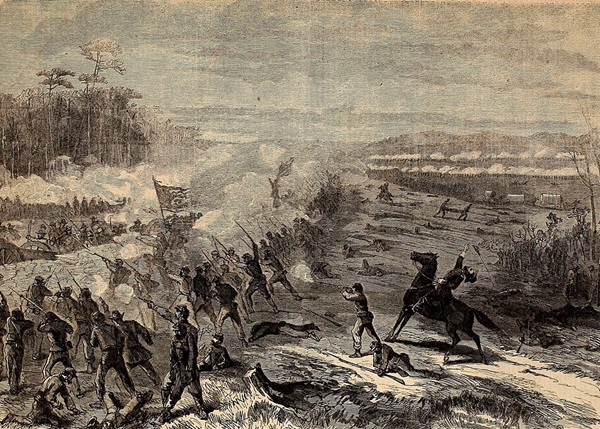
\n\n
DESCRIPTION:The Battle of Nashville took place on December 15-16\, 1864\, d
uring the American Civil War. Fought in Nashville\, Tennessee\, it pitted
Union forces under General George H. Thomas against the Confederate Army o
f Tennessee led by General John Bell Hood. The Union army launched a power
ful\, well-coordinated assault that shattered Hood’s weakened forces. Th
e battle ended in a decisive Union victory and effectively destroyed the C
onfederate presence in Tennessee\, marking one of the final major blows to
the Confederacy.\n\n
URL:https://americanhistorycalendar.com/eventscalendar/2,3139-battle-of-nas
hville
END:VEVENT
BEGIN:VEVENT
SUMMARY:Boston Tea Party
UID:2008-04-30-05-33-17-62-@americanhistorycalendar.com
SEQUENCE:0
STATUS:CONFIRMED
TRANSP:OPAQUE
RRULE:FREQ=YEARLY;INTERVAL=1;BYMONTH=12;BYMONTHDAY=16
DTSTART;VALUE=DATE:20081216
DTEND;VALUE=DATE:20081217
DTSTAMP:20260609T202915
CATEGORIES:Revolution Era
LOCATION:Boston\, Massachusetts
GEO:42.3584308;-71.0597732
X-ALT-DESC;FMTTYPE=text/html:\n\n\n\nThe Boston Tea
Party took place on December 16, 1773, in Boston, Massachusetts. American
colonists, frustrated with British taxes on tea and lack of representation
in Parliament, disguised themselves as Native Americans and boarded Briti
sh ships. They dumped 342 chests of tea into Boston Harbor as a protest. T
he event escalated tensions between the colonies and Britain, helping spar
k the American Revolution.
\n
\n\n
DESCRIPTION:The Boston Tea Party took place on December 16\, 1773\, in Bost
on\, Massachusetts. American colonists\, frustrated with British taxes on
tea and lack of representation in Parliament\, disguised themselves as Nat
ive Americans and boarded British ships. They dumped 342 chests of tea int
o Boston Harbor as a protest. The event escalated tensions between the col
onies and Britain\, helping spark the American Revolution.\n\n
URL:https://americanhistorycalendar.com/eventscalendar/2,3148-boston-tea-pa
rty
END:VEVENT
BEGIN:VEVENT
SUMMARY:Wright Brothers fly first airplane
UID:2008-10-14-20-49-00-63-@americanhistorycalendar.com
SEQUENCE:0
STATUS:CONFIRMED
TRANSP:OPAQUE
RRULE:FREQ=YEARLY;INTERVAL=1;BYMONTH=12;BYMONTHDAY=17
DTSTART;VALUE=DATE:20081217
DTEND;VALUE=DATE:20081218
DTSTAMP:20260609T202915
CATEGORIES:Air and Space Events
LOCATION:Kitty Hawk\, North Carolina
GEO:36.0646102;-75.7057346
X-ALT-DESC;FMTTYPE=text/html:\n\n\n\nThe Wright brot
hers, Orville and Wilbur Wright, made the first successful powered airplan
e flight on December 17, 1903, in Kitty Hawk, North Carolina. Their aircra
ft, the Wright Flyer, flew for 12 seconds and covered 120 feet. This achie
vement marked the beginning of modern aviation and demonstrated that contr
olled, sustained flight was possible, changing transportation and technolo
gy forever.
\n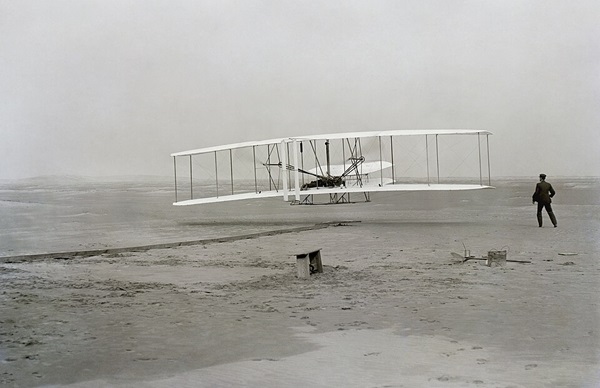
\n\n
DESCRIPTION:The Wright brothers\, Orville and Wilbur Wright\, made the firs
t successful powered airplane flight on December 17\, 1903\, in Kitty Hawk
\, North Carolina. Their aircraft\, the Wright Flyer\, flew for 12 seconds
and covered 120 feet. This achievement marked the beginning of modern avi
ation and demonstrated that controlled\, sustained flight was possible\, c
hanging transportation and technology forever.\n\n
URL:https://americanhistorycalendar.com/eventscalendar/2,3157-wright-brothe
rs-fly-first-airplane
END:VEVENT
BEGIN:VEVENT
SUMMARY:New Jersey\, the third state
UID:2008-05-02-03-21-59-63-@americanhistorycalendar.com
SEQUENCE:0
STATUS:CONFIRMED
TRANSP:OPAQUE
RRULE:FREQ=YEARLY;INTERVAL=1;BYMONTH=12;BYMONTHDAY=18
DTSTART;VALUE=DATE:20081218
DTEND;VALUE=DATE:20081219
DTSTAMP:20260609T202915
CATEGORIES:State Ratification
LOCATION:Trenton\, New Jersey
GEO:40.2170534;-74.7429384
X-ALT-DESC;FMTTYPE=text/html:\n\n\n\nNew Jersey beca
me the third state to join the United States on December 18, 1787. Located
in the Mid-Atlantic region, it is bordered by New York, Pennsylvania, Del
aware, and the Atlantic Ocean. Known as the “Garden State,” New Jersey
played an important role in the American Revolution and early U.S. histor
y. Its largest city is Newark, and its capital is Trenton. The state is kn
own for its industry, transportation, and diverse communities.
\n\n
DESCRIPTION:New Jersey became the third state to join the United States on
December 18\, 1787. Located in the Mid-Atlantic region\, it is bordered by
New York\, Pennsylvania\, Delaware\, and the Atlantic Ocean. Known as the
“Garden State\,” New Jersey played an important role in the American
Revolution and early U.S. history. Its largest city is Newark\, and its ca
pital is Trenton. The state is known for its industry\, transportation\, a
nd diverse communities.\n
URL:https://americanhistorycalendar.com/eventscalendar/2,3166-new-jersey-th
e-third-state
END:VEVENT
BEGIN:VEVENT
SUMMARY:South Carolina secedes from the Union
UID:2008-05-08-02-01-16-63-@americanhistorycalendar.com
SEQUENCE:0
STATUS:CONFIRMED
TRANSP:OPAQUE
RRULE:FREQ=YEARLY;INTERVAL=1;BYMONTH=12;BYMONTHDAY=20
DTSTART;VALUE=DATE:20081220
DTEND;VALUE=DATE:20081221
DTSTAMP:20260609T202915
CATEGORIES:Civil War Events
LOCATION:South Carolina
GEO:33.836081;-81.1637245
X-ALT-DESC;FMTTYPE=text/html:\n\n\n\nSouth Carolina
seceded from the United States on December 20, 1860, becoming the first st
ate to leave the Union. The decision was driven by disputes over states' r
ights and the future of slavery. South Carolina's secession marked the beg
inning of the Southern states' withdrawal, which led directly to the outbr
eak of the American Civil War in 1861.
\n<
/p>\n
\n
DESCRIPTION:South Carolina seceded from the United States on December 20\,
1860\, becoming the first state to leave the Union. The decision was drive
n by disputes over states' rights and the future of slavery. South Carolin
a's secession marked the beginning of the Southern states' withdrawal\, wh
ich led directly to the outbreak of the American Civil War in 1861.\n\n
URL:https://americanhistorycalendar.com/eventscalendar/2,3175-south-carolin
a-secedes-from-the-union
END:VEVENT
BEGIN:VEVENT
SUMMARY:Washington resigns as Commander in Chief
UID:2008-05-02-03-05-31-63-@americanhistorycalendar.com
SEQUENCE:0
STATUS:CONFIRMED
TRANSP:OPAQUE
RRULE:FREQ=YEARLY;INTERVAL=1;BYMONTH=12;BYMONTHDAY=23
DTSTART;VALUE=DATE:20081223
DTEND;VALUE=DATE:20081224
DTSTAMP:20260609T202915
CATEGORIES:Revolution Era
LOCATION:Annapolis\, Maryland
X-ALT-DESC;FMTTYPE=text/html:\n\n\n\nGeorge Washingt
on resigned as Commander-in-Chief of the Continental Army on December 23,
1783, at the Maryland State House in Annapolis. After leading the American
forces to victory in the Revolutionary War, he voluntarily gave up power
and returned to private life at his Mount Vernon estate. His resignation s
et a precedent for civilian control of the military and reinforced the pri
nciples of republican government in the United States.
\n\n
DESCRIPTION:George Washington resigned as Commander-in-Chief of the Contine
ntal Army on December 23\, 1783\, at the Maryland State House in Annapolis
. After leading the American forces to victory in the Revolutionary War\,
he voluntarily gave up power and returned to private life at his Mount Ver
non estate. His resignation set a precedent for civilian control of the mi
litary and reinforced the principles of republican government in the Unite
d States.\n
URL:https://americanhistorycalendar.com/eventscalendar/2,3184-washington-re
signs-as-commander-in-chief
END:VEVENT
BEGIN:VEVENT
SUMMARY:Washington Crosses the Delaware and captures Trenton
UID:2008-05-02-02-25-35-63-@americanhistorycalendar.com
SEQUENCE:0
STATUS:CONFIRMED
TRANSP:OPAQUE
RRULE:FREQ=YEARLY;INTERVAL=1;BYMONTH=12;BYMONTHDAY=26
DTSTART;VALUE=DATE:20081226
DTEND;VALUE=DATE:20081227
DTSTAMP:20260609T202915
CATEGORIES:Revolution Era
LOCATION:Trenton\, New Jersey
GEO:40.2170534;-74.7429384
X-ALT-DESC;FMTTYPE=text/html:\n\n
\n\nOn the night of
December 25 - 26, 1776, during the American Revolutionary War, General Ge
orge Washington led Continental Army troops across the icy Delaware River.
They launched a surprise attack on Hessian forces in Trenton, New Jersey,
achieving a crucial victory. This bold maneuver boosted American morale,
revived the revolutionary cause, and is remembered as one of Washington’
s most daring and celebrated military feats.
\n\n<
/html>
DESCRIPTION:On the night of December 25 - 26\, 1776\, during the American R
evolutionary War\, General George Washington led Continental Army troops a
cross the icy Delaware River. They launched a surprise attack on Hessian f
orces in Trenton\, New Jersey\, achieving a crucial victory. This bold man
euver boosted American morale\, revived the revolutionary cause\, and is r
emembered as one of Washington’s most daring and celebrated military fea
ts.\n
URL:https://americanhistorycalendar.com/eventscalendar/2,3202-washington-cr
osses-the-delaware-and-captures-trenton
END:VEVENT
BEGIN:VEVENT
SUMMARY:Iowa\, the twenty-ninth state
UID:2008-05-02-04-22-20-63-@americanhistorycalendar.com
SEQUENCE:0
STATUS:CONFIRMED
TRANSP:OPAQUE
RRULE:FREQ=YEARLY;INTERVAL=1;BYMONTH=12;BYMONTHDAY=28
DTSTART;VALUE=DATE:20081228
DTEND;VALUE=DATE:20081229
DTSTAMP:20260609T202915
CATEGORIES:State Ratification
LOCATION:Des Moines\, Iowa
GEO:41.6005448;-93.6091064
X-ALT-DESC;FMTTYPE=text/html:\n\n\n\nIowa became the
twenty-ninth state of the United States on December 28, 1846. Located in
the Midwest, it is bordered by Minnesota, Wisconsin, Illinois, Missouri, N
ebraska, and South Dakota. Known as the “Hawkeye State,” Iowa has a st
rong agricultural economy, producing corn, soybeans, and livestock. Its ca
pital is Des Moines, which is also its largest city. Iowa played an import
ant role in westward expansion and American farming development.
\n<
/p>\n
DESCRIPTION:Iowa became the twenty-ninth state of the United States on Dece
mber 28\, 1846. Located in the Midwest\, it is bordered by Minnesota\, Wis
consin\, Illinois\, Missouri\, Nebraska\, and South Dakota. Known as the â
€œHawkeye State\,” Iowa has a strong agricultural economy\, producing co
rn\, soybeans\, and livestock. Its capital is Des Moines\, which is also i
ts largest city. Iowa played an important role in westward expansion and A
merican farming development.\n
URL:https://americanhistorycalendar.com/eventscalendar/2,3211-iowa-the-twen
ty-ninth-state
END:VEVENT
BEGIN:VEVENT
SUMMARY:British occupy Savannah\, GA
UID:2008-05-02-02-42-27-63-@americanhistorycalendar.com
SEQUENCE:0
STATUS:CONFIRMED
TRANSP:OPAQUE
RRULE:FREQ=YEARLY;INTERVAL=1;BYMONTH=12;BYMONTHDAY=29
DTSTART;VALUE=DATE:20081229
DTEND;VALUE=DATE:20081230
DTSTAMP:20260609T202915
CATEGORIES:Revolution Era
LOCATION:Savannah\, Georgia
GEO:32.0835407;-81.0998342
X-ALT-DESC;FMTTYPE=text/html:\n\n\n\nThe British occ
upied Savannah, Georgia, on December 29, 1778, during the American Revolut
ionary War. British forces captured the city to gain control of the southe
rn colonies and establish a strategic base for operations in the South. Th
e occupation lasted for more than two years, during which Savannah became
a center of Loyalist activity and military planning. The city was eventual
ly retaken by American and French forces in 1782.
\n\n
DESCRIPTION:The British occupied Savannah\, Georgia\, on December 29\, 1778
\, during the American Revolutionary War. British forces captured the city
to gain control of the southern colonies and establish a strategic base f
or operations in the South. The occupation lasted for more than two years\
, during which Savannah became a center of Loyalist activity and military
planning. The city was eventually retaken by American and French forces in
1782.\n
URL:https://americanhistorycalendar.com/eventscalendar/2,3220-british-occup
y-savannah-ga
END:VEVENT
BEGIN:VEVENT
SUMMARY:Texas\, the twenty-eighth state
UID:2008-05-02-04-20-52-63-@americanhistorycalendar.com
SEQUENCE:0
STATUS:CONFIRMED
TRANSP:TRANSPARENT
RRULE:FREQ=YEARLY;INTERVAL=1;BYMONTH=12;BYMONTHDAY=29
EXDATE;TZID=UTC:20251229
DTSTART;VALUE=DATE:20081229
DTEND;VALUE=DATE:20081230
DTSTAMP:20260609T202915
CATEGORIES:State Ratification
LOCATION:Austin\, Texas
GEO:30.267153;-97.7430608
X-ALT-DESC;FMTTYPE=text/html:\n\n\n\nDecember 29, 18
45
\n\n
DESCRIPTION:December 29\, 1845\n
URL:https://americanhistorycalendar.com/eventscalendar/2,3229-texas-the-twe
nty-eighth-state
END:VEVENT
BEGIN:VEVENT
SUMMARY:John Wilkes Boothe Killed
UID:2010-09-29-14-43-28-63-0@AmericanHistoryCalendar.com
SEQUENCE:0
STATUS:CONFIRMED
TRANSP:TRANSPARENT
RRULE:FREQ=YEARLY;INTERVAL=1;BYMONTH=4;BYMONTHDAY=26
DTSTART;VALUE=DATE:20090426
DTEND;VALUE=DATE:20090427
DTSTAMP:20260609T202915
CATEGORIES:Civil War Events,Presidential Events
LOCATION:Port Royal\, Virginia
GEO:38.1717974;-77.1910885
X-ALT-DESC;FMTTYPE=text/html:\n\n\n\nJohn Wilkes Boo
th, the assassin who killed President Abraham Lincoln, was tracked down an
d killed on April 26, 1865, during a manhunt that lasted nearly two weeks.
After assassinating Lincoln on April 14, 1865, at Ford's Theatre in Washi
ngton, D.C., Booth fled the city and went into hiding.
\nHe was even
tually located in a barn in Garrett, Virginia, where he had been hiding wi
th his co-conspirator, David Herold. Union soldiers surrounded the barn, a
nd after a standoff, Booth was shot. Some reports suggest that Booth was s
hot by a soldier named Boston Corbett, while others claim that Booth was f
atally wounded in a scuffle after being captured. He died a few hours late
r from his injuries.
\nBooth's death marked the end of the search
for the man who assassinated President Lincoln, and his actions are rememb
ered as one of the most significant acts of violence in American history.<
/p>\n

\n\n
DESCRIPTION:John Wilkes Booth\, the assassin who killed President Abraham L
incoln\, was tracked down and killed on April 26\, 1865\, during a manhunt
that lasted nearly two weeks. After assassinating Lincoln on April 14\, 1
865\, at Ford's Theatre in Washington\, D.C.\, Booth fled the city and wen
t into hiding.\nHe was eventually located in a barn in Garrett\, Virginia\
, where he had been hiding with his co-conspirator\, David Herold. Union s
oldiers surrounded the barn\, and after a standoff\, Booth was shot. Some
reports suggest that Booth was shot by a soldier named Boston Corbett\, wh
ile others claim that Booth was fatally wounded in a scuffle after being c
aptured. He died a few hours later from his injuries. \nBooth's death mar
ked the end of the search for the man who assassinated President Lincoln\,
and his actions are remembered as one of the most significant acts of vio
lence in American history.\n\n
URL:https://americanhistorycalendar.com/eventscalendar/2,3238-john-wilkes-b
oothe-killed
END:VEVENT
BEGIN:VEVENT
SUMMARY:Victory at Yorktown
UID:2010-09-29-14-06-45-63-0@AmericanHistoryCalendar.com
SEQUENCE:0
STATUS:CONFIRMED
TRANSP:OPAQUE
RRULE:FREQ=YEARLY;INTERVAL=1;BYMONTH=10;BYMONTHDAY=19
DTSTART;VALUE=DATE:20091019
DTEND;VALUE=DATE:20091020
DTSTAMP:20260609T202915
CATEGORIES:Revolution Era
LOCATION:Yorktown\, Virginia
GEO:37.2387556;-76.5096731
X-ALT-DESC;FMTTYPE=text/html:\n\n\n\nThe victory at
Yorktown took place in October 1781 during the American Revolutionary War.
American and French forces, led by General George Washington and French G
eneral Rochambeau, surrounded the British army commanded by General Charle
s Cornwallis at Yorktown, Virginia. After several weeks of siege, Cornwall
is surrendered on October 19, 1781, effectively ending major fighting in t
he war. The victory at Yorktown marked the last major battle of the Revolu
tion and led to peace negotiations that secured American independence.
\n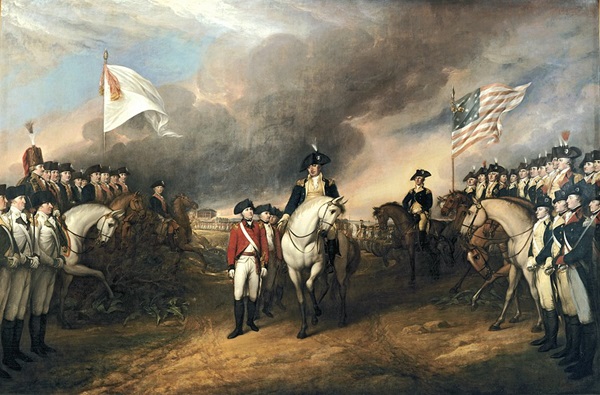
\n\n
DESCRIPTION:The victory at Yorktown took place in October 1781 during the A
merican Revolutionary War. American and French forces\, led by General Geo
rge Washington and French General Rochambeau\, surrounded the British army
commanded by General Charles Cornwallis at Yorktown\, Virginia. After sev
eral weeks of siege\, Cornwallis surrendered on October 19\, 1781\, effect
ively ending major fighting in the war. The victory at Yorktown marked the
last major battle of the Revolution and led to peace negotiations that se
cured American independence.\n\n
URL:https://americanhistorycalendar.com/eventscalendar/2,3247-victory-at-yo
rktown
END:VEVENT
BEGIN:VEVENT
SUMMARY:Rosa Parks refuses to give up her bus seat to a white passenger
UID:2010-09-13-11-47-11-63-0@AmericanHistoryCalendar.com
SEQUENCE:0
STATUS:CONFIRMED
TRANSP:OPAQUE
RRULE:FREQ=YEARLY;INTERVAL=1;BYMONTH=12;BYMONTHDAY=1
DTSTART;VALUE=DATE:20091201
DTEND;VALUE=DATE:20091202
DTSTAMP:20260609T202915
CATEGORIES:Civil Rights Events
LOCATION:Montgomery\, Alabama
GEO:32.3668052;-86.2999689
X-ALT-DESC;FMTTYPE=text/html:\n\n\n\nRosa Parks’ r
efusal to give up her bus seat occurred on December 1, 1955, in Montgomery
, Alabama. Parks, an African American seamstress and civil rights activist
, was riding a segregated city bus when the driver ordered her to give her
seat to a white passenger. She quietly refused, leading to her arrest for
violating segregation laws. Her courageous stand sparked the Montgomery B
us Boycott, a 381-day protest that helped launch the modern civil rights m
ovement and elevated figures like Martin Luther King Jr. Parks went on to
work for civil rights causes for the rest of her life and became a nationa
l symbol of dignity and resistance.
\n\n
DESCRIPTION:Rosa Parks’ refusal to give up her bus seat occurred on Decem
ber 1\, 1955\, in Montgomery\, Alabama. Parks\, an African American seamst
ress and civil rights activist\, was riding a segregated city bus when the
driver ordered her to give her seat to a white passenger. She quietly ref
used\, leading to her arrest for violating segregation laws. Her courageou
s stand sparked the Montgomery Bus Boycott\, a 381-day protest that helped
launch the modern civil rights movement and elevated figures like Martin
Luther King Jr. Parks went on to work for civil rights causes for the rest
of her life and became a national symbol of dignity and resistance.\n
URL:https://americanhistorycalendar.com/eventscalendar/2,3255-rosa-parks-re
fuses-to-give-up-her-bus-seat-to-a-white-passenger
END:VEVENT
BEGIN:VEVENT
SUMMARY:Three astronauts killed from flash fire while onboard command modul
e
UID:2010-10-01-13-07-08-63-0@AmericanHistoryCalendar.com
SEQUENCE:0
STATUS:CONFIRMED
TRANSP:TRANSPARENT
RRULE:FREQ=YEARLY;INTERVAL=1;BYMONTH=1;BYMONTHDAY=27
DTSTART;VALUE=DATE:20100127
DTEND;VALUE=DATE:20100128
DTSTAMP:20260609T202915
CATEGORIES:Air and Space Events
LOCATION:Cape Canaveral\, Florida
GEO:28.388333;-80.603611
X-ALT-DESC;FMTTYPE=text/html:\n\n\n\nJanuary 27, 196
7
\n
\nThree NASA astronauts were killed from a flash fire while o
nboard the command module during a launch pad test. The tragedy brought a
bout changes in the Apollo program to improve safety. The AS-204 mission
was redesignated Apollo I in honor of the crew.
\n
\n\n
DESCRIPTION:January 27\, 1967\n\nThree NASA astronauts were killed from a f
lash fire while onboard the command module during a launch pad test. The
tragedy brought about changes in the Apollo program to improve safety. Th
e AS-204 mission was redesignated Apollo I in honor of the crew.\n\n
URL:https://americanhistorycalendar.com/eventscalendar/2,3263-three-astrona
uts-killed-from-flash-fire-while-onboard-command-module
END:VEVENT
BEGIN:VEVENT
SUMMARY:Birth of the U.S. Army
UID:2011-10-26-10-20-01-63-0@AmericanHistoryCalendar.com
SEQUENCE:0
STATUS:CONFIRMED
TRANSP:TRANSPARENT
RRULE:FREQ=YEARLY;INTERVAL=1;BYMONTH=6;BYMONTHDAY=14
DTSTART;VALUE=DATE:20100614
DTEND;VALUE=DATE:20100615
DTSTAMP:20260609T202915
CATEGORIES:Revolution Era
LOCATION:Philadelphia\, PA
GEO:39.952335;-75.163789
X-ALT-DESC;FMTTYPE=text/html:\n\n
\n\nThe United Stat
es Army was founded on June 14, 1775, by the Continental Congress to fight
in the American Revolutionary War. It began as the Continental Army, led
by General George Washington, and was created to unify the colonial militi
as against British rule. The Army played a key role in securing American i
ndependence and has since grown into one of the world’s most powerful mi
litary forces. June 14 is now celebrated as the Army’s birthday each yea
r.
\n
\n\n
DESCRIPTION:The United States Army was founded on June 14\, 1775\, by the C
ontinental Congress to fight in the American Revolutionary War. It began a
s the Continental Army\, led by General George Washington\, and was create
d to unify the colonial militias against British rule. The Army played a k
ey role in securing American independence and has since grown into one of
the world’s most powerful military forces. June 14 is now celebrated as
the Army’s birthday each year.\n\n
URL:https://americanhistorycalendar.com/eventscalendar/2,3271-birth-of-the-
u-s-army
END:VEVENT
BEGIN:VEVENT
SUMMARY:Birth of the U.S. Coast Guard
UID:2011-10-26-20-21-33-63-0@AmericanHistoryCalendar.com
SEQUENCE:0
STATUS:CONFIRMED
TRANSP:OPAQUE
RRULE:FREQ=YEARLY;INTERVAL=1;BYMONTH=8;BYMONTHDAY=4
DTSTART;VALUE=DATE:20100804
DTEND;VALUE=DATE:20100805
DTSTAMP:20260609T202915
CATEGORIES:Revolution Era
X-ALT-DESC;FMTTYPE=text/html:\n\n\n\nThe U.S. Coast
Guard was officially born on August 4, 1790, when Congress authorized the
construction of ten revenue cutters to enforce tariff laws and prevent smu
ggling. Originally called the Revenue Marine (later the Revenue Cutter Ser
vice), it was the only armed maritime service of the U.S. until the Navy w
as reestablished in 1798.
\nFounded under the direction of Alexander
Hamilton, the Coast Guard merged with the U.S. Life-Saving Service in 191
5, officially becoming the United States Coast Guard. It is the nation's o
ldest continuous seagoing service, performing missions in maritime law enf
orcement, search and rescue, environmental protection, and national defens
e.
\n
\n\n
DESCRIPTION:The U.S. Coast Guard was officially born on August 4\, 1790\, w
hen Congress authorized the construction of ten revenue cutters to enforce
tariff laws and prevent smuggling. Originally called the Revenue Marine (
later the Revenue Cutter Service)\, it was the only armed maritime service
of the U.S. until the Navy was reestablished in 1798.\nFounded under the
direction of Alexander Hamilton\, the Coast Guard merged with the U.S. Lif
e-Saving Service in 1915\, officially becoming the United States Coast Gua
rd. It is the nation's oldest continuous seagoing service\, performing mis
sions in maritime law enforcement\, search and rescue\, environmental prot
ection\, and national defense.\n\n
URL:https://americanhistorycalendar.com/eventscalendar/2,3279-birth-of-the-
u-s-coast-guard
END:VEVENT
BEGIN:VEVENT
SUMMARY:Birth of the U.S. Marine Corps
UID:2011-10-26-10-12-10-63-0@AmericanHistoryCalendar.com
SEQUENCE:0
STATUS:CONFIRMED
TRANSP:OPAQUE
RRULE:FREQ=YEARLY;INTERVAL=1;BYMONTH=11;BYMONTHDAY=10
DTSTART;VALUE=DATE:20101110
DTEND;VALUE=DATE:20101111
DTSTAMP:20260609T202915
CATEGORIES:Revolution Era
LOCATION:Philadelphia\, PA
GEO:39.952335;-75.163789
X-ALT-DESC;FMTTYPE=text/html:\n\n\n\nThe United Stat
es Marine Corps was founded on November 10, 1775, during the American Revo
lutionary War. The Continental Congress established the Corps to serve as
a specialized force capable of fighting both at sea and on land. Marines p
layed key roles in early battles, providing shipboard security, amphibious
assault capabilities, and rapid-response combat skills. Over time, the Ma
rine Corps became known for its rigorous training, discipline, and distinc
tive role as an elite expeditionary force. Today, it remains a vital branc
h of the U.S. military.
\n
\n\n
DESCRIPTION:The United States Marine Corps was founded on November 10\, 177
5\, during the American Revolutionary War. The Continental Congress establ
ished the Corps to serve as a specialized force capable of fighting both a
t sea and on land. Marines played key roles in early battles\, providing s
hipboard security\, amphibious assault capabilities\, and rapid-response c
ombat skills. Over time\, the Marine Corps became known for its rigorous t
raining\, discipline\, and distinctive role as an elite expeditionary forc
e. Today\, it remains a vital branch of the U.S. military.\n\n
URL:https://americanhistorycalendar.com/eventscalendar/2,3286-birth-of-the-
u-s-marine-corps
END:VEVENT
BEGIN:VEVENT
SUMMARY:Bill of Rights Ratified
UID:2015-01-16-16-46-16-585-1@americanhistorycalendar.com
SEQUENCE:0
STATUS:CONFIRMED
TRANSP:OPAQUE
RRULE:FREQ=YEARLY;INTERVAL=1;BYMONTH=12;BYMONTHDAY=15
DTSTART;VALUE=DATE:20101215
DTEND;VALUE=DATE:20101216
DTSTAMP:20260609T202915
CATEGORIES:Revolution Era
LOCATION:Philadelphia\, Pennsylvania
GEO:39.9525839;-75.1652215
X-ALT-DESC;FMTTYPE=text/html:\n\n\n\nThe Bill of Rig
hts, the first ten amendments to the United States Constitution, was ratif
ied on December 15, 1791. It guarantees fundamental rights and freedoms, i
ncluding freedom of speech, religion, and the press, the right to bear arm
s, and protections against unreasonable searches and cruel punishments. Th
e Bill of Rights was created to ensure individual liberties and limit the
power of the federal government, becoming a cornerstone of American law an
d democracy.
\n
\n\n
DESCRIPTION:The Bill of Rights\, the first ten amendments to the United Sta
tes Constitution\, was ratified on December 15\, 1791. It guarantees funda
mental rights and freedoms\, including freedom of speech\, religion\, and
the press\, the right to bear arms\, and protections against unreasonable
searches and cruel punishments. The Bill of Rights was created to ensure i
ndividual liberties and limit the power of the federal government\, becomi
ng a cornerstone of American law and democracy.\n\n
URL:https://americanhistorycalendar.com/eventscalendar/2,3571-bill-of-right
s-ratified
END:VEVENT
BEGIN:VEVENT
SUMMARY:Juneteenth National Independence Day
UID:33d42bce-ea3b-41fd-bbec-bb0f6e3286a7
SEQUENCE:0
STATUS:CONFIRMED
TRANSP:OPAQUE
RRULE:FREQ=YEARLY;INTERVAL=1;BYMONTH=06;BYMONTHDAY=19
DTSTART;VALUE=DATE:20180619
DTEND;VALUE=DATE:20180620
DTSTAMP:20260609T202915
CATEGORIES:Civil War Events
LOCATION:Texas
GEO:0;0
X-ALT-DESC;FMTTYPE=text/html:\n\n\n\nJuneteenth, cel
ebrated on June 19th, marks the day in 1865 when enslaved African American
s in Texas were finally informed of their freedom—more than two years af
ter the Emancipation Proclamation was issued. It is considered the oldest
nationally celebrated Black holiday in the United States, symbolizing the
end of slavery and the ongoing struggle for freedom and equality. Juneteen
th is now recognized as a federal holiday and is celebrated with events, m
usic, food, and community gatherings across the country.
\n
\n\n
DESCRIPTION:Juneteenth\, celebrated on June 19th\, marks the day in 1865 wh
en enslaved African Americans in Texas were finally informed of their free
dom—more than two years after the Emancipation Proclamation was issued.
It is considered the oldest nationally celebrated Black holiday in the Uni
ted States\, symbolizing the end of slavery and the ongoing struggle for f
reedom and equality. Juneteenth is now recognized as a federal holiday and
is celebrated with events\, music\, food\, and community gatherings acros
s the country.\n\n
URL:https://americanhistorycalendar.com/eventscalendar/2,6940-juneteenth-na
tional-independence-day
END:VEVENT
BEGIN:VEVENT
SUMMARY:British sign Articles of Peace
UID:2d8342c9-460f-473a-a88a-dfd2a8b0376e
SEQUENCE:0
STATUS:CONFIRMED
TRANSP:OPAQUE
RRULE:FREQ=YEARLY;INTERVAL=1;BYMONTH=11;BYMONTHDAY=11
DTSTART;VALUE=DATE:20201111
DTEND;VALUE=DATE:20201112
DTSTAMP:20260609T202915
CATEGORIES:Revolution Era
GEO:0;0
X-ALT-DESC;FMTTYPE=text/html:\n\n\n\nOn November 11,
1782, British representatives agreed in principle to the preliminary Arti
cles of Peace with the American colonies, beginning the formal process to
end the Revolutionary War. These articles outlined terms for recognizing A
merican independence, establishing borders, and addressing issues such as
debts and the treatment of Loyalists. The preliminary agreement paved the
way for the final Treaty of Paris, which was signed on September 3, 1783,
officially ending the war and confirming the United States as an independe
nt nation.
\n\n
DESCRIPTION:On November 11\, 1782\, British representatives agreed in princ
iple to the preliminary Articles of Peace with the American colonies\, beg
inning the formal process to end the Revolutionary War. These articles out
lined terms for recognizing American independence\, establishing borders\,
and addressing issues such as debts and the treatment of Loyalists. The p
reliminary agreement paved the way for the final Treaty of Paris\, which w
as signed on September 3\, 1783\, officially ending the war and confirming
the United States as an independent nation.\n
URL:https://americanhistorycalendar.com/eventscalendar/2,12323-british-sign
-articles-of-peace
END:VEVENT
BEGIN:VEVENT
SUMMARY:Battle of Fredricksburg
UID:aa3bfd81-f854-4e70-89b0-de18efa8f0d8
SEQUENCE:0
STATUS:CONFIRMED
TRANSP:OPAQUE
RRULE:FREQ=YEARLY;INTERVAL=1;BYMONTH=12;BYMONTHDAY=11
DTSTART;VALUE=DATE:20201211
DTEND;VALUE=DATE:20201212
DTSTAMP:20260609T202915
CATEGORIES:Civil War Events
LOCATION:Fredricksburg\, Virginia
GEO:0;0
X-ALT-DESC;FMTTYPE=text/html:\n\n\n\nThe Battle of F
redericksburg took place from December 11 to 15, 1862, during the American
Civil War. Fought in and around Fredericksburg, Virginia, it pitted Union
forces under General Ambrose Burnside against Confederate troops led by G
eneral Robert E. Lee. The Union army launched repeated assaults against st
rong Confederate positions on Marye’s Heights but suffered heavy casualt
ies. The battle ended in a decisive Confederate victory and is remembered
as one of the war’s most lopsided and costly Union defeats.
\n\n\n\n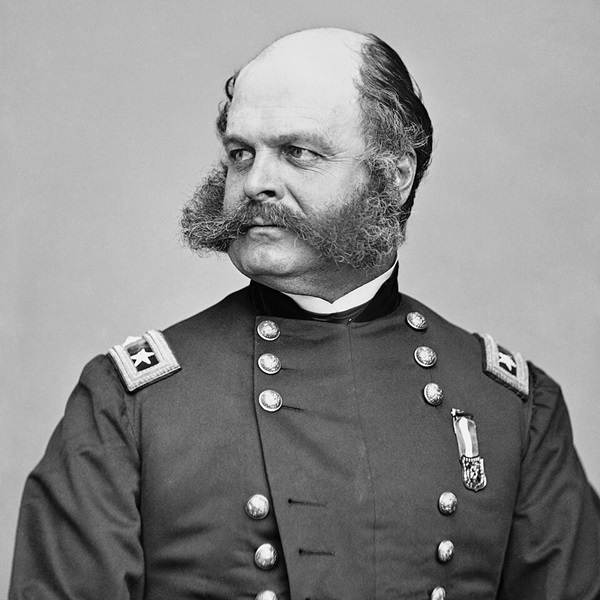 | \n
\n\n| General Ambr
ose Burnside | \n
\n\n
\n
\n\n<
/body>
DESCRIPTION:The Battle of Fredericksburg took place from December 11 to 15\
, 1862\, during the American Civil War. Fought in and around Fredericksbur
g\, Virginia\, it pitted Union forces under General Ambrose Burnside again
st Confederate troops led by General Robert E. Lee. The Union army launche
d repeated assaults against strong Confederate positions on Marye’s Heig
hts but suffered heavy casualties. The battle ended in a decisive Confeder
ate victory and is remembered as one of the war’s most lopsided and cost
ly Union defeats.\n\n\n\n\n\n\nGeneral Ambrose Burnside\n\n\n\n \n
URL:https://americanhistorycalendar.com/eventscalendar/2,12369-battle-of-fr
edricksburg
END:VEVENT
BEGIN:VEVENT
SUMMARY:Texas\, the twenty-eighth state
UID:93ec7a34-dcd4-4e8b-a731-75ff5b3ec20c
SEQUENCE:0
STATUS:CONFIRMED
TRANSP:OPAQUE
RRULE:FREQ=YEARLY;INTERVAL=1;BYMONTH=12;BYMONTHDAY=29
DTSTART;VALUE=DATE:20201229
DTEND;VALUE=DATE:20201230
DTSTAMP:20260609T202915
CATEGORIES:State Ratification
LOCATION:Austin\, Texas
GEO:0;0
X-ALT-DESC;FMTTYPE=text/html:\n\n\n\nTexas became th
e twenty-eighth state of the United States on December 29, 1845. Located i
n the southern part of the country, it is bordered by New Mexico, Oklahoma
, Arkansas, Louisiana, and Mexico, with a coastline along the Gulf of Mexi
co. Known as the “Lone Star State,” Texas was an independent republic
before joining the U.S. Its capital is Austin, and its largest city is Hou
ston. Texas is known for its size, natural resources, and diverse culture.
\n\n
DESCRIPTION:Texas became the twenty-eighth state of the United States on De
cember 29\, 1845. Located in the southern part of the country\, it is bord
ered by New Mexico\, Oklahoma\, Arkansas\, Louisiana\, and Mexico\, with a
coastline along the Gulf of Mexico. Known as the “Lone Star State\,”
Texas was an independent republic before joining the U.S. Its capital is A
ustin\, and its largest city is Houston. Texas is known for its size\, nat
ural resources\, and diverse culture.\n
URL:https://americanhistorycalendar.com/eventscalendar/2,12380-texas-the-tw
enty-eighth-state
END:VEVENT
BEGIN:VEVENT
SUMMARY:Boston Massacre
UID:a3c8caf1-889a-4576-a6a0-67eb4dbfc2aa
SEQUENCE:0
STATUS:CONFIRMED
TRANSP:OPAQUE
RRULE:FREQ=YEARLY;INTERVAL=1;BYMONTH=03;BYMONTHDAY=05
DTSTART;VALUE=DATE:20240305
DTEND;VALUE=DATE:20240306
DTSTAMP:20260609T202915
CATEGORIES:Revolution Era
LOCATION:Boston\, MA
GEO:0;0
X-ALT-DESC;FMTTYPE=text/html:\n\n\n\nThe Boston Mass
acre occurred on March 5, 1770, when British soldiers opened fire on a cro
wd of colonists in Boston, killing five people. Tensions had been rising b
etween the colonists and British troops, and the incident, sparked by a co
nfrontation outside the Customs House, became a powerful symbol of British
oppression. It fueled anti-British sentiment and helped pave the way for
the American Revolution.
\n
\n
\n\n
DESCRIPTION:The Boston Massacre occurred on March 5\, 1770\, when British s
oldiers opened fire on a crowd of colonists in Boston\, killing five peopl
e. Tensions had been rising between the colonists and British troops\, and
the incident\, sparked by a confrontation outside the Customs House\, bec
ame a powerful symbol of British oppression. It fueled anti-British sentim
ent and helped pave the way for the American Revolution.\n\n \n
URL:https://americanhistorycalendar.com/eventscalendar/2,6986-boston-massac
re
END:VEVENT
BEGIN:VEVENT
SUMMARY:Battle of Chancellorsville
UID:65fb2eb7-32e5-4873-accf-e2b888da98d4
SEQUENCE:0
STATUS:CONFIRMED
TRANSP:TRANSPARENT
RRULE:FREQ=YEARLY;INTERVAL=1;BYMONTH=4;BYMONTHDAY=30
DTSTART;VALUE=DATE:20240430
DTEND;VALUE=DATE:20240501
DTSTAMP:20260609T202915
CATEGORIES:Civil War Events
LOCATION:Chancellorsville\, Virginia
GEO:0;0
X-ALT-DESC;FMTTYPE=text/html:\n\n
\n\nThe Battle of C
hancellorsville was fought from April 30 to May 6, 1863, during the Americ
an Civil War. It took place in Virginia, near the village of Chancellorsvi
lle, and was a major victory for the Confederate Army, commanded by Genera
l Robert E. Lee, over the Union Army led by General Joseph Hooker.
\nIn the battle, Lee, despite being outnumbered, executed a brilliant tacti
cal maneuver. He divided his forces, sending General Thomas "Stonewall" Ja
ckson on a flanking march to attack the Union right. The surprise attack o
verwhelmed Union forces, and the Confederates were able to inflict heavy c
asualties.
\nHowever, the victory came at a great cost. General Ston
ewall Jackson was accidentally shot by his own troops during the battle an
d died of complications from his wounds a few days later, which was a sign
ificant blow to the Confederate Army.
\nThe Battle of Chancellorsvil
le is often considered one of Lee’s greatest victories, but it also mark
ed the beginning of the decline in Confederate fortunes, as the loss of Ja
ckson was a severe blow to the leadership of the Army of Northern Virginia
. For the Union, the defeat was another setback, and it led to the retreat
of Union forces back toward Washington, D.C. The battle set the stage for
the Battle of Gettysburg, which occurred later that year.
\n
\n\n
DESCRIPTION:The Battle of Chancellorsville was fought from April 30 to May
6\, 1863\, during the American Civil War. It took place in Virginia\, near
the village of Chancellorsville\, and was a major victory for the Confede
rate Army\, commanded by General Robert E. Lee\, over the Union Army led b
y General Joseph Hooker.\nIn the battle\, Lee\, despite being outnumbered\
, executed a brilliant tactical maneuver. He divided his forces\, sending
General Thomas "Stonewall" Jackson on a flanking march to attack the Union
right. The surprise attack overwhelmed Union forces\, and the Confederate
s were able to inflict heavy casualties.\nHowever\, the victory came at a
great cost. General Stonewall Jackson was accidentally shot by his own tro
ops during the battle and died of complications from his wounds a few days
later\, which was a significant blow to the Confederate Army.\nThe Battle
of Chancellorsville is often considered one of Lee’s greatest victories
\, but it also marked the beginning of the decline in Confederate fortunes
\, as the loss of Jackson was a severe blow to the leadership of the Army
of Northern Virginia. For the Union\, the defeat was another setback\, and
it led to the retreat of Union forces back toward Washington\, D.C. The b
attle set the stage for the Battle of Gettysburg\, which occurred later th
at year.\n\n
URL:https://americanhistorycalendar.com/eventscalendar/2,6978-battle-of-cha
ncellorsville
END:VEVENT
BEGIN:VEVENT
SUMMARY:British Burn New Haven\, Connecticut
UID:4726a4b1-4c25-4754-a0c8-0f9d5748b0ce
SEQUENCE:0
STATUS:CONFIRMED
TRANSP:OPAQUE
RRULE:FREQ=YEARLY;INTERVAL=1;BYMONTH=07;BYMONTHDAY=05
DTSTART;VALUE=DATE:20240705
DTEND;VALUE=DATE:20240706
DTSTAMP:20260609T202915
CATEGORIES:Revolution Era
GEO:0;0
X-ALT-DESC;FMTTYPE=text/html:\n\n\n\nOn July 5, 1779
, during the American Revolutionary War, British troops attacked and burne
d parts of New Haven, Connecticut. Led by General William Tryon, the raid
was part of a larger campaign to punish and intimidate American coastal to
wns that supported the Patriot cause. British forces landed at nearby beac
hes and clashed with local militia, causing damage to homes, public buildi
ngs, and Yale College. Although the British eventually withdrew, the raid
caused significant destruction and outrage, strengthening American resista
nce and support for independence.
\n
\n\n
DESCRIPTION:On July 5\, 1779\, during the American Revolutionary War\, Brit
ish troops attacked and burned parts of New Haven\, Connecticut. Led by Ge
neral William Tryon\, the raid was part of a larger campaign to punish and
intimidate American coastal towns that supported the Patriot cause. Briti
sh forces landed at nearby beaches and clashed with local militia\, causin
g damage to homes\, public buildings\, and Yale College. Although the Brit
ish eventually withdrew\, the raid caused significant destruction and outr
age\, strengthening American resistance and support for independence.\n\n
URL:https://americanhistorycalendar.com/eventscalendar/2,7004-british-burn-
new-haven-connecticut
END:VEVENT
BEGIN:VEVENT
SUMMARY:British burn Fairfield\, Connecticut
UID:c58f290c-d825-409d-b5bb-fdf8be94fa22
SEQUENCE:0
STATUS:CONFIRMED
TRANSP:OPAQUE
RRULE:FREQ=YEARLY;INTERVAL=1;BYMONTH=07;BYMONTHDAY=07
DTSTART;VALUE=DATE:20240707
DTEND;VALUE=DATE:20240708
DTSTAMP:20260609T202915
CATEGORIES:Revolution Era
LOCATION:Fairfield\, Connecticut
GEO:0;0
X-ALT-DESC;FMTTYPE=text/html:\n\n\n\nOn July 7, 1779
, during the American Revolutionary War, British troops burned the town of
Fairfield, Connecticut. Led by General William Tryon, the British forces
launched a coastal raid to punish and intimidate Patriot supporters. They
destroyed homes, churches, and public buildings, leaving much of the town
in ruins. The attack was part of a broader campaign that also targeted nea
rby towns like New Haven and Norwalk. Instead of weakening American resist
ance, the destruction of Fairfield and other towns strengthened colonial r
esolve and increased support for the Revolutionary cause.
\n
\n\n
DESCRIPTION:On July 7\, 1779\, during the American Revolutionary War\, Brit
ish troops burned the town of Fairfield\, Connecticut. Led by General Will
iam Tryon\, the British forces launched a coastal raid to punish and intim
idate Patriot supporters. They destroyed homes\, churches\, and public bui
ldings\, leaving much of the town in ruins. The attack was part of a broad
er campaign that also targeted nearby towns like New Haven and Norwalk. In
stead of weakening American resistance\, the destruction of Fairfield and
other towns strengthened colonial resolve and increased support for the Re
volutionary cause.\n\n
URL:https://americanhistorycalendar.com/eventscalendar/2,7000-british-burn-
fairfield-connecticut
END:VEVENT
BEGIN:VEVENT
SUMMARY:The Treaty of Ghent signed
UID:5a763d92-a4f6-4d9b-a174-073a4ac3747a
SEQUENCE:0
STATUS:CONFIRMED
TRANSP:OPAQUE
RRULE:FREQ=YEARLY;INTERVAL=1;BYMONTH=12;BYMONTHDAY=24
DTSTART;VALUE=DATE:20241224
DTEND;VALUE=DATE:20241225
DTSTAMP:20260609T202915
CATEGORIES:1812 War Events
LOCATION:Ghent\, Belgium
GEO:0;0
X-ALT-DESC;FMTTYPE=text/html:\n\n\n\nThe Treaty of G
hent was signed on December 24, 1814, ending the War of 1812 between the U
nited States and Great Britain. Negotiated in Ghent, Belgium, the treaty r
estored pre-war boundaries and called for the return of conquered territor
y, but did not address the issues that initially caused the war, such as t
rade restrictions and impressment. Despite this, the treaty marked the beg
inning of improved relations between the two nations. News of the treaty t
ook weeks to reach America, and fighting continued briefly, including the
Battle of New Orleans.
\n\n
DESCRIPTION:The Treaty of Ghent was signed on December 24\, 1814\, ending t
he War of 1812 between the United States and Great Britain. Negotiated in
Ghent\, Belgium\, the treaty restored pre-war boundaries and called for th
e return of conquered territory\, but did not address the issues that init
ially caused the war\, such as trade restrictions and impressment. Despite
this\, the treaty marked the beginning of improved relations between the
two nations. News of the treaty took weeks to reach America\, and fighting
continued briefly\, including the Battle of New Orleans.\n
URL:https://americanhistorycalendar.com/eventscalendar/2,6991-the-treaty-of
-ghent-signed
END:VEVENT
BEGIN:VEVENT
SUMMARY:Vermont\, the fourteenth state
UID:0b2fe02a-54a9-4292-8e3a-0b3a22d7c360
SEQUENCE:0
STATUS:CONFIRMED
TRANSP:TRANSPARENT
RRULE:FREQ=YEARLY;INTERVAL=1;BYMONTH=03;BYMONTHDAY=04
DTSTART;VALUE=DATE:20250304
DTEND;VALUE=DATE:20250305
DTSTAMP:20260609T202915
CATEGORIES:State Ratification
LOCATION:Montpelier\, Vermont
GEO:0;0
X-ALT-DESC;FMTTYPE=text/html:\n\n\n\nVermont became
the 14th state of the United States on March 4, 1791. Located in the north
eastern part of the country, it is known for its beautiful landscapes, inc
luding its Green Mountains and numerous lakes. Vermont was originally part
of the land disputed between New York and New Hampshire during the coloni
al era. It declared its independence as the "Republic of New Connecticut"
in 1777, during the American Revolution, before it became a state.
\nVermont's entry into the Union was unique because it had previously opera
ted as an independent republic, known as the Vermont Republic, from 1777 u
ntil it joined the United States. The state was admitted under a compromis
e, as there was some tension over land claims with neighboring New York an
d New Hampshire. However, Vermont's admission helped solidify the borders
of the new nation.
\nVermont's economy has historically been based o
n agriculture, particularly dairy farming, and the state became famous for
its maple syrup production. Over time, Vermont's rugged terrain and natur
al beauty have made it a popular destination for tourism and outdoor activ
ities, contributing to its economic growth.
\n\n
DESCRIPTION:Vermont became the 14th state of the United States on March 4\,
1791. Located in the northeastern part of the country\, it is known for i
ts beautiful landscapes\, including its Green Mountains and numerous lakes
. Vermont was originally part of the land disputed between New York and Ne
w Hampshire during the colonial era. It declared its independence as the "
Republic of New Connecticut" in 1777\, during the American Revolution\, be
fore it became a state.\nVermont's entry into the Union was unique because
it had previously operated as an independent republic\, known as the Verm
ont Republic\, from 1777 until it joined the United States. The state was
admitted under a compromise\, as there was some tension over land claims w
ith neighboring New York and New Hampshire. However\, Vermont's admission
helped solidify the borders of the new nation.\nVermont's economy has hist
orically been based on agriculture\, particularly dairy farming\, and the
state became famous for its maple syrup production. Over time\, Vermont's
rugged terrain and natural beauty have made it a popular destination for t
ourism and outdoor activities\, contributing to its economic growth.\n
URL:https://americanhistorycalendar.com/eventscalendar/2,6982-vermont-the-f
ourteenth-state
END:VEVENT
BEGIN:VEVENT
SUMMARY:Battle of Okinawa Ends
UID:389354ec-f1d8-40f6-b0e4-db9a27d7a57a
SEQUENCE:0
STATUS:CONFIRMED
TRANSP:TRANSPARENT
RRULE:FREQ=YEARLY;INTERVAL=1;BYMONTH=06;BYMONTHDAY=22
DTSTART;VALUE=DATE:20250622
DTEND;VALUE=DATE:20250623
DTSTAMP:20260609T202915
CATEGORIES:World War II Events
LOCATION:Ryukyu Islands\, Okinawa
GEO:0;0
X-ALT-DESC;FMTTYPE=text/html:\n\n\n\nThe Battle of O
kinawa ended on June 22, 1945, after nearly three months of intense fighti
ng between U.S. and Japanese forces during World War II. It was the larges
t and bloodiest battle in the Pacific Theater, with heavy casualties on bo
th sides, including many civilians. The U.S. victory gave Allied forces a
strategic base close to Japan, paving the way for the planned invasion of
the Japanese mainland. The battle’s brutality influenced the decision to
use atomic bombs to end the war.
\n
\n<
p>\n
DESCRIPTION:The Battle of Okinawa ended on June 22\, 1945\, after nearly th
ree months of intense fighting between U.S. and Japanese forces during Wor
ld War II. It was the largest and bloodiest battle in the Pacific Theater\
, with heavy casualties on both sides\, including many civilians. The U.S.
victory gave Allied forces a strategic base close to Japan\, paving the w
ay for the planned invasion of the Japanese mainland. The battle’s bruta
lity influenced the decision to use atomic bombs to end the war.\n\n
URL:https://americanhistorycalendar.com/eventscalendar/2,7008-battle-of-oki
nawa-ends
END:VEVENT
BEGIN:VEVENT
SUMMARY:President Johnson signs the Civil Rights Act
UID:68df3182-272f-4711-b296-deddff9c2868
SEQUENCE:0
STATUS:CONFIRMED
TRANSP:OPAQUE
DTSTART;VALUE=DATE:20250702
DTEND;VALUE=DATE:20250703
DTSTAMP:20260609T202915
CATEGORIES:Civil Rights Events
GEO:0;0
X-ALT-DESC;FMTTYPE=text/html:\n\n\n\nOn July 2, 1964
, President Lyndon B. Johnson signed the Civil Rights Act into law, markin
g a major victory for the Civil Rights Movement. The law banned discrimina
tion based on race, color, religion, sex, or national origin in public pla
ces, employment, and education. It also strengthened voting rights and enf
orced desegregation. The act was a key step toward ending legal segregatio
n in the United States and fulfilled part of the legacy of President John
F. Kennedy, who had proposed the legislation before his assassination.
\n
\n\n
DESCRIPTION:On July 2\, 1964\, President Lyndon B. Johnson signed the Civil
Rights Act into law\, marking a major victory for the Civil Rights Moveme
nt. The law banned discrimination based on race\, color\, religion\, sex\,
or national origin in public places\, employment\, and education. It also
strengthened voting rights and enforced desegregation. The act was a key
step toward ending legal segregation in the United States and fulfilled pa
rt of the legacy of President John F. Kennedy\, who had proposed the legis
lation before his assassination.\n\n
URL:https://americanhistorycalendar.com/eventscalendar/2,6533-president-joh
nson-signs-the-civil-rights-act
END:VEVENT
BEGIN:VEVENT
SUMMARY:Battle of Atlanta
UID:36e5d745-2799-4ea6-b6a7-8d20db23b0e0
SEQUENCE:0
STATUS:CONFIRMED
TRANSP:OPAQUE
RRULE:FREQ=YEARLY;INTERVAL=1;BYMONTH=07;BYMONTHDAY=22
DTSTART;VALUE=DATE:20250722
DTEND;VALUE=DATE:20250723
DTSTAMP:20260609T202915
CATEGORIES:Civil War Events
LOCATION:Atlanta\, Georgia
GEO:0;0
X-ALT-DESC;FMTTYPE=text/html:\n\n\n\nThe Battle of A
tlanta was a significant Civil War battle fought on July 22, 1864, during
the Union’s Atlanta Campaign. Union forces under Major General William T
ecumseh Sherman clashed with Confederate troops led by General John Bell H
ood near the city of Atlanta, Georgia. The battle was fierce and resulted
in heavy casualties on both sides, but the Union army ultimately succeeded
in defending its positions. This victory was crucial in the Union’s eff
orts to capture Atlanta, a key Confederate transportation hub and industri
al center. The fall of Atlanta later that year boosted Northern morale and
helped secure President Abraham Lincoln’s reelection.
\n
\n\n
DESCRIPTION:The Battle of Atlanta was a significant Civil War battle fought
on July 22\, 1864\, during the Union’s Atlanta Campaign. Union forces u
nder Major General William Tecumseh Sherman clashed with Confederate troop
s led by General John Bell Hood near the city of Atlanta\, Georgia. The ba
ttle was fierce and resulted in heavy casualties on both sides\, but the U
nion army ultimately succeeded in defending its positions. This victory wa
s crucial in the Union’s efforts to capture Atlanta\, a key Confederate
transportation hub and industrial center. The fall of Atlanta later that y
ear boosted Northern morale and helped secure President Abraham Lincoln’
s reelection.\n\n
URL:https://americanhistorycalendar.com/eventscalendar/2,7011-battle-of-atl
anta
END:VEVENT
END:VCALENDAR